





Chapter 1: Why does the ceiling stain sit right against the house wall?
What we find
On a rear extension, the weakest line is usually where the flat roof meets the main house. The membrane should turn up that wall as an upstand, the raised edge of the roof covering, and a flashing should lap down over it. A flashing is a strip of lead or membrane tucked into a mortar joint in the brickwork, so rain runs over the top of the upstand instead of behind it.
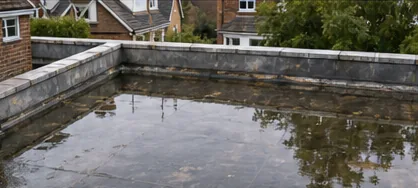
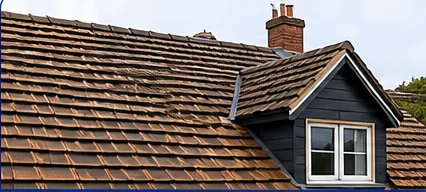
On extensions from the 1970s and 1980s around Basingstoke we often find felt simply dressed a few courses up the brick and stuck there with bitumen, with no flashing at all, or a lead flashing that has worked out of its joint as the mortar softened. Sometimes a later owner has run a bead of mastic along the top as a fix. Mastic stiffens, shrinks and lets go within a few seasons. Water then gets behind the upstand, runs down the inside face of the felt and appears as a brown line on the ceiling along the house wall, often well along from where it entered. Wind-driven rain makes it worse, so the leak can come and go with the weather direction. On dormers the same fault shows at the cheeks, the short side walls, where tile-hung or clad faces meet the roof.
What we fix
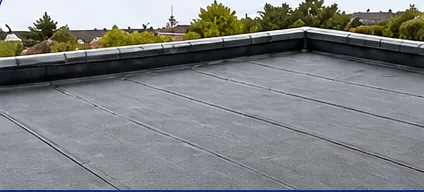
Mastic over a failed upstand is not a repair we will sell you. We cut the old covering back from the wall, check the timber behind for rot, and fit an angle fillet, a small triangular batten that stops the membrane being folded through a sharp right angle where it would crack. The new covering then turns up the wall to the height its maker specifies and is bonded to the brick or to a primed board.
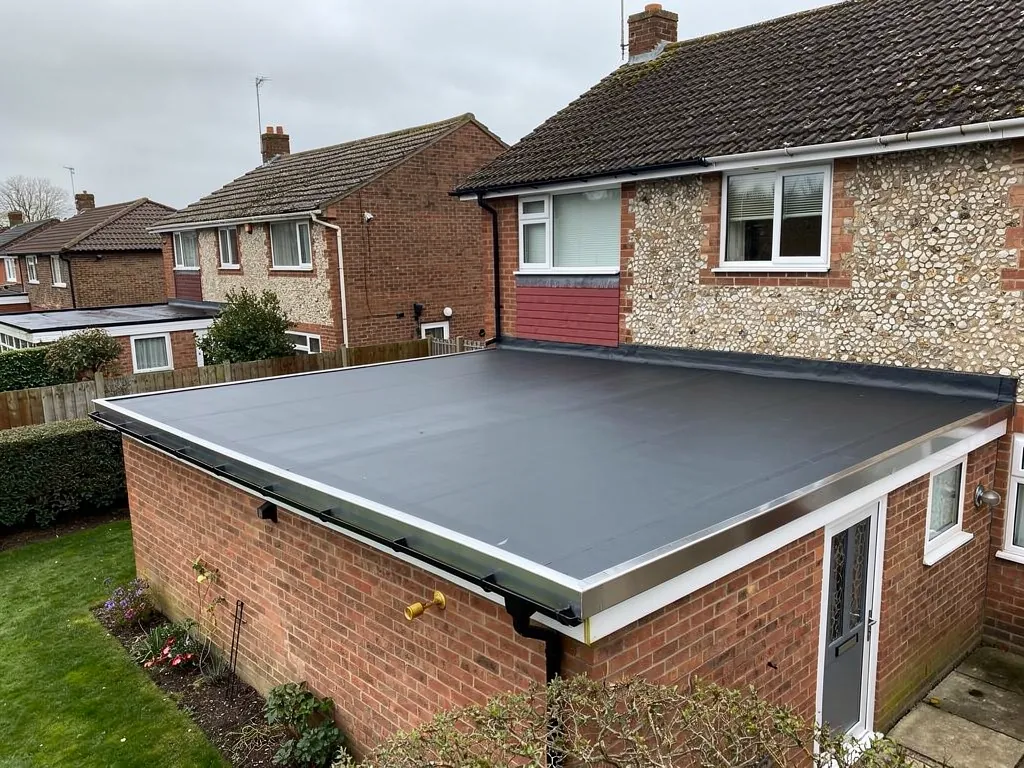
Over that goes a proper cover flashing. On brick we rake out a mortar joint, dress in sheet lead or a membrane flashing, wedge it and point it, so the upstand is protected by something that sheds water rather than something that tries to glue it out. Where the main wall is rendered we use a trim designed to sit in a cut in the render. On a dormer cheek, the upstand runs up behind the cladding or tile hanging, which sometimes means lifting a few tiles and refitting them.
If the rest of the roof is sound, this can be a repair in its own right, and the photo report will show it. If the junction has failed because the whole covering has shrunk away from the wall, patching one edge just moves the leak, and we price a new roof instead. Chased lead flashings follow the same standards as our lead roofing work.
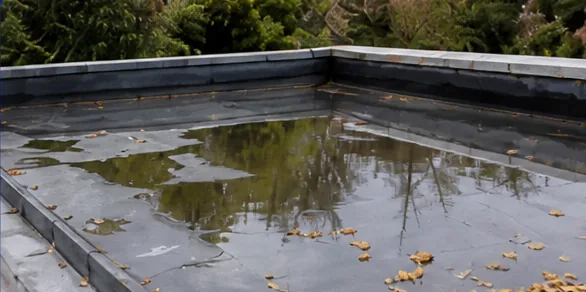 Before
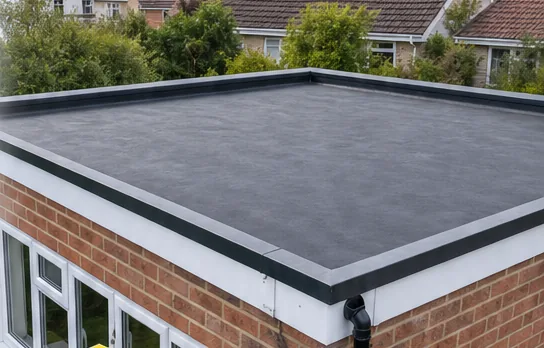 After