


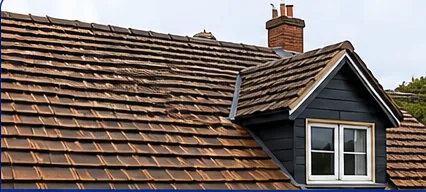

Chapter 1: Why does water come in beside the chimney on our older brick house in Frimley?
What we find
On houses that date from the coaching years and the Victorian period, the chimney is often the highest and most exposed part of the roof. The joint between brick stack and roof is sealed with lead flashing (the folded strip of metal that turns up the brick) and soakers (little lead sheets worked in between the tiles along the stack). After a century or more of heat, frost and wind, the lead cracks, the mortar that holds its upper edge lets go, and rain runs behind it.
Inside, the stain usually appears on the chimney breast itself or on the ceiling next to it, and it gets worse after wind-driven rain. The pot and the stack mortar above are worth a look too, because water that enters at the top of a stack can travel a long way down inside the brick before it shows.
What we fix
We start by checking the stack from a ladder and from the loft, photographing the flashings, the pointing and the flaunching (the mortar cap that holds the pots). If the brick is sound, repair is the answer: new lead flashings and soakers cut to the existing tile courses, repointing where the joints have opened, and a fresh flaunching. Lime mortar is the right choice on soft old brick, because a hard cement mix traps moisture and makes the faces spall.
Typical UK prices reported for chimney leadwork average about £570, with a range of £350 to £920, and scaffold adds to that when the stack cannot be reached safely. The number you pay is set once the survey is done. More on our chimney repairs page for how we approach stacks that need more than flashing.
