





Chapter 1: What tends to fail first on a 1960s or 70s Basingstoke estate roof?
What we find
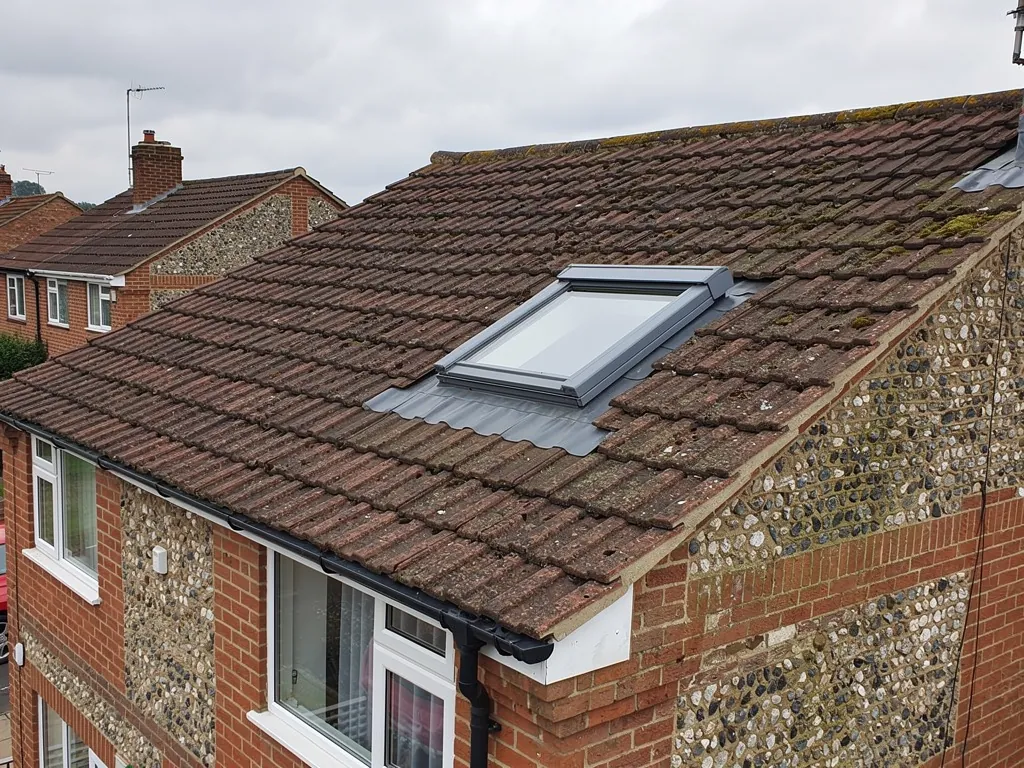
South Ham was mostly built in the late 1960s, when Basingstoke was developed as an overspill town for London. Brighton Hill and Viables followed around 1970, and Kempshott went up in phases through the 1970s and early 1980s. Many of those houses were roofed in concrete interlocking tiles, which are heavy, quick to lay and long-lived. Because whole estates went up within a few years of each other, the same faults now appear street after street.
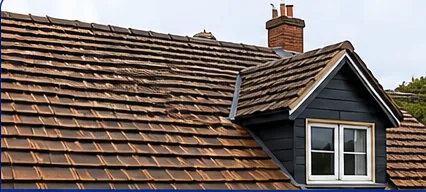
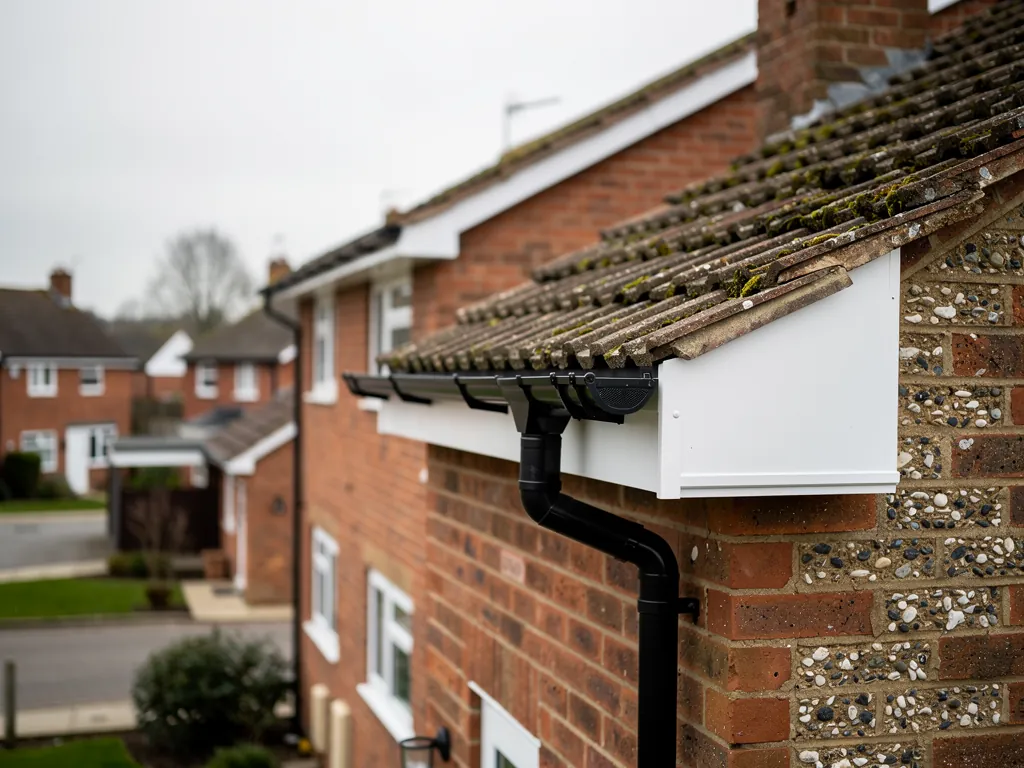
The tiles themselves are rarely the first thing to go. What gives out is the fixings and the layers underneath. The nails holding the tiles to the battens, the timber strips the tiles hang on, rust through, and tiles begin to creep down the slope. The underlay, the sheet under the battens that catches any rain getting past the tiles, was often bitumen felt on houses of that age. At the eaves it perishes and sags into the gutter, so water that should drain away runs behind the fascia, the board along the bottom edge of the roof that carries the gutter. The surface of old concrete tiles also wears, holds moss and stays damp for longer. None of this looks dramatic from the pavement, which is why a damp patch on a bedroom ceiling is often the first sign anyone notices.
What we fix
We start in the loft as well as on the roof. From inside you can see daylight around slipped tiles, water staining on the battens and how far the felt has failed at the eaves. Outside, we photograph each fault and mark it on the report, so you can see exactly where it sits on your own roof.
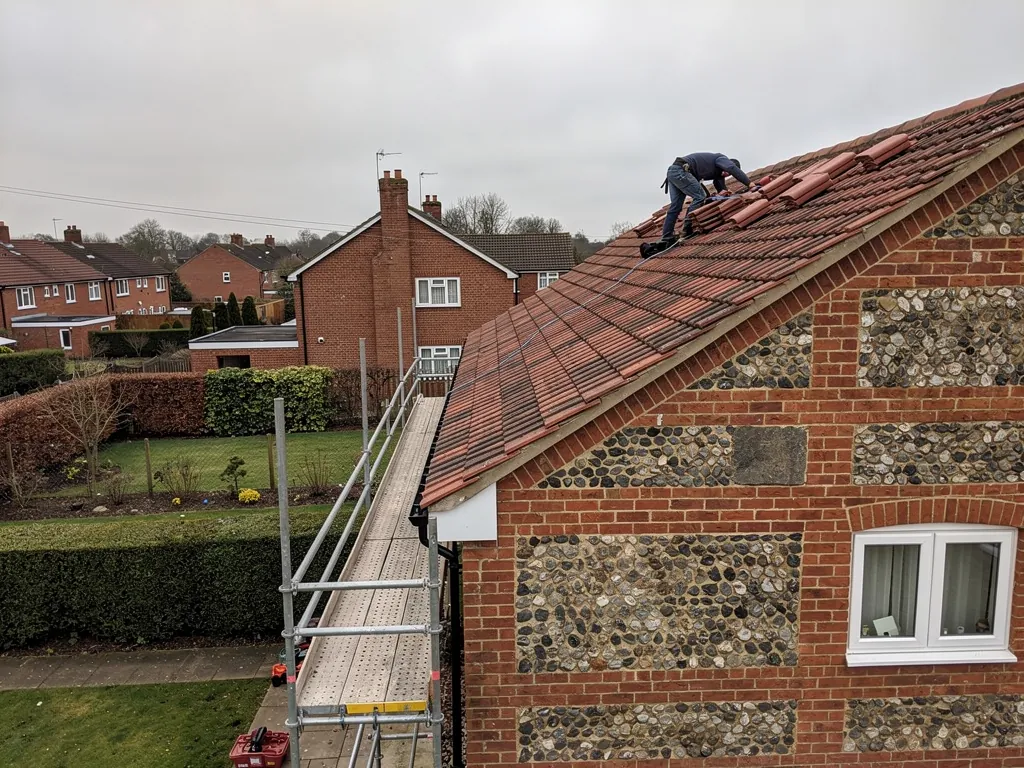
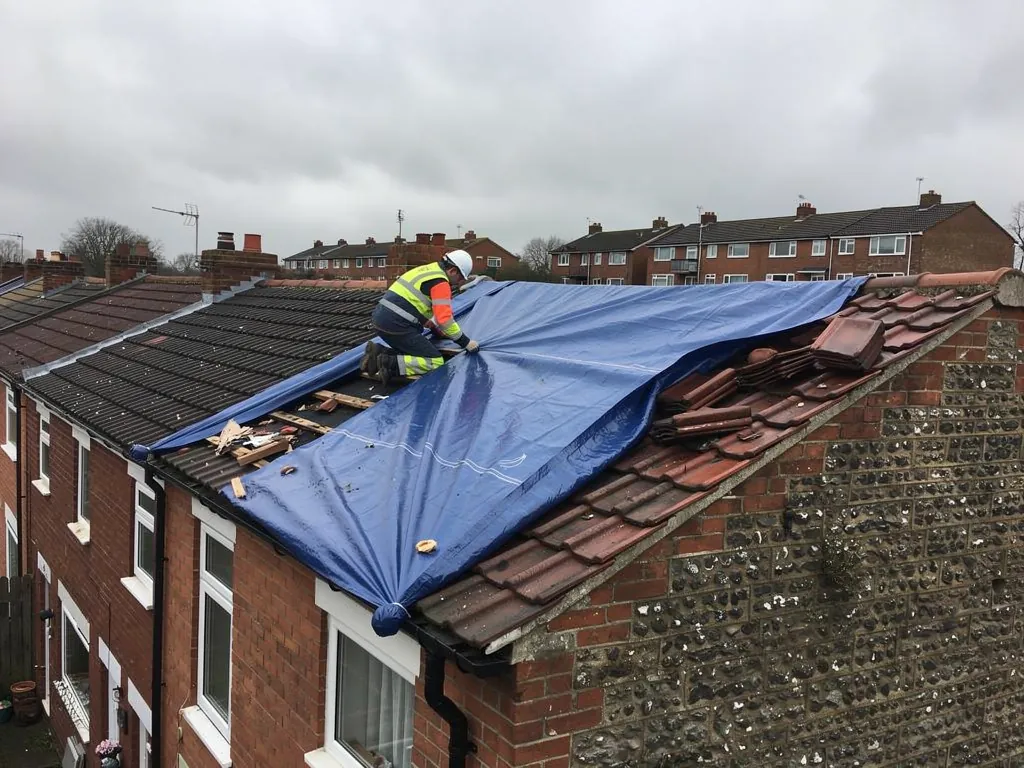
A handful of slipped or cracked tiles is a routine job for our pitched roofing team: ease up the courses above, refix or replace the tile with a new nail or clip, and lay the courses back down. Concrete interlocking profiles from that era often have close modern equivalents, and reclaimed tiles fill the gaps where they do not. Where the felt has only failed along the eaves, a new strip of underlay and an eaves support tray behind the fascia can cure it without stripping the whole slope.
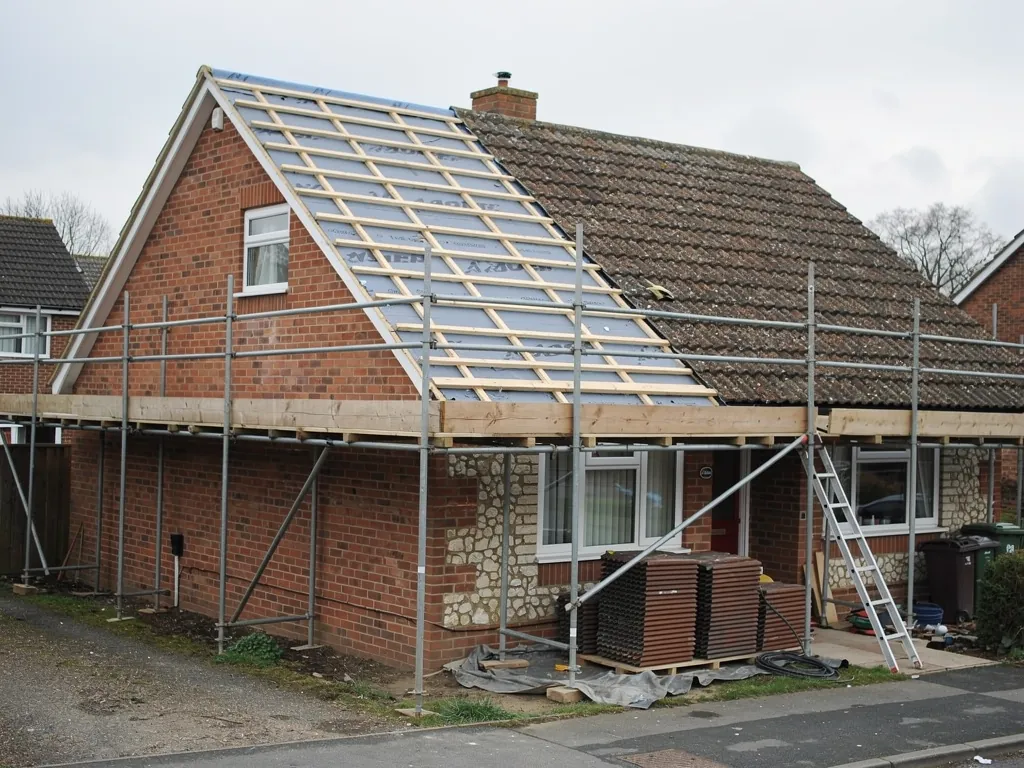
When the nails have failed across an entire slope, or the felt has perished well up the roof, patching turns into a cycle of return visits. That is the point where stripping and re-covering makes more sense. Our roof replacement survey sets out both routes side by side, each with its cost, so you can compare them on paper rather than on trust.
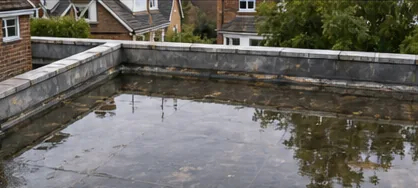 Before
 After
After