
Beacon Basingstoke Roofing

Roofers in Newbury

Newbury is 17.2 road miles north-west of Basingstoke, a market town on the River Kennet with the North Wessex Downs rising on three sides. A 17th-century timber-framed Cloth Hall, Georgian frontages and newer estates share its skyline. We survey each roof on its own terms, photograph what we find and give you a fixed written price.

Brick chimney stack with clay pots

Roofs we see in Newbury

  • White uPVC fascia, soffit and guttering under a tiled roof

    Listed and period buildings

    Newbury keeps listed buildings from the 17th and 18th centuries beside the Cloth Hall of 1626 to 1627, now Grade I listed and home to the West Berkshire Museum, and its adjoining half-timbered granary. These roofs carry old clay tile, slate, lead and timber of great age, and a repair has to respect that. The faults sit where different materials meet: a lead gutter against a brick wall, a hipped corner, or a stack shared between neighbours.

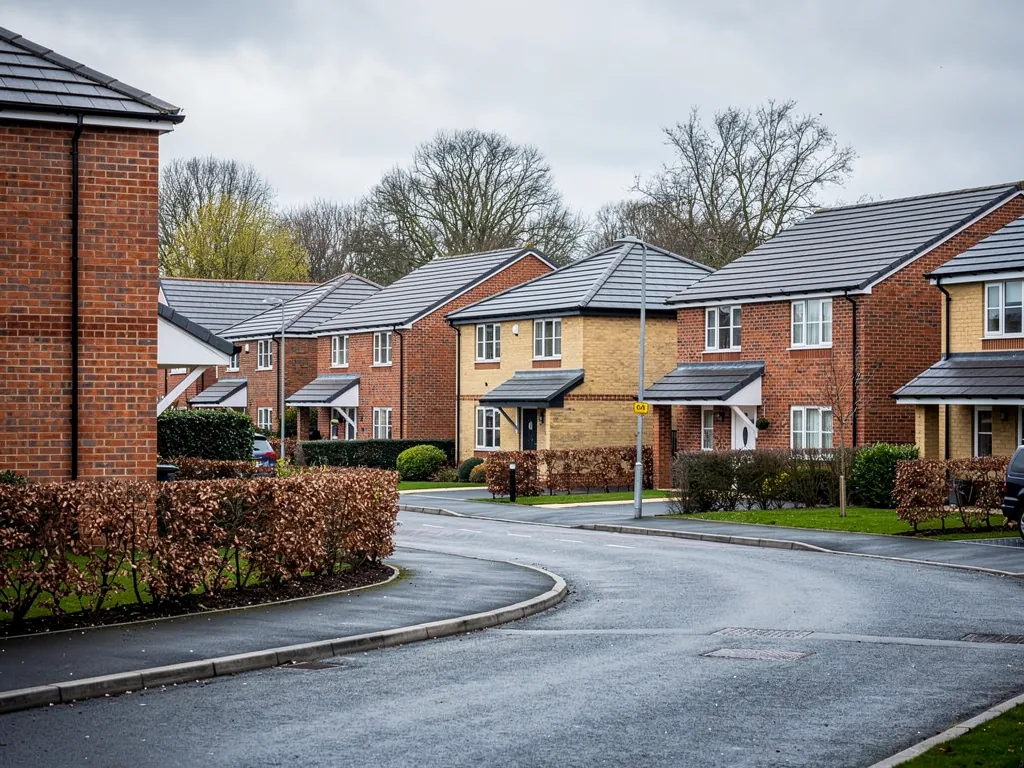
  • Modern 2000s brick houses with grey concrete tile roofs on a new estate near Basingstoke

    Canal and river-side homes

    The River Kennet and the Kennet and Avon Canal flow east through the centre of town, and houses beside the water sit in damper, shadier air. Roofs there collect moss and algae faster, gutters block with leaf fall from waterside trees, and low-lying walls stay damp. A clean roof and clear outlets matter more here than on a dry hilltop.

  • Clay tiled pitched roof gable on a red-brick house

    Downland-edge exposure

    The town is surrounded on three sides, north, west and south, by the North Wessex Downs, and houses on the rising ground take wind straight off open land. Ridge tiles, verges and loose slates are the first to go in a gale. On the exposed edges, fixings and the way the ridge is secured matter more than the covering itself.

17.2 road miles north-west of Basingstoke

Planning and building control in Newbury

West Berkshire Council handles planning and building control for Newbury. The council's conservation areas in the town include Newbury Town Centre, Donnington Square, and Shaw Road and Crescent, and its main site at westberks.gov.uk is the place to check whether a street you live on falls inside one. The town also has a good many listed buildings, among them the Cloth Hall and its granary.

In a conservation area or on a listed house, repairs that match what is there are generally acceptable, but a different material, a new colour of tile or a changed roof line may need consent, so put the question to West Berkshire's conservation team first, and do that before anything is bought. Pausing for a week at that stage costs far less than undoing work that was done without consent, and the survey photographs give them a clear record to respond to. Outside those areas, big re-covers can still be notifiable under building control, and we take care of that process on your behalf. Planning to add daylight to a loft? Our conservation rooflights page is the place to begin, as the rules differ in protected areas.

Faults on Newbury roofs, and the fixes

Newbury's roofs range from 17th-century timber frames to modern estates, and the town is shaped by water to its middle and downland all around. That produces three families of problem: old materials wearing out, damp air fostering growth and decay, and wind testing every fixing. Four of the commonest situations are set out below, each with its likely cause and the repair we would put to you. Where a house is listed or sits in a conservation area, every one of them begins with photographs of every slope, so nothing is lost or guessed at. Repair always comes before replacement in our thinking.

Chapter 1: Why are the clay tiles on our old Newbury house flaking and cracking?

What we find

Handmade clay tiles are fired at lower temperatures than modern ones and are more porous, so they take in water. When that water freezes it expands and pushes the face off the tile in thin flakes, a failure called delamination. You see it as orange or grey scales on the gutter, and a tile with a pitted, rough surface rather than a smooth one.

Older houses in the town centre also have tiles pegged or nailed to oak or softwood battens, and those fixings tire first. Moss compounds the damage by holding wet against the surface. If the tile has only lost its face, it may still hang and shed water for years; if it has split through, it will leak. Telling the two apart needs a close look, because a roof can look worse than it is.

What we fix

We go through the roof and replace only the tiles that are split or badly spalled, keeping every sound one. Matching replacements come from reclaimed stock or a maker who produces handmade plain tiles, chosen to suit the colour and curve of what is already there. Where the nails have failed, we re-fix the tiles with stainless or copper nails and replace soft battens in the area we have opened.

If the house is listed or in a conservation area, we use the same material and take photographs of the work for your records. Typical UK prices reported for a natural slate re-roof run from £120 to £180 per square metre, which gives a sense of the cost of traditional materials, though a clay re-cover is quoted separately from the survey. The pitched roofing service page describes each stage of a re-cover or patch repair, from stripping the affected area to checking the finished courses. On old houses in the centre of town, it is also worth asking us to look at the loft timbers while the tiles are off, since rafter ends and wall plates are easier to inspect then.

Chapter 2: Where is the leak coming from on the flat roof at the back of our Newbury shop or office?

What we find

Many town-centre premises have a flat roof tucked behind the pitched front: a rear extension, a flat-topped store or the roof over an old yard. Over time those roofs fail at the edges first. Felt splits at the upstand, the outlet blocks, and puddles stand where the deck has sagged. The damp shows up as a stain across the ceiling of the room below, often some way from the actual hole.

Roofs in this part of town are also overlooked by taller neighbours, so leaves, birds and debris land on them from above. The Kennet valley air keeps surfaces damp, so anything that has gathered stays wet. An outlet clogged with silt turns a simple roof into a shallow pond, and the weight of water then strains a deck that was never designed to hold it.

What we fix

We clear the roof, trace the failing detail and test the deck for soft spots. A small split can be repaired, but a roof that has ponded for years generally needs a new covering. We lay a rubber membrane (EPDM) or glass-reinforced plastic (GRP), formed with upstands, new outlets and a gentle fall so that water leaves the roof.

Typical UK prices for flat roofing are £80 to £120 per square metre in EPDM and £100 to £160 in GRP, and the fixed quote follows once we have been up on the roof. Business premises are covered by our commercial roofing service, and domestic buildings by flat roofing. We can work around trading hours where the building allows.

Chapter 3: How do we stop ridge tiles lifting in the wind on a house at the edge of Newbury?

What we find

Ridge tiles run along the very top of the roof, the most exposed point, and on a hillside house facing open downland, they catch the strongest gusts. For decades they were simply bedded in mortar. Mortar shrinks, cracks and loses its grip, and a tile that once felt solid begins to rock. Gable edges suffer alike, because wind gets under the tiles where the slope stops at the end wall.

The first signs are small: mortar crumbs in the gutter, a ridge tile out of line, or a line of daylight when you stand in the loft. After a gale a tile can drop into the garden. Because mortar fails slowly, the damage often goes unnoticed until the first serious storm brings it to light.

What we fix

The current standard, BS 5534:2014, expects the top-of-roof pieces to be held down by a mechanical fixing, with mortar alone no longer trusted. We lift the old ridge, check the tiles beneath and refix on a dry system: the capping is secured with screws or clips to a batten laid over a breathable strip, a method with its own standard, BS 8612:2018. Gable edges get dry verge units that grip the tile ends.

For a semi, a dry ridge is reported at £900 to £1,600 across the UK, plus scaffold of £300 to £900, and the fixed price is set once we have surveyed. For more detail, see ridge tile repairs. Repairs like this are among the most useful jobs on exposed roofs, since they remove the most likely point of failure.

Chapter 4: Do we need to worry about the lead and stacks on a listed building in Newbury town centre?

What we find

On listed and period buildings in the centre, lead is the usual material for valleys, gutters and chimney flashings, and it has often been there for generations. It work-hardens and splits where it flexes, and thieves have occasionally targeted it. A cracked flashing at a stack can leak for years before a stain reaches a ceiling.

The brick stacks themselves are frequently shared between two houses, so a failed joint or leaning pot affects both. Older mortar was lime-based, soft and breathable, and a later patch in hard cement can trap moisture in the brick and cause it to spall. If a previous repair used cement or sealant, the damage may be greater than it appears from below.

What we fix

We record the stack and flashings in photographs, then repair in kind: lime mortar for repointing, new lead flashings and soakers cut to the tile gauge, and a vented cap on any flue no longer in use. Where a stack is shared, we tell you so you can speak to your neighbour before work starts.

For work on a listed building, check with West Berkshire's conservation officer before changing materials. Typical UK prices for chimney leadwork average about £570, ranging from £350 to £920, and your own quote is fixed after the survey. Our lead roofing and leadwork and chimney repairs pages cover the detail.

Newbury roofing questions

Does a half-timbered house in Newbury need a different kind of roof repair?

Often it does. Timber-framed buildings move more than modern brick ones, so the roof above them can sag or rack slightly, and old clay tiles may be hand-made and uneven. We repair in sections, keep sound tiles for reuse where we can, and check the framing beneath for damp before closing it up. If the building is listed, consent comes first.

Can you work on a listed building in the centre of Newbury?

Yes, on a like-for-like basis. We record the existing roof first, repair with matching material, and give you the photo report to share with West Berkshire's conservation officer if consent is needed. Changes to materials or appearance can need permission, so ask the council before work is booked. Our work carries a written ten-year guarantee on workmanship.

Does living beside the canal or river change how often a roof needs cleaning?

Often it does. Damp air from the Kennet and the canal keeps roofs wet for longer, so moss and algae return faster than on a dry hillside. We suggest a check after a few winters, with the gutters cleared alongside, and treat the roof by hand rather than by pressure washing where the tiles are old.

Will storms from the downs damage my roof more than elsewhere?

Houses on rising ground at the edge of town face stronger wind, and loose ridge tiles, verges and slipped slates are the first casualties. A check of the fixings after a rough winter is sensible. If a tile has come down and water is getting in, ring us and we will prioritise making the roof safe.

Get your free roof survey in Newbury

Tell us what’s happening and we’ll call you back to arrange a visit. You’ll get photos of your roof and a fixed written quote.

  • No obligation
  • Photo report of your roof
  • 10-year workmanship guarantee

Rather talk? 01256 213956

Call Free survey