

Beacon Basingstoke Roofing

Roof inspections and surveys in Basingstoke

We inspect roofs across Basingstoke and nearby towns: on the tiles or slates, from the loft, along the gutters and, where it helps, by drone. You get photographs of your own roof, a plain account of what is wrong and what is sound, and a fixed written quote if any work follows.

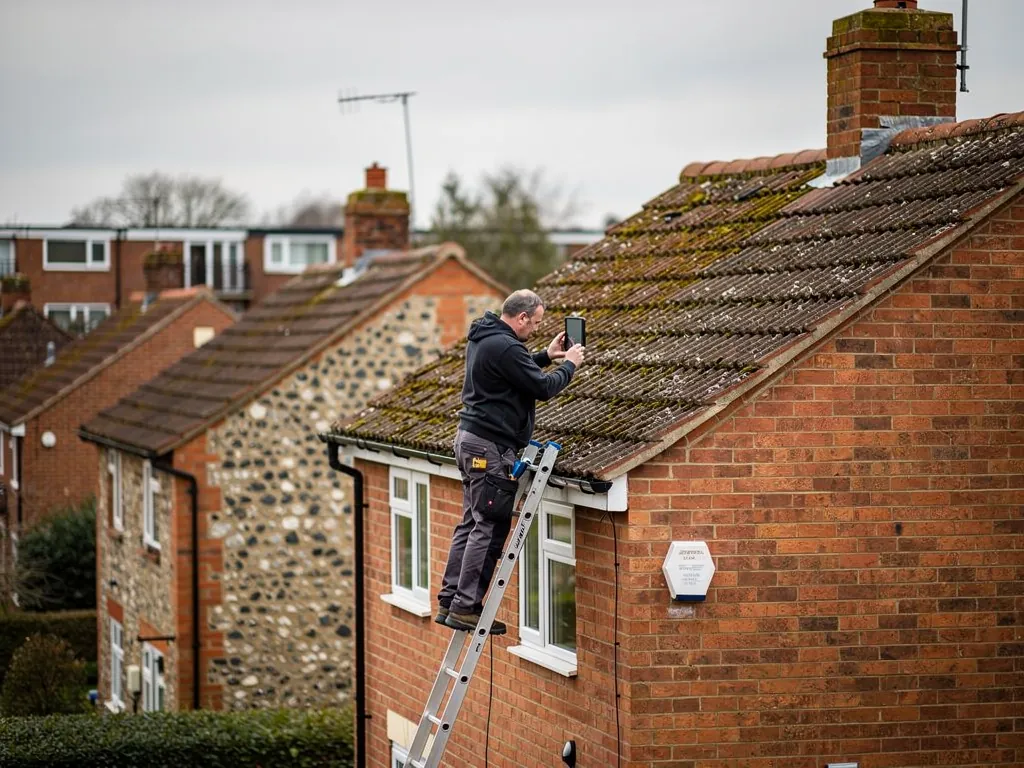
A roofer on a ladder photographing roof tiles with a tablet during a roof survey

Three kinds of inspection we carry out

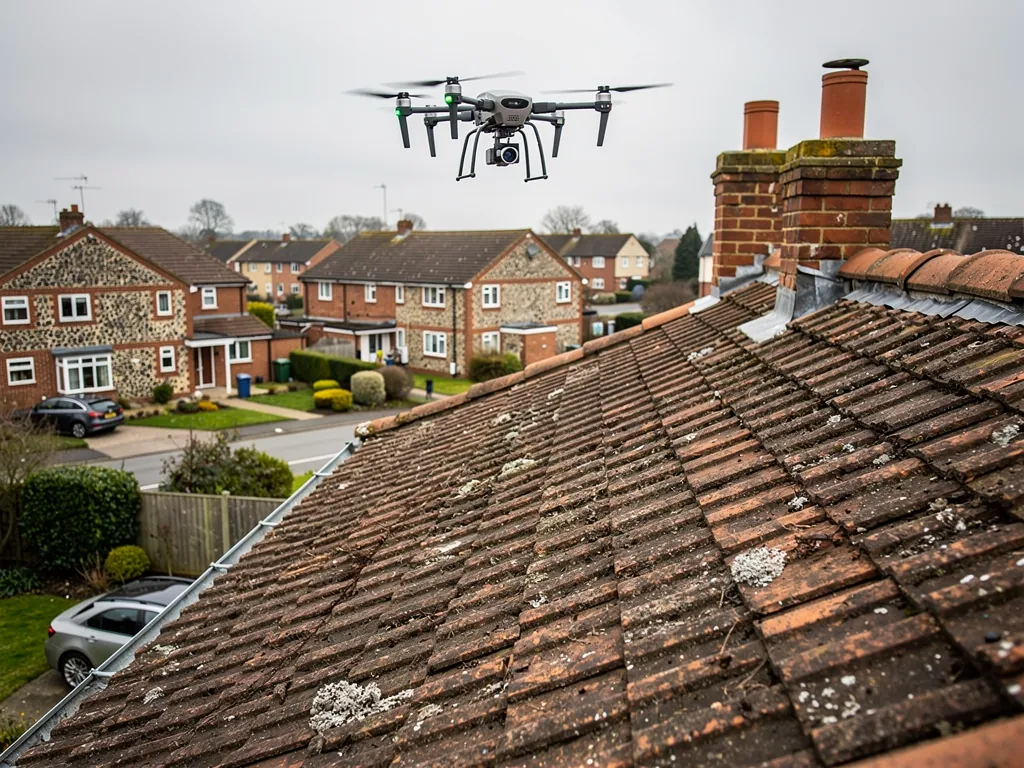
  • A small drone hovering over a tiled roof during a roof inspection

    Survey ahead of a repair or re-roof

    We go onto the roof, into the loft and along the gutters, photograph what is failing and why, and price the work. Looking at your roof so we can quote for it is free.

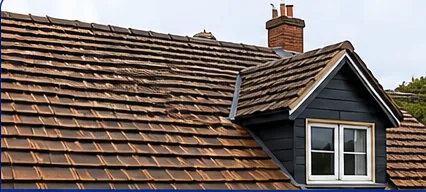
  • Slipped and cracked clay roof tiles

    Condition report for a buyer, seller or landlord

    A written record of each roof area, with dated photographs and a ranked list of what needs doing. It is a separate piece of work, so we agree the scope and a fixed price first.

  • Crumbling mortar under a clay ridge tile

    Drone and photographic survey

    A drone gives a clear view of tall, steep or fragile roofs without scaffold. We follow it with a hands-on check at any point the pictures cannot settle.

Signs the roof is due a proper look

  • Tiles or slates lying in the garden after a windy night
  • A ceiling stain that has appeared or spread since last winter
  • Daylight visible between the tiles when you look up from the loft
  • Moss, lifted ridge tiles or a dip in the line of the roof
  • A survey, valuation or insurer asking for a roof report

How a roof inspection runs

  1. 1Free surveyFor repair or replacement quotes we look at the whole roof, loft and gutters, at no charge, and photograph what we find.
  2. 2Photo report and fixed quotePictures of your roof come with a note on each fault, plus the cost of the work set down in one written figure.
  3. 3Report or repairYou choose: keep the report on file, have us do the repairs, or take the evidence to your buyer, landlord or insurer.
  4. 4Sign-off and guaranteeCompleted repairs are photographed against the original fault, and the before-and-after set reaches you in one folder.

The roof inspection long read

What a roof inspection finds around Basingstoke, and what to do with it

A roof inspection is a person looking at every part of a roof closely enough to say what condition it is in and what, if anything, should be done. That sounds simple until you try to buy one, because the same words cover a glance from the pavement, a drone flight, a surveyor's paragraph in a house-buying report and a morning on the roof with a camera. The chapters below set out what each kind of inspection can and cannot tell you, who asks for them in and around Basingstoke, and where the findings lead. Pitched, flat, slate and chimney problems each have their own pages elsewhere on this site, and we point you there when an inspection turns one up.

Chapter 1: Why has my buyer's survey told me to get a roofer to look at the roof?

What we find

A home survey is a general inspection of the whole house, and the surveyor does not normally climb onto the roof. RICS Home Survey reports come in three levels, from a condition report on a straightforward modern home up to a full building survey for an older or altered one. At every level the roof is judged from what can be seen from the ground, from a window or from the loft hatch. Where something looks wrong, the wording turns careful: slipped tiles seen from the road, a ridge line that is not quite straight, staining on a rafter in the loft, and a recommendation that a specialist look before you exchange contracts.

That recommendation can mean anything from a few tiles to a failing roof structure, and the report rarely says which. On the postwar estates around the edge of Basingstoke, the usual triggers are a concrete tile roof with a worn surface and moss, old felt underlay torn at the battens (the thin timber strips the tiles hook onto), or an extension roof that holds water. The report names the symptom, not the cause, and it gives you no price. The agent may tell you not to worry. You need something you can act on before the deadline.

What we fix

We inspect the roof the way the survey could not: from the roof itself where it is safe to stand on it, from the loft, and along the gutters and eaves from a ladder or tower. You get photographs of what we found and a written note on each area covering its condition, how long it should last and what it would cost to put right. If the roof has years left and the fault is a handful of tiles and a ridge, the report says so, and the figure is for a repair. If the covering is near the end of its life, it says that too, with a fixed written quote for a new one so you can set it against the asking price.

A standalone report that goes to a solicitor or a seller is a separate job from our free quoting survey, so we agree its scope and a fixed price in writing before anyone goes up. You will need the seller's permission for access, and the sooner it is arranged the better. Our page for buyers whose survey flagged the roof covers the timing, and the RICS site explains what each survey level includes. Whether to ask for a lower price is a decision for you and your solicitor; we supply the evidence.
Chapter 2: What does an inspection of my roof actually involve?

What we find

People often picture a surveyor with binoculars at the end of the drive. A real inspection has more parts than that, because a roof fails in places a distant look will not reach. We start on the ground and take in the outline: the straightness of the ridge, any dip in a slope, chimneys leaning or stained, gutters sagging and the line of the fascia, the board along the eaves that carries the gutter.

Then we go close. On each slope we look at the tiles or slates for cracks, slips, missing pieces and surface wear. Along the ridge, hips and valleys we check the ridge tiles, the sloping hip lines and the valleys, the internal gutters where two slopes meet. At the verges, the edge of the roof over a gable wall, we check how the tiles are held. Around chimneys, dormers and walls we look at the flashings, the strips of lead or metal that seal the joint, and at the soakers, the small folded pieces of lead that sit under slates or tiles beside an abutment. Under it all is the underlay, the waterproof sheet below the tiles, which you can only judge from the loft. Each finding is photographed where it is, with a note of where on the roof it sits.

What we fix

The photographs matter as much as the climb. Every defect is shot close up and again in context, so a reader can see which slope it is on and how it relates to the rest. Those pictures go into the report in the order we walked the roof, with a plain description under each: what the part is, what has gone wrong, what caused it, and whether the answer is a repair or a replacement. We say what is sound as well, because a roof where eight of the ten areas are fine should read that way.

We keep the walk safe for the roof as well as for us. Tiles crack under a boot, and old concrete tiles and brittle slate break easily, so we use roof ladders and crawl boards to spread the load. Climbing up yourself is not worth the risk, and the Health and Safety Executive's work at height guidance explains why falls from roofs are taken seriously; our answer on whether it is safe to inspect your own roof gives a safer way to check from the ground. How long we are on site depends on the size of the house and the number of separate roof planes, and we tell you when we book.

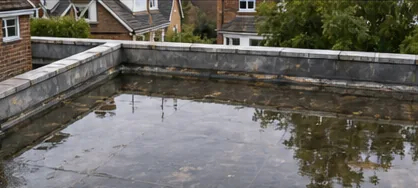
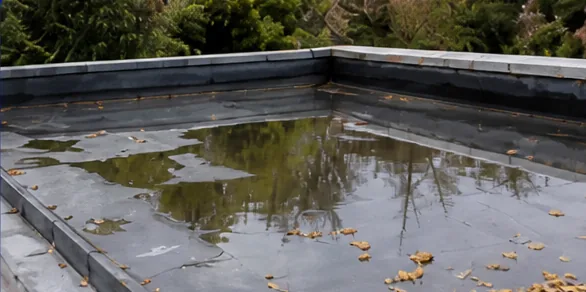
Before: Water ponding on a domestic flat roofBefore
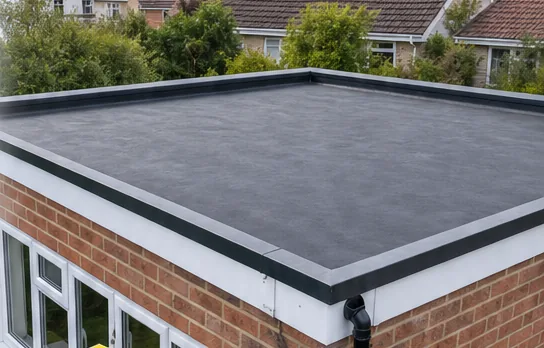
After: New EPDM flat roof on a brick extensionAfter
Typical of what we find and what we leave behind. Every survey includes photos of your own roof.

Chapter 3: Is a drone survey enough, or does someone still have to go up?

What we find

A drone is very good at some things. It gives a clean overview of a whole roof in one sweep, it reaches a tall gable or a steep slope where a ladder is awkward, and it shows a chimney stack, a ridge line or a valley from directly above. It is a sensible first look at a large house, a roof with many levels or a flat roof where you want to see where water collects. The pictures also make a useful record, because you can compare one flight with the next.

What it cannot do is touch. A drone cannot tell you whether a tile is loose at its fixing, whether a nail has rusted through, whether the underlay beneath is torn or whether a soft patch on a flat roof gives underfoot. Hairline cracks under a layer of moss disappear into the texture. Glare, wet surfaces and low light all hide detail. And nothing from above shows the underside of the covering, which is where many faults first appear. A drone report on its own is an overview, and it is fair to call it that.

What we fix

We use a drone when the roof is tall, steep or fragile enough that the first look is better made from the air, and when a managing agent or buyer wants a record of the whole roof surface in one set of images. Where the pictures show something that needs a closer look, such as a ridge that appears to have moved or a section of flashing that has lifted, we follow up by hand at that point only, from a ladder or tower. For an ordinary house that is often cheaper than putting up access for the whole roof.

Flying has its own rules, set by the Civil Aviation Authority, and those are the operator's job to follow, not yours. Our page on what drone roof surveys can and cannot show goes through it further. The table gives the ranges that UK cost guides report for drone work, so you can judge an offer against them. They are not our prices; a written quote from us follows the survey.

Chapter 4: What can only be seen from inside the roof space?

What we find

The loft is the back of the roof, and a good deal of the evidence is on this side. Looking up from the hatch you are seeing the underside of the covering, the underlay, the battens and the rafters, the sloping timbers that carry the whole thing. A fault outside often leaves a clear trail in here long before a ceiling shows a mark.

The common finds are daylight through gaps where a tile has slipped, dark tide marks on a rafter where water has run for seasons, underlay that has torn or sagged between the rafters, and nail tips furred with frost-like condensation in a cold spell. On the 1960s and 1970s roofs around Basingstoke, the old bitumen felt underlay is often brittle and cracked where it crosses the rafters. Insulation pushed hard up into the eaves can block the air path that carries moisture out, so the timbers there sit damp. Mouse droppings, nesting material and chewed wiring are also visible from inside. If the loft has been insulated with spray foam, much of this disappears. The RICS consumer guide notes that timbers can look dry on the visible face but be wet behind the foam, which is a reason to have the roof checked before and after.

What we fix

We go into every loft that can be entered safely, and we read the timbers with a moisture meter, an instrument that gives a percentage reading from the surface of the wood. A rafter that reads dry in one place and wet a metre down tells us where water is entering. We photograph each mark with its position noted, so the report can say "second rafter from the chimney, north slope" and not "somewhere near the back".

What happens next depends on what we find. Torn underlay can often be patched or replaced locally from inside while the covering is open for another repair. Damp timbers that have dried out and are sound are left and monitored; softened timbers are cut out and replaced. Blocked eaves are cleared and ventilated. Where spray foam is involved the answer is more involved, and our spray foam insulation page covers it.

If you want to look yourself, step only on boards laid across the joists, never between them, and take a torch. Our guide to inspecting your loft lists what to look for and what to leave alone. If you see old lagging or board that might contain asbestos, do not disturb it.

Chapter 5: How do I record roof damage properly before I phone my insurer?

What we find

After a gale, damage is often scattered and easy to miss. Tiles slip or crack, a ridge tile cracks along its bedding, a flashing lifts and flaps, lead is rolled back by the wind, gutters pull away from their brackets. Some of that is visible from the garden. Some is not: a lifted flashing on the far slope, a hole in the underlay behind a missing tile, a wet patch spreading quietly through the insulation. Stains in the ceiling may take days or weeks to appear, and by then the cause is hard to separate from earlier wear.

An insurer will usually want to know four things: when the damage happened, what caused it, how much is affected and how it differs from long-term wear. A roof with moss, crumbling mortar and a long-running leak is a different story from a roof that lost six tiles in one night, even if both leak today. Policies differ in how they treat each, so read yours. A phone photo from a bedroom window is a start, but it rarely shows enough to settle the question.

What we fix

If water is coming in, call us first and we will prioritise it and make the roof safe, with a temporary cover over the affected area so the damage does not grow. Do not go up yourself in the wind. Take photographs from the ground and from inside, with the date on them, and keep any pieces that fell.

Once the roof is safe we inspect all of it, not just the spot that leaks, and write up each damaged element with a photograph, its position on the roof and our reading of its cause. Where tiles have clearly been blown off a sound roof, the report says that. Where the roof was already worn at that point, it says that as well. Giving you a fair picture helps with an honest claim; whether the insurer accepts it is their decision. We have set out more on this in roof reports for insurance claims, and urgent repairs sit under emergency roof repairs.

A permanent repair then follows on its own fixed quote. Keep every photograph and the report in one folder; you may want them again at renewal, or when you sell.

Before: Flat roof with standing water before repairBefore
After: Flat roof re-laid in EPDM rubber membraneAfter
Typical of what we find and what we leave behind. Every survey includes photos of your own roof.

Chapter 6: I manage several buildings: how do I get each roof's condition on file?

What we find

A landlord or managing agent usually hears about a roof when a tenant rings with a stain on the ceiling. By then the repair is urgent and the budget has not been set. The roofs of a small block, a row of rentals or a handful of commercial units around Basingstoke each age at their own rate, and without a record nobody knows which one is next.

The roofs differ in ways that matter. A terrace of Victorian houses has slate or clay with lead valleys and parapet gutters. A 1980s block may have a flat felt roof with a poorly drained outlet. A trading estate unit has profiled sheeting, rooflights that can be fragile to stand on, and plant on the roof. Each needs a different way of looking, and a different safe way of getting there. Access gear, fall protection and fragile-surface warnings belong in the record, since a contractor who comes later needs to know them. Without a written baseline, each leak becomes a fresh argument about whether it is wear, damage or neglect.

What we fix

We inspect each roof and keep the findings by address, so a portfolio can be read as a list. Photographs are labelled by building and roof area. Each issue is ranked: act now, plan for within the year, or watch and look again at the next visit. The table shows what each condition record holds.

With a ranked list you can set a budget and tell tenants what is happening and when. Each item that needs work comes with its own fixed written quote, so a managing agent can approve repairs one building at a time and see what the whole programme would cost. Where the repair is small we say that, and the roof stays in service. Where the covering is at the end of its life we cover replacement in the same record.

Commercial units, with their sheeted roofs and flat areas, are covered separately under commercial roofing, and our page on roof inspections for landlords and managing agents explains how a regular inspection can be set up. A report for a third party is priced as its own job, agreed in writing before we start.

Chapter 7: How do I find out how much life my roof has left?

What we find

There is no date stamped on a roof, and the age of the house is only a rough guide, because a roof may have been renewed once or twice or patched many times. What you are really asking is how much longer the covering and the fixings will do their job, and the answer comes from the material.

Concrete tiles lose their surface layer over time, turn rough and pick up moss, but the tile beneath may stay sound for a long while. Clay tiles tend to hold their colour and shape, and fail at the fixings or by frost getting in. Natural slate can last a long time, yet its iron nails corrode, and when enough have gone the slates start to slip; that fault is called nail sickness. The underlay under 1960s and 1970s roofs was bitumen felt, and it often goes brittle before the tiles do. Ridge mortar cracks and loosens. A roof can therefore look presentable from the road while the parts that matter are close to finished. Moss alone is not proof of anything either way, which is why a look from the pavement tells you little.

What we fix

We judge remaining life by sampling. We lift a few tiles or slates on each slope to see the underside, the nail condition and the underlay, check how many pieces are cracked or loose, and look at the ridge, valleys and flashings, which often wear out first. We then compare that with what a repair would cost. A roof can have a tired covering and still be worth repairing for years if the fixings and timbers are sound.

The report gives you a plain verdict for each area: sound, repair, or plan to replace, with photographs to back it up. If the roof has years left, the report records that and the quote covers only what needs doing. If a replacement is coming, you can plan for it rather than meet it as an emergency, and the roof replacement page explains what a new roof involves. Nobody can promise an exact number of years, and we will not guess one. We can tell you what condition each part is in today and what we would watch.

Re-roofing above certain thresholds brings in building control, and we handle that where it applies.

Decide what the report is for before you book, because that sets what we photograph. A buyer's survey that flagged the roof needs the flagged area pictured and described. A landlord wants every roof on file in the same format. After a storm, an insurer wants dated pictures of the damage. Tell us which when you call 01256 213956 or message us on WhatsApp, and send the roof paragraph of the surveyor's report if you have one. Any repairs that follow come with a fixed written quote and a 10-year workmanship guarantee.

Roof inspections: questions we get asked

Can you look at the roof of a house I am buying but do not yet own?

Yes, with the seller's agreement. The agent arranges access, and we usually need the loft hatch clear and the property empty enough to walk through. Because a buyer's report goes to a solicitor, we agree the scope and a fixed price in writing before we go. Book early: the best moment is straight after your survey raises the roof, before you exchange contracts, while there is still time to ask the seller to act on what we find.

If you find nothing wrong, will I still get a written report?

Yes. A roof that is sound is a result, and you get the same photographs and notes as for a roof with faults, so you have a dated record of its condition. That is worth having when you sell, when a landlord's agent asks, or when an insurer wants to know what the roof looked like before a storm. We say what we checked, what was in good order and what we would watch at the next look.

What happens if it rains on the day of my inspection?

Light rain does not stop a loft inspection, and a wet day can in fact show where water is entering. Walking on wet roofs is another matter: slates and tiles become slippery, and the risk to both of us is higher. If conditions are unsafe, we do the loft and the ground checks, then agree a new day for the roof itself, or use a drone for the overview. We will not take a risk with your tiles or ourselves.

Do you inspect a roof that has solar panels on it?

Yes, with limits. We can inspect the roof around the array, the flashings at the panel feet, the roof edges, the gutters and the loft beneath. We cannot see the tiles directly under a panel without lifting it, which is a job for the panel installer. If you are planning an installation, a check beforehand makes more sense, since the tiles beneath will be covered for years. Our answer on checking the roof before solar panels explains why.

Is a roof inspection report the same as a structural survey?

No. A roof inspection reports on the covering, flashings, drainage, timbers and loft as they affect keeping water out. A structural survey looks at whether the building's frame is moving or overloaded, and is the work of a chartered surveyor or structural engineer. If we see signs that go beyond the roof, such as a wall that has bowed or a sagging ridge with cracking below it, we say so in the report and suggest you ask one of them to look.

Will an inspection mean you recommend work I do not need?

Our method is built to prevent that. You get photographs of the fault so you can see it for yourself, and a note of whether the answer is a repair or a replacement. If a small repair will give the roof years, that is what we price. A report that says no work is needed is a normal outcome. You can take the photographs and the fixed written quote to anyone else you like and compare them.

Get your free roof survey

Tell us what’s happening and we’ll call you back to arrange a visit. You’ll get photos of your roof and a fixed written quote.

  • No obligation
  • Photo report of your roof
  • 10-year workmanship guarantee

Rather talk? 01256 213956

Call Free survey