
Beacon Basingstoke Roofing

Roofers in Tadley

Tadley sits 7.9 road miles north of Basingstoke, up the A340, and its roofs tell two stories: the post-war estates built for staff at the Atomic Weapons Research Establishment, and the older red clay tile and thatch around its two conservation areas. We survey both with photographs, then put a fixed price in writing.

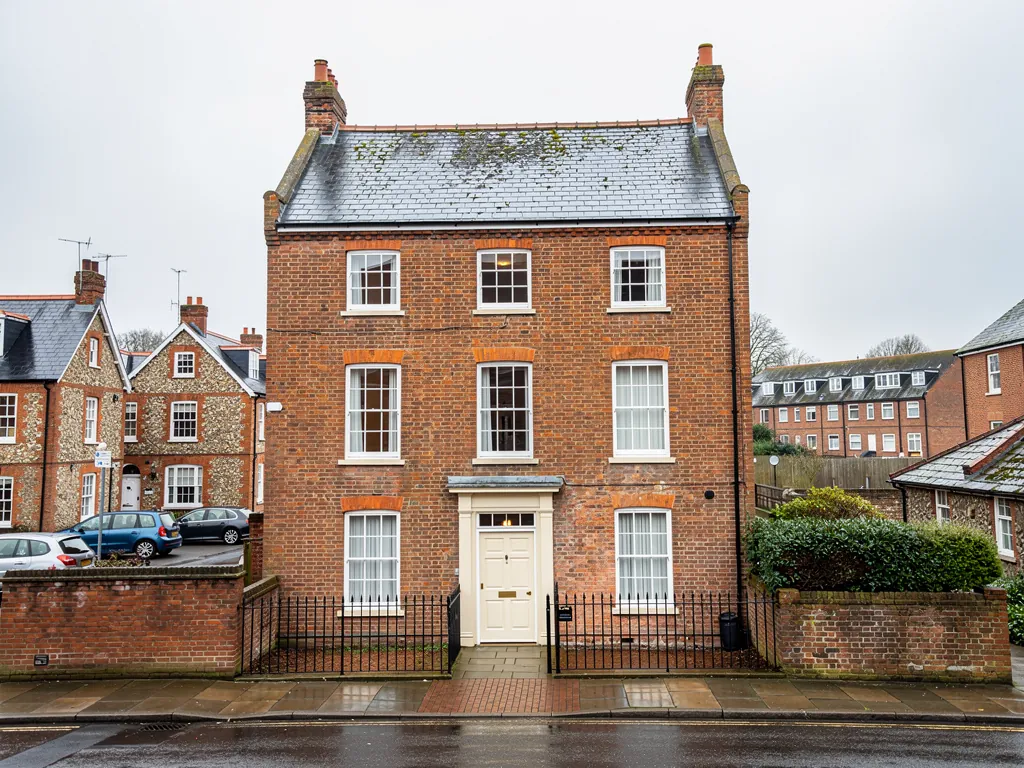
A Georgian brick town house with a slate roof and parapet in a Hampshire market town

Roofs we see in Tadley

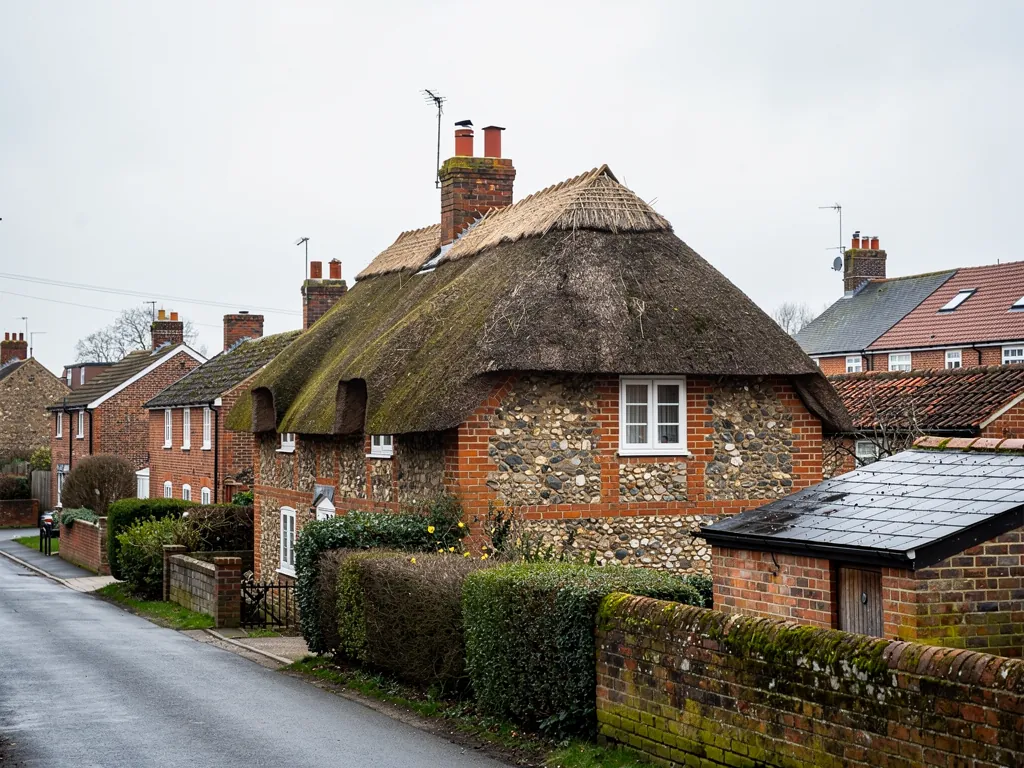
  • A thatched cottage in a Test Valley village with a brick chimney

    Post-war AWRE estate houses

    Many of Tadley's houses went up to house workers at the Atomic Weapons Research Establishment at Aldermaston, and the estates show it: repeated semis and terraces, with ridges bedded in mortar and timber fascias along the eaves. Concrete tile was a common covering on post-war estates, and these roofs are now old enough that the original felt underlay and the ridge mortar tend to be the first parts to give up, long before the tiles.

  • Brick estate houses with concrete tile roofs among pine trees

    Red clay tile in the old village

    Inside the Tadley and Tadley Church Road conservation areas, the borough's appraisal records plain red clay tile and long straw thatch over timber frame and orange-red brick. Plain tiles are small and double-lapped, hung on battens (the timber laths the tiles hook over), and they take well to patching with matched reclaimed tiles rather than wholesale replacement.

  • Brick chimney stack with clay pots

    Garages and back extensions

    Behind the estate houses sit the flat roofs: single garages, kitchen extensions and porches, mostly finished in bitumen felt when they were built. A garage from the same building period can still carry corrugated asbestos cement sheets. Each fails in its own way, and each has a sensible repair or re-cover that we price from the survey photographs of your own roof.

7.9 road miles north of Basingstoke

Planning and building control in Tadley

Tadley falls under Basingstoke and Deane Borough Council for both planning and building control. The council has designated two conservation areas in the town, Tadley and Tadley Church Road, and publishes an appraisal of each on its conservation appraisals page. They are worth reading before roof work on an older house, because they list the materials the council treats as part of the character here: long straw thatch, plain red clay tile, timber frame and orange-red brick. Tadley Place on Church Lane, which takes in part of the former Tudor manor house, is listed at Grade II.

Like-for-like repair inside either conservation area is normally straightforward. Swapping clay tile for concrete, or otherwise changing how a roof looks, may need consent, so talk to the council's conservation officer before anything is ordered, and treat any listed house the same way. On the post-war estates the question is usually building control rather than planning: a full strip and re-cover can be notifiable, and we deal with that side for you. Thinking of a roof window? Our guide to planning permission for roof windows sets out the rules, which are tighter in a conservation area.

What we find on Tadley roofs

Tadley's roofs divide neatly by age. The estates built for AWRE staff are now well into the second half of a concrete tile roof's working life, with the faults that brings at the ridge, the eaves and the garage. The older houses near Church Road and the common carry clay tile, chimneys of local brick and, in places, thatch.

Chapter 1: Why are the ridge tiles coming loose on our AWRE-era house in Tadley?

What we find

On the semis and terraces built for Aldermaston workers, the ridge (the row of capping tiles along the top of the roof) was set in a bed of sand and cement mortar. So was the verge, the edge of the roof at the gable end. That mortar has now taken more than half a century of frost, sun and rain, and it shrinks and cracks away from the concrete tiles. Once the bond goes, a ridge tile can rock in its bed and lift in a strong gust.

From the street, the first sign is often a scatter of mortar crumbs in the gutter or on the drive, or a ridge tile sitting slightly out of line with its neighbours. In the loft you may see daylight along the ridge board, or a damp stain on the timber below it. Because the estates were built in runs, the neighbouring roofs usually show the same fault at a similar stage.

What we fix

We lift a sample of ridge tiles first, to see whether the tiles are sound and only the mortar has failed, which is the usual finding on these houses. Sound tiles can go back on, but BS 5534 now requires ridge, hip and verge tiles to be mechanically fixed, with mortar no longer relied on by itself. So on Tadley's estate roofs we normally recommend dry-fix: the ridge tiles are screwed or clipped to a continuous batten over a breathable roll, and nothing depends on mortar holding. Dry-fix systems are covered by BS 8612.

Gable verges can be done at the same visit with dry verge caps, plastic units that clip over the tile ends and stop wind getting under the edge. Typical UK prices reported for a dry ridge on a semi run from £900 to £1,600, with scaffold at £300 to £900 on top; your fixed quote follows the survey. Our ridge tile repairs page explains the options in more depth.

Chapter 2: What is causing the stain on the bedroom ceiling under the eaves of our Tadley semi?

What we find

Houses from the AWRE building period were felted with bitumen-based underlay, the sheet laid over the rafters beneath the battens to catch any water that gets past the tiles. Along the eaves, where it laps into the gutter, that felt is exposed to sunlight and wind, and on many of these roofs it has turned brittle and torn back. That leaves a gap: rain blown under the bottom course of tiles drops onto the wall plate instead of running into the gutter.

Inside, it shows as a brown tide mark on the bedroom ceiling near the outside wall, or a damp corner that worsens after driving rain. A timber fascia (the board along the eaves that carries the gutter) that has started to rot is often part of the same story, because the water has been reaching it for years. On a concrete tile roof of this age, the tiles themselves are usually still fit to keep.

What we fix

If the felt has failed only at the eaves, we take off the bottom courses of tiles, fit an eaves carrier tray (a rigid strip that carries water from the underlay into the gutter), replace any rotten fascia and relay the tiles. That keeps the rest of the roof working for years longer, at a fraction of the cost of a new one. Where the felt has perished right up the slope, which we check from inside the loft, patching stops making sense and a re-roof is the honest answer.

A full strip and re-cover on a Tadley semi means new breathable underlay, new battens, and either the existing tiles cleaned and relaid or new ones. Typical UK figures for re-roofing a three-bed semi in concrete tile are £6,500 to £10,500, and your fixed quote follows the survey. Work of that size is notifiable, so we handle the building control side. Our pitched roofing service covers how these jobs run.

Chapter 3: Is the corrugated roof on our Tadley garage asbestos, and what should we do about it?

What we find

The garages and outbuildings put up beside Tadley's post-war houses were roofed with whatever was quick and cheap at the time. For the flat-roofed garages and back extensions that meant bitumen felt on a timber deck. On some garages and sheds it meant corrugated sheets made of asbestos cement. The two fail differently. Felt splits and blisters, its joints lift, and water sits in hollows where the deck has sagged. Asbestos cement sheets gather moss and lichen, grow brittle and crack around the fixing bolts.

Nobody can identify asbestos cement by eye with certainty, but grey corrugated sheets on a garage of that age should be treated as suspect until tested. Do not drill, jet wash or stand on them. On a felt garage roof, the warning signs are bubbles, cracks along the front drip edge, and boards at the front of the garage that feel soft from underneath.

What we fix

Asbestos cement sheets can be taken down carefully, without breaking them, as non-licensed work under HSE guidance, with a risk assessment, proper controls and trained operatives. If the sheets would have to be broken up, the job becomes notifiable, so we plan the removal to keep them whole and take them to a site permitted to accept them. On a small garage, overlaying the sheets with a new roof is sometimes the better route, and we tell you which after the survey.

For felt garages and extensions, we strip back to the deck, replace any soft boards and re-cover in EPDM (a single-sheet synthetic rubber membrane) or GRP (glass-reinforced plastic, laid wet and cured hard). Typical UK prices for an EPDM roof on a single garage run from £1,200 to £2,500; your fixed quote follows the survey. Our garage roof replacement page compares the choices.

Chapter 4: Can the old red clay tiles on a cottage in Tadley's conservation area be repaired rather than replaced?

What we find

The houses the council's appraisal describes, timber frame and orange-red brick under plain red clay tile, are the oldest roofs in Tadley. Bricks were once made on Tadley Common, so chimney stacks on these cottages can be local brick, softer than modern stock and laid in lime mortar. Plain clay tiles were hung on wooden pegs or iron nails, and the faults follow from that. Nails corrode until tiles slip out of their course, which roofers call nail sickness. Pegs rot. Frost flakes the faces of the softer tiles.

At the chimney, the lead flashing (the strip sealing the joint between stack and roof) and the soakers (small lead pieces interleaved with the tiles up each side of the stack) are a frequent source of leaks. On the thatched houses the appraisal mentions, the chimney is often the only part of the roof that is brick and lead, and it deserves the same close look.

What we fix

Repair is normally right for these roofs, and conservation area status makes it the sensible route anyway. We strip only the section that has failed, keep every sound tile, and make up the gaps with reclaimed or handmade plain tiles picked to match the colour and camber of the originals. New battens go in under the stripped area, and the tiles are fixed to current standards instead of being hung back on corroded nails.

Chimneys get new lead flashings and soakers cut to the existing tile gauge, and any repointing is done in lime so the soft brick is not trapped behind a harder mortar that makes it spall. Where more than a patch is needed, we photograph the whole roof and talk the options through with you before you approach the conservation officer, because a change of material on these cottages may need consent. That photo record also gives the council a clear picture of what is there now.

Tadley roofing questions

Do the former AWRE estate houses in Tadley need re-roofing as they age?

Not necessarily. Concrete tiles last a long time, and the problems usually start at the details: the mortar bedding at the ridge, the verge, the felt below and the fixings. If the tiles themselves are sound, a repair at the ridge or a relay of one slope may be all that is needed. If the underlay has perished across the roof, re-roofing is the answer, and the survey photographs show which case you have.

Our house was built for AWRE workers. Does it need a new roof yet?

Not necessarily. Concrete interlocking tiles from that period are often still sound; it is the ridge mortar, the eaves felt and the timber fascias that wear out first. We check the underlay from the loft and lift a few tiles to look at the battens. If the main roof has years left in it, we say so and quote for the repair, and the work carries our written 10-year workmanship guarantee.

Can you fit a roof window in a clay-tiled cottage near Tadley Church Road?

Often, yes, though in a conservation area the type and position of the window matter more than on the estates. Read our conservation rooflights guide, then check with Basingstoke and Deane's planning team before ordering anything. On a plain clay tile roof, a low-profile conservation rooflight with a slim frame, flashed neatly into the tiles, is usually the style that sits best.

Why does our roof on the north side of Tadley, near the common, grow so much moss?

The north of Tadley was mainly heath and common land, and houses on that side can sit close to trees and damp ground, so a shaded roof dries slowly after rain. Moss holds water against concrete tiles, packs into the joints between them and washes into the gutters, where it blocks the outlets. We clear it by hand and apply a biocide rather than pressure washing, which can strip the surface from older concrete tiles, and we clear the gutters at the same visit.

Can you repair the roof of a listed house in Tadley?

Yes, on the right terms. Tadley Place on Church Lane, which includes part of a Tudor manor house, is listed at Grade II, and any change to materials or appearance on a listed house needs consent from Basingstoke and Deane before work starts. We record the roof in photographs, recommend like-for-like repair in matching clay tile and lead, and give you the survey report for your talk with the conservation officer. Bats and nesting birds are protected, so old roofs may need a survey or careful timing first.

Get your free roof survey in Tadley

Tell us what’s happening and we’ll call you back to arrange a visit. You’ll get photos of your roof and a fixed written quote.

  • No obligation
  • Photo report of your roof
  • 10-year workmanship guarantee

Rather talk? 01256 213956

Call Free survey