




Chapter 1: Why does water pour over the front of my gutter when it rains hard?
What we find
A gutter that overflows in a downpour is rarely just blocked. Blockage is the cause people think of first, and leaves, moss washed off the tiles and the grit that sheds from concrete tiles do collect at the outlet. But when we climb up we find a handful of other causes sitting alongside it, and a good clear-out leaves them untouched.
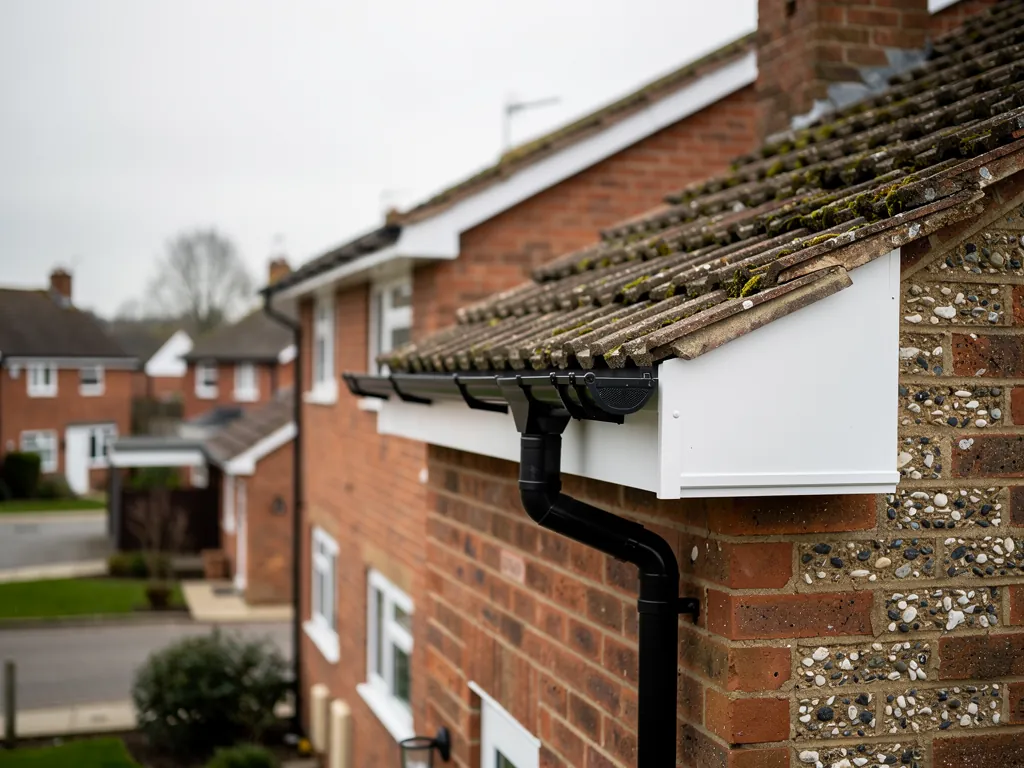
The first is fall. A gutter needs a slight slope towards the downpipe so water runs along it. Over the years brackets loosen, a run sags in the middle, and a low spot develops that holds a pool. The second is size: a lean-to or a long roof slope can feed far more water into a short run of narrow half-round gutter than the channel can carry. The third is position. If the gutter has dropped, or was hung too low at the start, roof water shoots over the back or the front instead of dropping into the middle of the channel. The fourth is the outlet itself, where a crushed or silted downpipe stops the whole run draining however clean the gutter is. The signs on the ground are a stripe of green or a splash mark on the wall, and a wet patch of path under the gutter.
What we fix
We begin by running water along the gutter and watching where it goes. That shows at once whether the trouble is blockage, fall, a sagging section or the downpipe below. A blockage on its own is a clear-out and a flush of the downpipe, and we will not sell you new guttering for it. Our answer on why gutters overflow sets out the usual checks if you want to look yourself first.
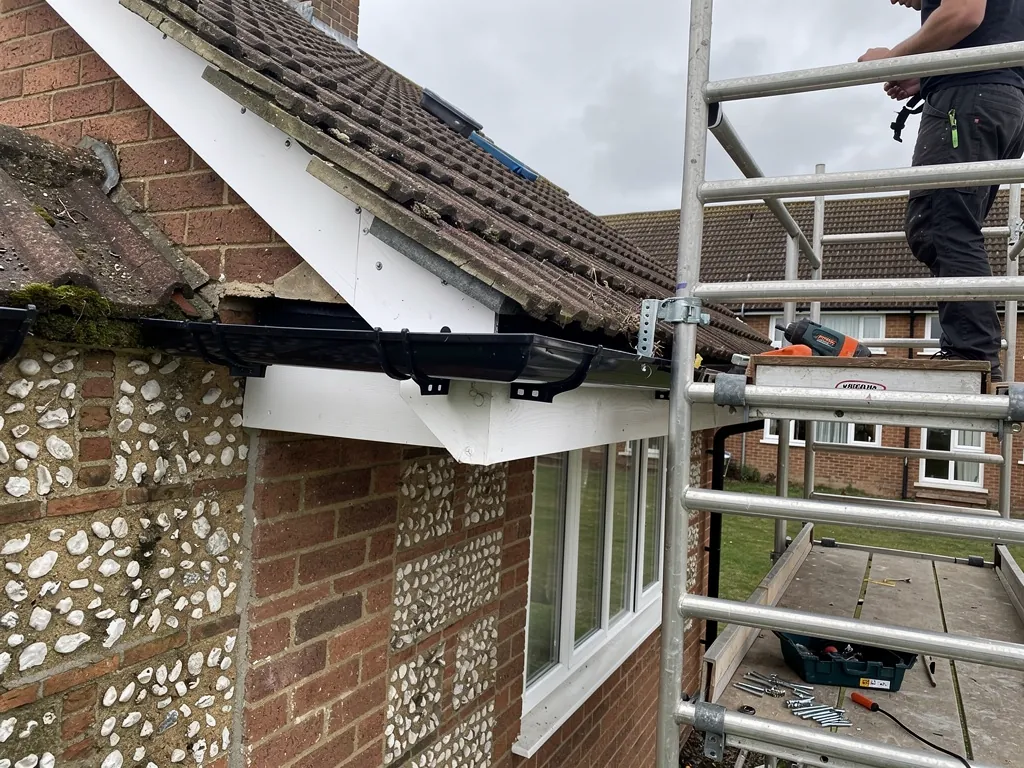
Where the fall has gone, we re-fix the run on new brackets at the spacing the maker specifies, setting it with a line and a level instead of by eye. Where one section is cracked or distorted, we cut it out and splice in a new length with a proper joint. If the channel is too small for the roof slope feeding it, we fit a larger profile, such as a deep-flow or square section, and add a second downpipe where the run is long. Where the downpipe is crushed or the shoe at the bottom is blocked, we replace the pipe lengths and make sure the water meets a gully or a soakaway connection instead of the foot of the wall.
What we will not do is chase an overflow with sealant. It never fixes a fall problem, and it hides the real fault until the next storm.
 Before
 After