






Chapter 1: What has spray foam done to the way my roof works?
What we find
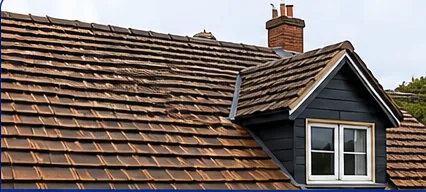
A traditional pitched roof in this part of Hampshire is a cold roof. The insulation lies on the loft floor, the loft above it stays cold, and the underlay and tiles are kept dry by air that drifts through the eaves and out at the ridge. That moving air carries away the damp that leaks up from the house below. It is a simple arrangement and it has looked after roofs for generations.
Foam sprayed onto the underside of the roof turns that cold roof into a warm roof. The RICS consumer guide on spray foam describes exactly this. The insulation now sits at the slope itself, the loft becomes part of the heated envelope, and the eaves vents and ridge vents that used to ventilate the space are often sealed by the foam. Whether that is a problem depends on the quality of the application, the condition of the roof beneath, and whether any moisture remains in the timbers when the foam goes on. On 1960s and 1970s estates round Basingstoke, we meet roofs with bitumen felt underlay that cannot pass water vapour at all. Foam applied over felt can leave no way out for moisture from the house.
What we fix
The first step is a survey. We look at the roof from outside, noting the tile type, the age of the underlay if we can see it, and the state of the eaves and ridge. Then we go into the loft and see what has been sprayed: how deep the foam is, whether it is soft and open-celled or hard and closed-cell, whether it covers the rafters entirely or just fills between them, and whether any gaps expose bare timber.
The question we try to answer is whether this roof can function as a warm roof. That needs a sound structure, a vapour path that suits the underlay, and some assurance the foam was applied by someone accountable. If so, the foam can sometimes stay, with monitoring. If not, we explain why, show you the photographs, and quote for removal. Where the evidence says the roof is fine, the foam stays. A pitched roof with no foam on it stays under our pitched roofing work, and the comparison between a warm and a cold loft is covered in our guide to warm loft versus cold loft.