
Beacon Basingstoke Roofing

Roofers in Hungerford

Hungerford is near the outer edge of our patch, 27.9 road miles north-west of Basingstoke, where the Kennet and Avon Canal and the River Dun run beside a High Street of Georgian fronts. Its roofs are older and more varied than most we visit. Our survey photographs your own roof, so you see the fault before you see a price.

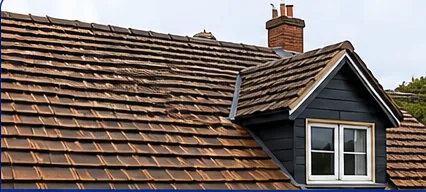
House roof stripped to battens during a roof replacement

Roofs we see in Hungerford

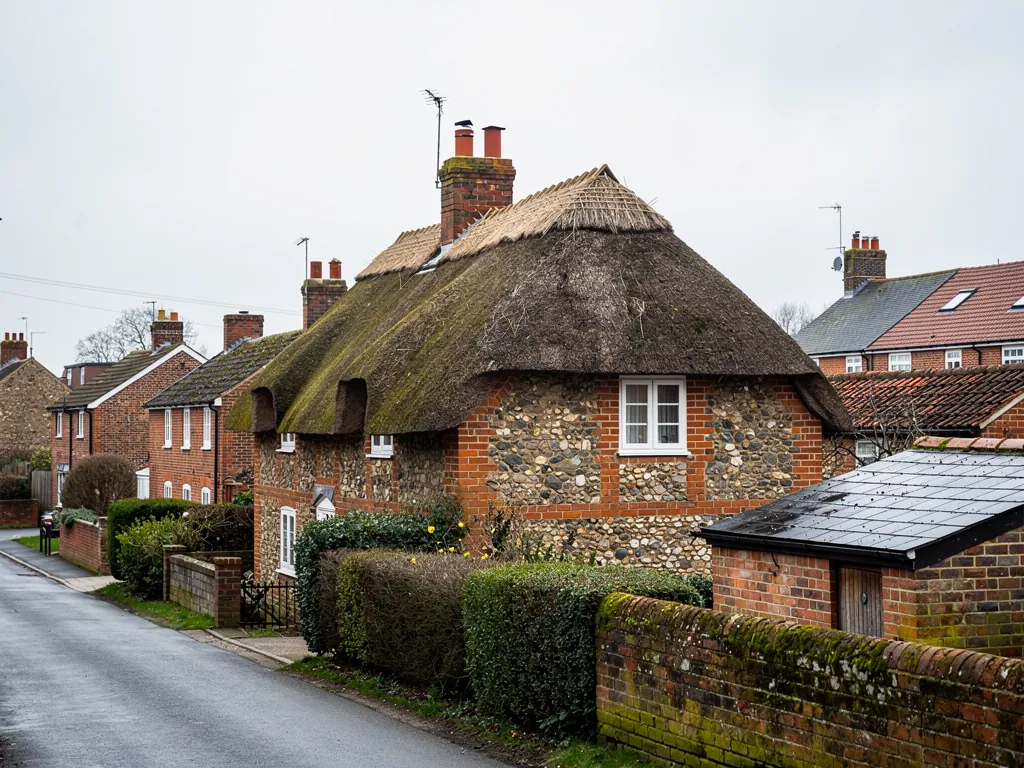
  • A thatched cottage in a Test Valley village with a brick chimney

    Georgian High Street houses

    The Hungerford Virtual Museum notes that many of the town's Georgian buildings were put up from pattern books, so neighbouring houses often share the same proportions and the same roof form. Where a Georgian roof sits behind a parapet, its gutters and valleys are tucked out of sight. That hidden drainage is where leaks begin, and it is the first place we climb to look.

  • Brick estate houses with concrete tile roofs among pine trees

    Brick-tile fronts and the odd thatch

    Some High Street fronts are hung with brick tiles, also called mathematical tiles, which are uncommon in the town and are made to pass for brickwork. Number 84 is the last thatched cottage on the street. Both are small jobs with specialist needs: the hung tiles are nailed to battens on a wall, and a thatch has to be kept well away from any hot work at the chimney.

  • Brick chimney stack with clay pots

    Canal and riverside homes

    Houses near the canal and the Dun sit on low ground by the water, some under mature trees. Roofs here stay wet long after the rain has stopped, so moss builds on the shaded slopes, leaves collect in the valleys and gutters, and small slips or cracks go unseen under a green coat. The newer streets on the edge of town carry ordinary concrete tile that wears in the usual way.

27.9 road miles north-west of Basingstoke

Planning and building control in Hungerford

For any Hungerford roof, West Berkshire Council is the authority, covering planning and building control alike. The town has a conservation area, designated by the council in 1974, and the Hungerford Virtual Museum counts around 125 listed buildings, a high number for a place this size. That means many older roofs in the town centre are either listed or inside the conservation area, and the council's own site at westberks.gov.uk is the place to check a particular address.

Repairing a roof with the same materials is usually fine, even on an older building. Altering the covering, its colour or its appearance may need consent, and a listed house is a stricter case again, so ring the conservation officer at the council before any materials are ordered. Our guide to roof work in a conservation area explains how that conversation tends to go. Where a job is large enough to be notifiable, we handle the building control side. For roof windows, see our planning guide for skylights, because protected buildings face tighter rules.

What we find on Hungerford roofs

The houses here belong to different centuries, and their roofs fail in different ways. The Georgian terraces suffer where water is collected and carried away, in valleys and parapet gutters. The hung brick-tile fronts suffer from rusting fixings. The canal and river streets suffer from damp and shade.

Chapter 1: Why does my Georgian house in Hungerford leak when it rains hard, with no tiles missing?

What we find

On a pattern-book Georgian house the roof is often a pair of low slopes meeting at a valley, or a slope running back from a parapet wall, and the water from both ends up in a lead-lined channel. That channel is called a valley gutter or a parapet gutter. It is narrow, it is hidden from the street, and it handles a large share of the roof's rainfall in a single run. A few pieces of moss, a handful of leaves or a split in the lead can send water over the edge and into the wall.

The signs are rarely on the roof itself. Look for a brown stain high on the party wall, a damp patch on the first-floor ceiling beside the chimney breast, or plaster blown from a wall that is dry at the other end. Because the slates look intact from the road, owners often chase the wrong cause for a season or two.

What we fix

We start by getting up to the gutter with a camera, clearing it and photographing the lead along its length. Lead is a metal that moves with the weather, and over many years it work-hardens at the folds and cracks. A small split can be repaired with a lead patch welded or bossed into place. Where the sheets have thinned, we lay a new lead lining over a fresh timber fall, which is the slight slope that stops water pooling, and we lap it under the slates on both sides.

Typical UK figures for leadwork on a chimney run from £350 to £920, and valley work is quoted by the length of the run; your fixed quote follows the survey. Lead grades and how long each lasts are covered on our lead roofing page.

Chapter 2: The brick tiles on the front of our Hungerford house are loosening. Can they be fixed without stripping the whole front?

What we find

Brick tiles, sometimes called mathematical tiles, are thin, hard-fired tiles hung on the face of a timber-framed or older brick wall so that the building reads as plain brickwork. Some High Street fronts in Hungerford are finished this way. Each tile is fixed to a batten (the timber lath it hangs from) with iron nails, and the joints are pointed in mortar to complete the brick look. Over a couple of centuries the nails rust, the battens soften where water has crept behind, and the pointing opens.

You may see a tile that has slipped a few millimetres, a line of pointing that has fallen out, or a bulge in the face. Rain gets behind a loose tile and wets the batten, which speeds the problem along. At the roof edge, where the tile hanging meets the slates or the clay tiles, the junction is a common leak.

What we fix

This is a repair job, not a replacement job. We take out only the tiles that have lost their grip, check the battens behind them, and replace any that have gone soft. New tiles are fixed with stainless steel or copper nails that will not rust the way the originals did. Matching the old tiles is the hard part, because they were made in a limited set of colours, so we look for reclaimed pieces, or fit the nearest available colour in an unobtrusive spot.

At the junction with the main roof, we form a lead apron or flashing (the strip that lets water pass over the joint) and tuck it behind the tile hanging. If the front is listed or in the conservation area, the repair should be like for like, and the photographs from our survey will help when you speak to the council. See our roof inspections page for what a survey covers.

Chapter 3: What can be done about a thatched or slated roof next to a chimney in the old part of Hungerford?

What we find

Number 84 is the only thatched cottage left on the High Street, and other older houses in the town have slate or tile beside brick chimneys. The chimney is a hard point in any such roof. The stack heats and cools every day, the mortar between its bricks weathers faster than the bricks do, and the lead flashing that seals the stack to the roof can lift or crack. In thatch, there is also a fire risk if a flue is damaged or neglected.

On slate, the problem is more often the soakers, which are the small pieces of lead folded between the slates up each side of the stack. When they corrode, water finds a path down the side of the chimney breast. You may notice a damp patch around the chimney breast upstairs, a flaking ceiling in the loft, or a dark streak where the brick is staining.

What we fix

We do not work on the thatch itself, which is a separate trade with its own materials. For the brickwork, the lead and the slates around the stack, our approach is the same as on any older chimney: inspect the pointing, repoint with a mortar that suits the age of the brick, and renew the flashing and soakers in lead. If the flue is in use, we recommend a sweep and a flue check from the right professional before anything is repaired around it.

Where slates have slipped, we re-fix them with copper nails and replace cracked ones with matching reclaimed slate. Re-fixing one slate typically costs £100 to £250 for the labour, with the slate itself at £5 to £25, and access by tower or scaffold adds £300 to £800. The firm figure for your roof comes after the survey, in writing. Our chimney repairs page sets out the options.

Chapter 4: Why does the roof on our house near the canal and the Dun go green so fast?

What we find

The Kennet and Avon Canal and the River Dun both run through Hungerford, in the North Wessex Downs, and the low ground along them stays damp for much of the year. Add tall trees on the bank and a north-facing slope, and a roof can stay wet through a dry week. Moss and algae grow best in that condition. They take hold on the rough face of a concrete tile first, then spread into the overlaps and the joints between the tiles.

The roof may look like a cosmetic problem at first. But a thick moss mat holds water against the tile, lifts the edges of slates, and sheds spores and dead material into the gutters, where it blocks the outlets. Frost then works at the wet moss and flakes the tile surface. You may notice water spilling over the gutter in the middle of a downpour, or a tile that has chipped along its lower edge.

What we fix

We clear moss by hand with a brush and scraper, then apply a biocide that kills what is left and slows regrowth. We keep the jet washer off older concrete tile, since it wears away the surface layer and drives water up under the laps. While we are up there, we lift a few tiles to see whether the felt below has held, and we clear the gutters and downpipes so they carry water away again.

Hand clearing with a biocide treatment is typically priced in the UK across the sizes: £748 (small), £863 (average) and £978 (large), with the fixed quote following the survey. If trees keep the roof permanently shaded, we suggest a trim to let light and wind reach it. See our roof cleaning page for how the work is done and when we would advise against it.

Hungerford roofing questions

Some High Street fronts in Hungerford use brick tiles. Can those be repaired?

Brick tiles, sometimes called mathematical tiles, are hung on battens and made to imitate brickwork. They are uncommon in the town, so matching is the difficult part. Sound ones can be taken off and rehung, and a repair should use matching replacements. In a conservation area or on a listed building, ask the council's conservation officer first if the appearance would change.

Who can look after the roof of a listed house on Hungerford High Street?

We can carry out like-for-like repair, and we record the roof in photographs first. Listed status applies to the whole building, and any change to its materials or appearance may need consent from West Berkshire Council, so check with the conservation officer before work is booked. Historic England has general guidance at historicengland.org.uk. Old roofs can shelter bats and nesting birds, both protected, so timing or a survey may come first.

Is it worth repairing a roof on one of Hungerford's pattern-book Georgian houses rather than re-roofing?

Often, yes. These roofs are usually sound in their slopes and fail at the valleys, parapets and chimney flashings. We look at the lead and the nails first, because a few repaired details can add years to the covering. If the nails have gone throughout, we quote for a strip and re-cover. Either way, our workmanship is guaranteed in writing for 10 years.

Will the M4 or the A338 hold up a job on a Hungerford roof?

Hungerford is close to M4 Junction 14 and the A338 runs through the town, so we reach it by road without trouble. We plan deliveries of tiles, slate and scaffold for the quieter part of the day, because the High Street is busy, and parking and loading there need planning. If your house is on the street, tell us at the survey and we will agree where the skip and the scaffold can go.

Can I put a roof window into a house inside the Hungerford conservation area?

Possibly, though a conservation area is a more restricted setting than an ordinary street. A slim, low-profile conservation rooflight usually sits best on an older roof, and our conservation rooflights guide covers what to choose. Confirm the position and type with West Berkshire Council before you order, since the rules differ for listed houses, and we can supply photographs of the roof to support your enquiry.

Get your free roof survey in Hungerford

Tell us what’s happening and we’ll call you back to arrange a visit. You’ll get photos of your roof and a fixed written quote.

  • No obligation
  • Photo report of your roof
  • 10-year workmanship guarantee

Rather talk? 01256 213956

Call Free survey