


Chapter 1: Where do leaks start on a large detached Ascot house with several roof levels?
What we find
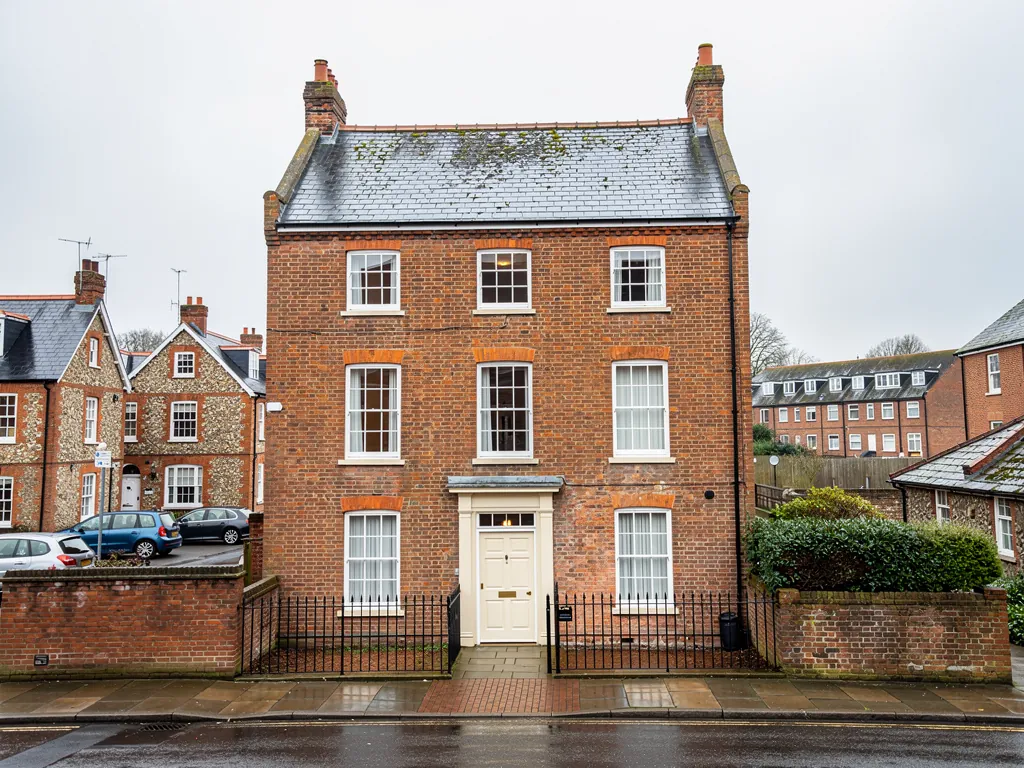
A big house in its own grounds has a roof built from many parts: a main ridge, hips running down to the corners, valleys where wings meet, dormers, and chimney stacks rising through the slopes. Every one of those is a place where two surfaces meet, and every meeting needs a lead flashing, a valley lining or a gutter to carry water away. The more junctions a roof has, the more chances there are for a small failure to start a leak.
On a house like this, water often travels a long way before it shows. It runs along a rafter or the top of a wall, and then appears as a stain in a bedroom far from the source. Look for staining beside chimney breasts, ceiling marks under valleys and mould on the top corner of an upstairs room. A tidy-looking roof from the drive can still have a split lead apron on a rear wing.
What we fix
We take the roof apart on paper before we touch it: a photograph of every hip, valley, flashing, gutter and stack, taken from a ladder or a platform, and a check from the loft that links each stain to its likely source. That report shows you the faults on your own house. Failed lead is replaced in the right weight with correct laps and falls, valley linings are renewed where they have cracked, and slipped or broken tiles are replaced with matching ones.
On roofs this size, repairing the worst sections while the rest keeps going is often sensible, and we tell you plainly when that is so. Typical UK pricing for chimney leadwork runs from £350 to £920, and the fixed quote comes after the survey. Our lead roofing and leadwork page describes the work in detail.
