
Beacon Basingstoke Roofing

Chimney repairs in Basingstoke

We repoint, reflaunch, re-pot, cap, rebuild and take down chimney stacks on Basingstoke houses, from 1960s estate semis to older brick terraces. You will see photographs of the stack, the flaunching and the flashings before we quote, after a free survey, and the price is fixed in writing. If repointing will do, we say so. The survey also looks inside the loft at the breast, where a chimney leak first shows.

A roofer repointing a brick chimney stack from scaffold, clay pots on top

The chimney work we carry out

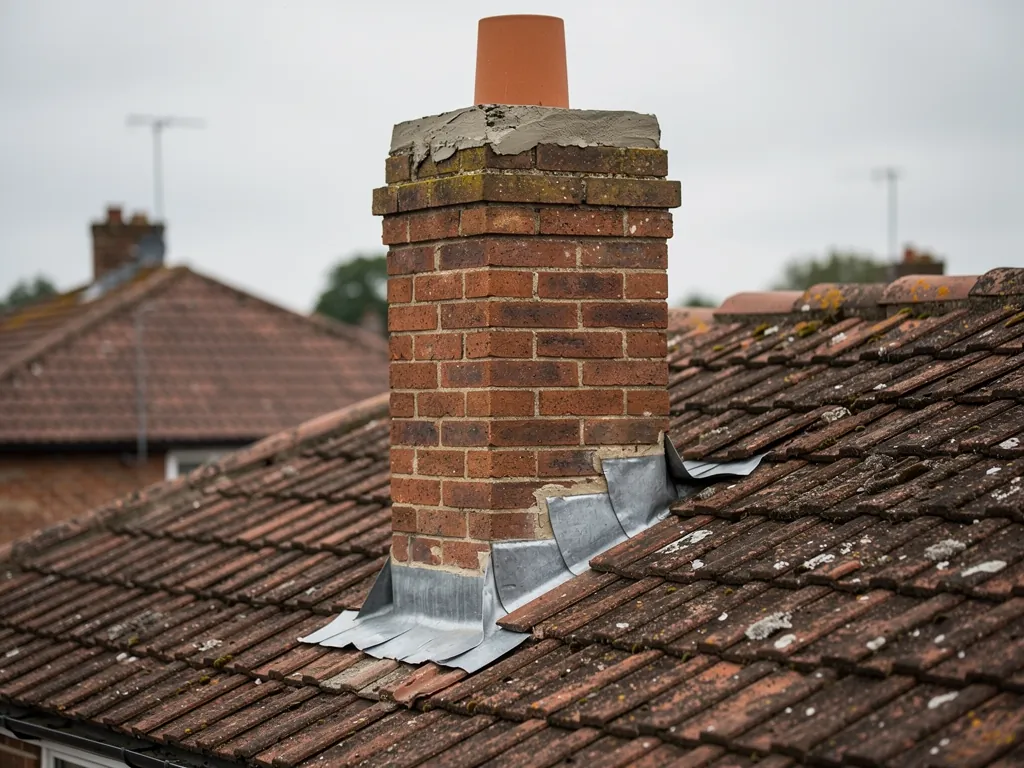
  • Close-up of new mortar flaunching and lead flashing at the base of a brick chimney stack

    Repointing and brick repair

    We rake out the failed mortar joints, replace brick faces that have broken up, and repoint in a mortar matched to the brick, so the stack sheds water instead of soaking it up.

  • Brick chimney stack with clay pots

    Flaunching, pots and cowls

    Flaunching is the sloping mortar bed that holds the pots in the top of the stack. We renew it, rebed loose pots, and fit cowls or caps that keep rain and birds out.

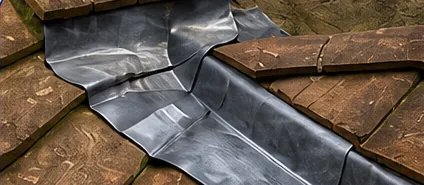
  • Lead flashing where a chimney meets a tiled roof

    Capping, rebuilding and removal

    Disused flues are capped with ventilation kept open. Stacks too far gone to repair are taken down and rebuilt, and some are removed to below the roof line with the slope made good.

Signs your chimney stack needs looking at

  • Mortar crumbling out of the joints and lying on the roof or in the gutter
  • Brick faces flaking or peeling away, leaving soft red dust behind
  • A visible lean in the stack when you look along the ridge
  • A brown patch that comes and goes on the chimney breast inside
  • Cracked mortar around the base of the pots, or a pot that rocks

Chimney work from the first look at the stack to handover

  1. 1Survey of the stackWe inspect the stack from the roof or a ladder, and look at the chimney breast inside and the flue in the loft.
  2. 2Stack photographs and priceYou see pictures of the pots, flaunching, flashings and brickwork, what has failed and why, then one written price.
  3. 3Access, repair or rebuildWe set up safe access, then repoint, reflaunch, re-pot, cap, rebuild or take down the stack as agreed.
  4. 4HandoverWe send photographs of the finished flaunching, pot and flashings, and take the old brick and mortar away.

The chimney long read

Chimney stack faults across Basingstoke, and the repair or rebuild for each

A chimney stack is the most exposed piece of masonry on a house. It stands clear of the roof, takes rain and frost from every side, and gets smoked on from inside as well. Mortar joints soften, the mortar bed that holds the pots cracks, and water finds its way into the brick and down the flue. These chapters follow the faults we meet on stacks in Basingstoke and the villages beyond, from the post-war estates to older brick houses and terraces. Under each heading you will read the fault, the repair and any building rule that applies. Repointing has its own guide on chimney repointing, and the lead around the base of a stack sits with our lead roofing page.

Chapter 1: Why is the mortar falling out of my chimney stack, and does it all need redoing?

What we find

Mortar is the softer part of a brick wall by design. It is meant to give a little and to wear away before the brick does, so that repairs can be made to the joints rather than the bricks. On a chimney stack that wear is faster than anywhere else on the house. Rain hits all four faces, the top few courses dry out in wind and sun, and frost then pushes at any joint that has taken in water.

On a stack that has not been touched for a long time, the joints look recessed, sandy and dark. You can often scratch them out with a key. Fragments land on the roof slope below and wash into the gutter, which is often how the fault is first noticed. As the joints go, rain reaches the brick edges, and bricks that were fine start to break up at the corners. Many of the houses built around Basingstoke in the 1960s and 1970s have a single tall stack on the gable or ridge, built in a cement-rich mortar that is harder than the brick around it. That mortar tends to hold, while the brick face is lost in flakes, which is a different fault with a different repair.

What we fix

We start with a close look at the joints, then decide how much of the stack needs work. Where the mortar has failed across a face, we rake out each joint to a depth of about twice its width, brush out the dust and wet the brick, so the new mortar does not dry too fast and crack. Then we repoint, pressing the mortar in firmly and finishing it flush or lightly struck, to suit the brick and the age of the house.

The mix matters. A hard cement mortar on a soft old brick forces water out through the brick face, and the brick spalls: the face flakes off in thin plates. For older, softer brick we use a lime-based mix, and for modern hard brick a lighter cement mix with a plasticiser. Our short answer on lime or cement mortar for chimneys sets out the reasoning. Bricks that have lost their face are cut out and replaced with matching ones, tied into the courses around them.

Like-for-like repointing is repair, not a notifiable job, so no building control application is normally needed.

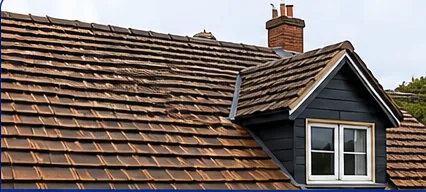
Before: Crumbling mortar under a clay ridge tileBefore
After: House roof stripped to battens during a roof replacementAfter
Typical of what we find and what we leave behind. Every survey includes photos of your own roof.

Chapter 2: Why is there a crack around the base of my chimney pots, and what is that mortar for?

What we find

Flaunching is the sloping mortar bed on top of the stack that holds each pot in place. It does two jobs at once: it fixes the pot to the brickwork, and it throws rain outwards over the edge of the stack, so water runs off instead of sinking in. It is exposed to the weather on its top surface every day of its life, and takes the full force of frost.

The faults we find are a hairline crack where the flaunching has come away from the pot, a wide split across the slope, and flaunching that has simply broken up and gone, leaving a pot sitting on bare brick. In each case the flue below is open to rain. Water runs down the inside of the flue, wets the brick from within and lands on the throat of the fireplace, where it shows up as a patch on the breast or soot-coloured water in the grate. A pot that rocks when pushed is a bigger worry. A heavy clay pot can come down in a gale and land on the roof slope, a path or a car, and a loose pot is worth dealing with quickly rather than leaving until next summer.

What we fix

If the flaunching is cracked but the pots are firm, we chip the old mortar back, clean the top of the stack and lay new flaunching in a strong mix with a waterproofing additive, shaped to fall outwards. The edge is finished with a slight overhang, so water drips clear of the brick face. Where there are several pots, each one gets its own bed so a crack in one cannot run to the next.

When pots are loose or cracked, we lift them clear, check the flue lining, and bed them back level on fresh mortar, or replace them with new ones to match. A pot that is chipped at the rim but sound otherwise can usually stay, but one cracked right through gets replaced. If the stack top is too far gone to hold new flaunching, the top courses are rebuilt first. The step-by-step detail is in our guide to chimney flaunching repair and replacement.

The table below shows the cost guides we have seen for this kind of work, and how the numbers move with access.

Chapter 3: My chimney stack looks like it is leaning. Can it be saved, or must it come down?

What we find

A stack that leans is not always a stack that is moving. Sometimes it was built slightly out of true and has stayed that way for fifty years. What we look for is change: a gap opening between the stack and the roof, a crack that has widened, or joints on the weather side that have gone while the opposite face looks fine.

The usual cause is decay on one face. The side that faces the prevailing wind takes more rain, the mortar there softens, and the bricks in that face settle slightly while the dry side stays firm. Over many winters this tips the stack. A tall, thin stack carrying a heavy pot and a television aerial has a lot of weight and leverage high up, and wind pressure on the aerial's dish or mast adds to it. On older houses the stack can also be sitting on timber that has rotted where water has run in at its base. Inside the roof void, a damp stain or loose brickwork around the stack points to a bed that has been wet for a long time. A lean combined with a visible crack through the courses is the most serious case.

What we fix

The first thing we decide is whether the stack can be repaired in place. A modest lean with sound brickwork below the top few courses can often be dealt with by taking the top section down and rebuilding it, keeping the lower part. A lean that runs the full height, or a stack with cracks through the brick and a leaning base, is rebuilt from below the roof line.

When we rebuild, we take the stack down course by course, keep any sound bricks to reuse and sort the rest, then rebuild it plumb in a mortar suited to the brick. A damp proof course goes in just above the roof junction to stop moisture rising into the stack, and a new lead tray is fitted at the base so water is thrown out before it reaches the brick. New lead around the base is covered on our leadwork page. Our guide to leaning chimney stacks explains how to judge how serious a lean is. If a stack is unsafe and close to coming down, we will make it safe first, then talk about the rebuild.

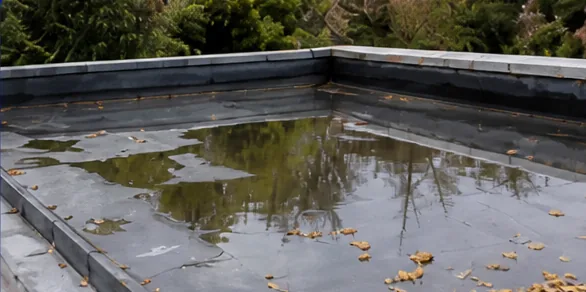
Before: Water ponding on a domestic flat roofBefore
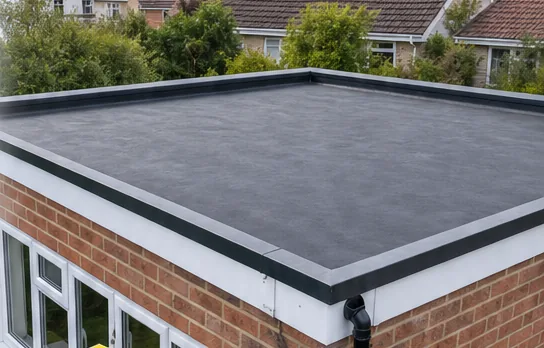
After: New EPDM flat roof on a brick extensionAfter
Typical of what we find and what we leave behind. Every survey includes photos of your own roof.

Chapter 4: Why is there a damp patch on my chimney breast when the roof looks fine?

What we find

A damp patch on a chimney breast is one of the most common reasons for a call, and one of the hardest to trace. The chimney breast is the brick projection in a room that carries the flue. It sits directly below the stack, so any water that gets in at the top can run a long way down inside before it shows.

The entry points are always one of a short list. The flaunching at the top has cracked, a pot has a split in it, the pointing has failed and the brick is soaked, or the lead around the base of the stack has lifted. Each one produces a slightly different pattern. A leak from the top shows as a stain that follows heavy rain, and often gets worse in a wind from one direction. Lead that has failed shows nearer the ceiling, often on one side of the breast. A patch that appears in cold weather, with yellow-brown salt marks and no link to rain, is often a different thing altogether. Salts in the flue brick, left behind by old fires, draw moisture from the air and show through the plaster. Cold, damp flues with no ventilation can produce the same effect.

What we fix

We work from the top down. On the roof, we check the flaunching, the pots, the pointing on every face, and the lead flashing and tray at the base. Inside, we look at the breast, the loft space around the stack and the flue, and use a damp meter on the plaster. The photographs show you what we are looking at.

Where the cause is on the roof, the repair is whatever the survey shows: reflaunch, replace a pot, repoint, or renew the flashings. If the lead is the problem, we strip the old and fit new, with a stepped flashing along the sides and a tray and apron at the back and front. A chimney can also have a back gutter, a small valley behind it that carries water round to either side. Our answer on what a chimney back gutter is explains why it matters.

Once the source is dry, the plaster can dry out and be redecorated. Our guide to why a chimney leaks sets out the full list of causes. Where the breast is damp with no sign of a roof fault, the report records that, rather than selling you work you do not need.

Chapter 5: Do I need a cowl on my chimney pot, and what do I do about birds nesting in it?

What we find

A chimney pot has a plain job: it extends the flue above the stack, helps the draw, and gives rain a little less room to fall straight down. Most clay pots are not designed for decades of weathering, and the glaze or the rim eventually gives out. We find pots with a split down one side, pots with the top few inches missing, and pots that have been cracked by a nesting bird's weight and then left.

An open pot on a flue you no longer use is an open door. Rain falls straight down it, and jackdaws and pigeons build in it. A nest can block the flue completely, which is a real danger if the fire or the boiler is still in use, because smoke and fumes then have nowhere to go. Birds that nest in a chimney are protected, and a nest in use cannot simply be cleared away, so the work may need to wait for the season to pass. On the other hand, a flue left with a hole in the pot lets water down into the breast. Cowls come in several kinds: a plain rain cap, a mesh bird guard, a rotating cowl for downdraught, and a pot hood to deflect wind.

What we fix

Which fix suits depends on what the flue is for. On a working flue, we fit a cowl that lets the smoke out and keeps rain and birds from coming down: a cage or mesh guard on an open fire, or a type approved for the appliance on a stove. On a flue that is out of use, the answer is a vented cap, which keeps rain out and lets air pass. Our guide to chimney pots and cowls lists the types and where each one fits.

Where a pot is cracked through, we replace it. Pots come in a range of shapes and heights, and we match the old one where we can. A new pot is bedded on fresh flaunching, which is renewed at the same time. If there is a nest, we check first whether it is in use, and we may need to wait for the chicks to fledge before the work starts. A chimney sweep can clear a flue and test the draw, but a roofer deals with the pot, the cowl and the mortar around them. Our answer on chimney sweep or roofer sets out who does what.

Chapter 6: We never use the fireplace. Can the flue be sealed up, and what happens to the damp?

What we find

Many Basingstoke houses have a fireplace that has not been lit for years. The grate has been bricked up or boarded over, and the flue above it sits sealed and cold. Sealing a flue off at the bottom is fine in principle. The trouble starts when it is also sealed at the top, or left open at the top with nothing to keep rain out and nothing to let air move.

A sealed, unventilated flue behaves like a cold, damp chimney in a stagnant pocket. Moisture builds up in the brick from condensation and from any rain that gets in through cracked flaunching. That damp migrates into the breast and shows as a stain at the plaster surface, often with a salt tide mark and a musty smell in the room. The reverse problem is an open pot with no cap at all, which sends rain straight into the breast. A third version is a chimney breast removed inside the house, leaving the stack above supported by a few brick courses and a steel beam, and no check that the flue above is still ventilated. This is the fault that turns up in houses that were altered by a previous owner.

What we fix

The standard answer is a capped pot with ventilation. We seal the top of the flue with a cap that keeps rain out but has a vent in it, so air can pass through the flue and carry moisture away. At the bottom, a small air brick or vent in the closed-up fireplace opening completes the path. The principle is the one in BS 5250: damp air in a closed space must be able to leave. We keep the vent in the cap as well, and do not seal the pot completely with mortar.

Where the pot is cracked, we replace it before capping. Where the breast is damp, we check that the cause is addressed on the roof before anything is plastered over. Our guide to capping a disused chimney goes through the options, and the question of whether capped chimneys need airflow has its own answer on ventilating a capped chimney.

If you might want to light the fire again, tell us at survey. A flue that has been capped may need a sweep, a smoke test and a lining check before it is used.

Chapter 7: Can I take down a chimney stack I don't use, and what does the paperwork involve?

What we find

Taking a stack down is a common request, particularly on houses where the chimney is no longer used and the stack is in poor repair. The roof is then simpler, there is nothing to leak at the base, and in a small house a loft conversion may need the space. There are good reasons and poor ones, and the first question is what the stack is holding up.

There are three different jobs that get lumped together. Removing the stack above the roof line leaves the chimney breast in the room and the flue open, and the roof has to be made good where the stack stood. Removing the stack and the breast inside is a bigger structural job, because the breast may be holding up the stack above, the floor joists, or the party wall. The third version is taking out the breast on the ground floor and leaving the rest, which has to be supported properly with a beam. A shared stack, common on terraces and semi-detached houses, brings the neighbour into it, because half the stack is theirs and so is half the support. Work to a shared wall may fall under the Party Wall etc. Act 1996, and a neighbour's flue could be affected by what you do to yours.

What we fix

Taking out a chimney breast is structural work under Approved Document A of the Building Regulations, and needs building control. We tell you that at survey, and handle the application where the work is notifiable. For a stack rebuild, building control can come from the council or from a private approver. Our guides on removing a chimney stack and shared chimney stack repairs explain the rules and the choices in more depth.

On the roof, taking a stack down means working from scaffold, dismantling it course by course, and then closing the hole in the roof. We lay new rafters or trimmers if needed, felt and batten across the gap, and tile over so that the slope runs on as if the stack had never been there. Tiles are matched to the rest of the roof, as far as the old ones allow. If the stack is in a conservation area or the house is listed, a change to its appearance may need consent, so speak to the conservation officer at the council before the stack is touched.

If the stack can be repaired and kept, the quote is for the repair. A repaired chimney is often cheaper than taking one down and making the roof good, and keeping it keeps the look of the house.

Look at the chimney from the garden before you call: crumbling joints, a tilting pot or a pale stain on the breast inside are all worth photographing. Those pictures tell us where on the stack to start. We then check the stack, the flashings and the loft, and you receive photographs and a fixed written price. Our workmanship on the stack is under a 10-year guarantee. Ring 01256 213956, or WhatsApp the pictures.

Chimney repairs: questions we get asked

How high is the scaffold for a chimney, and does it change the price?

It can change the price a good deal. A low stack on a bungalow may be reached from a ladder and a roof ladder, while a tall stack on a two-storey house usually needs a scaffold tower or a full scaffold to work safely. Scaffold hire is a fixed cost whatever the size of the repair, which is why small jobs can seem costly. We tell you at survey whether access is needed and put it in the fixed quote as a separate line, so you can see it.

Will repointing my chimney stop damp inside the house?

Only if the pointing is what let the water in. Failed joints are one cause among several, alongside cracked flaunching, split pots and worn flashings. The survey looks at all of them and at the breast inside, then the photo report names the one or ones at fault. Repointing a stack that is leaking at the base, for example, would leave the stain exactly where it was. We would rather tell you that than sell you the wrong repair.

Can you repair a chimney in the rain or in frost?

Not mortar work. Fresh mortar needs to cure without being washed out or frozen, so we pick dry spells above freezing for repointing, flaunching and rebuilding. If a leak is let in by a damaged stack, we can make it safe with a temporary cover, then return for the permanent repair when the weather allows. We prioritise leaking roofs, but we will not lay mortar that will fail in a week and call it a fix.

Is it safe to light the fire after the chimney has been repaired?

Repointing and flaunching do not change how the flue works, but we advise a sweep before you light a fire that has been unused for some time, and a lining check if the pot or flue top was repaired. A sweep can also confirm the draw. If the flue has been capped or the breast altered, tell us before you light it again, because the cap may need changing for the appliance you plan to use.

What happens to the pots when you rebuild the top of a stack?

Sound pots are lifted off with care, set aside and bedded back on fresh flaunching once the new brickwork is up. Cracked ones are replaced, and we match the shape and height to the old ones where we can. If the pots are an unusual pattern, we look for a close match and show you photos before ordering. The old pots stay with you if you want them, and otherwise they go with the rest of the waste.

Do I need building control to repair a chimney?

Not for like-for-like repair such as repointing, new flaunching or a replacement pot. Taking out a chimney breast or rebuilding a stack as a different structure is another matter, because that is structural work covered by Approved Document A and needs building control. Your building control body, the council's team or a registered approver, can confirm what applies. Where the work is notifiable, we handle that side and the paperwork goes in your file.

Get your free roof survey

Tell us what’s happening and we’ll call you back to arrange a visit. You’ll get photos of your roof and a fixed written quote.

  • No obligation
  • Photo report of your roof
  • 10-year workmanship guarantee

Rather talk? 01256 213956

Call Free survey