Beacon Basingstoke Roofing

Roofers in Petersfield

Petersfield is 25 road miles south of Basingstoke, wholly within the South Downs National Park, and its roofs run from handmade clay tile and slate in the old core to the late Victorian terraces around Station Road. We inspect each one, photograph what we find, and send a written quote at a set price.

Brick estate houses with concrete tile roofs among pine trees

Roofs we see in Petersfield

  • Slipped and cracked clay roof tiles

    Handmade clay tile in the old town

    The appraisal of Petersfield lists handmade clay roof tiles among its building materials, and the same tiles are used for tile-hanging on walls. They age well but not forever: frost flakes soft faces, peg holes crack, and mossy north slopes hold water. Because the town's character depends on the colour and texture of these tiles, matching replacements matter more here than in an estate suburb.

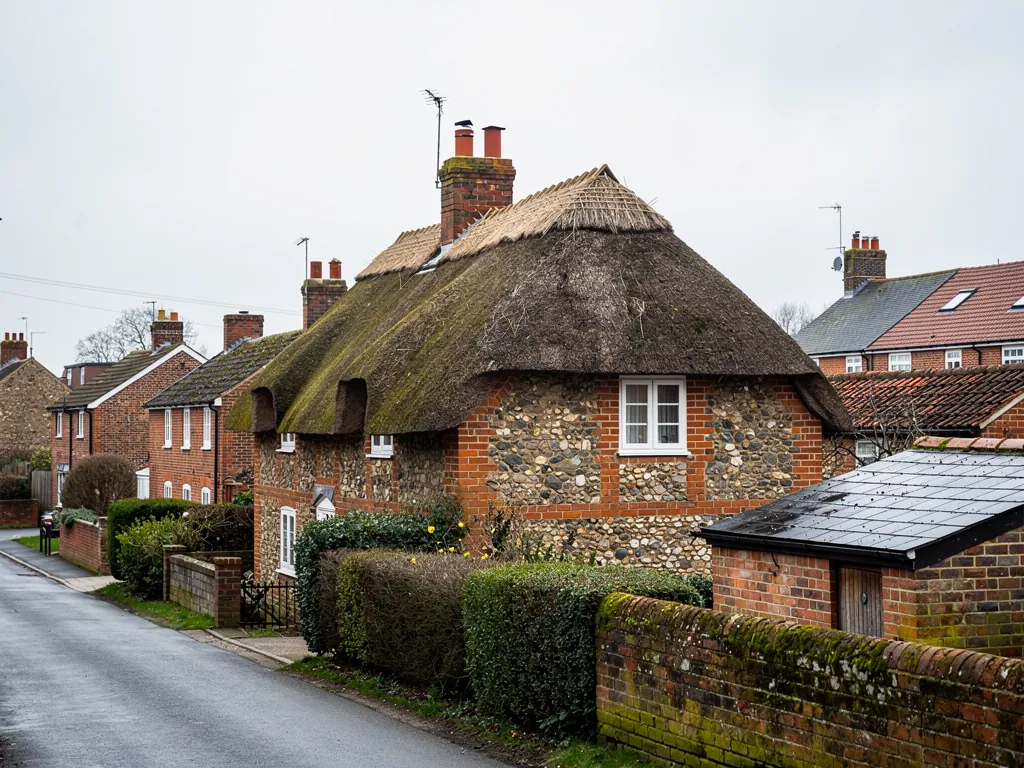
  • A thatched cottage in a Test Valley village with a brick chimney

    Late Victorian terraces near Station Road

    Around Station Road the housing is mainly unlisted terraces from the late nineteenth or early twentieth century. Where these terraces carry slate, it is likely to be Welsh, the slate the town historically used, with brick chimney stacks often shared between neighbours. Nail sickness, lead flashings worn thin at party walls and stained, cracked slates are typical faults on roofs of this age. Terraced houses share a roof line, so a fault next door often reaches yours.

  • Brick estate houses with concrete tile roofs among pine trees

    Flint, malmstone and the listed core

    Beyond tile and slate, the town uses sandstone, malmstone, flint and timber framing. Around 105 listed entries cover the town, mostly Grade II, and the market square statue of King William III is Grade I. Roofs on these buildings sit on old walls that move slightly, and a leak at the junction between roof and a stone or flint gable can be hard to trace.

25 road miles south of Basingstoke

Planning and building control in Petersfield

Petersfield lies wholly inside the South Downs National Park, so the National Park Authority is the planning authority, while East Hampshire District Council is the local council. That is different from Basingstoke, and it matters for roof work on anything unusual. The authority's 2017 conservation area appraisal for the town records around 105 listed entries, most of them Grade II, and lists the building materials that make up the town's character, among them handmade clay roof tiles, slate, flint, brick and timber frame.

A repair that matches what is on the roof now is normally accepted. A change of covering, such as clay tile to concrete or slate to a synthetic, may need consent, particularly in the conservation area or on a listed house, so ask the Authority through its website at southdowns.gov.uk before ordering anything. Building regulations are a separate matter, handled by your building control body, and we help with that where work is notifiable. For roof windows, read our skylight planning guide first.

Petersfield roof faults, causes and repairs

The old town, the Victorian terraces and the garages and extensions behind them all age differently, and the National Park setting adds rules on top. Each answer below explains what goes wrong, how to tell, and what we would do. For roofs elsewhere in our area, start from our main page, or look at nearby Alton.

Chapter 1: Why are slates sliding off our Victorian terrace near Station Road in Petersfield?

What we find

The terraced houses near Station Road were roofed in the late nineteenth and early twentieth century, and where one still carries its original slate, it is held by iron or early steel nails. Those nails rust where they pass through the slate, and the slate slips downwards out of its place. In a terrace the slopes are long and continuous, so the same fault can show on several houses at once.

From the pavement, look for dark gaps in the courses, slates sitting at an angle, or fragments in the gutter. In the loft a stain on the underside of the boards, or a damp patch on the party wall, shows where water has found a way in. Cracked and flaking slates make the problem worse, and the lead at party walls often needs attention at the same time.

What we fix

We start with a close inspection of the slope and the loft, then work out whether the slates are good enough to keep. Where they are, they are re-fixed with stainless nails or clips, and the broken ones replaced with reclaimed slate of the same thickness and size. Lead flashings along party walls and at chimney stacks are renewed with correct laps, since a terrace shares those details with its neighbour.

When the covering is finished, natural slate re-roofing is priced across the UK between £120 and £180 for each square metre, man-made slate between £90 and £130, and our fixed price follows the survey, once we have seen the roof. Read more under slate roofing.

Chapter 2: Can handmade clay tiles on an old Petersfield house be patched, or do they all have to come off?

What we find

Handmade clay tiles have a slight curve and an uneven face, which gives an old roof its soft, varied look. They also absorb water, and in a cold winter that water freezes and flakes the surface off, a fault called spalling. The wooden pegs or nails that hold them can fail too, and then a tile loosens and shifts. Where tile-hanging runs down a wall, the same faults reach the walls as well as the roof.

Look for tiles whose faces have peeled, a patch of bare battens, and tiles that sit lower than their neighbours. Inside the loft, you may see daylight through a gap or darkened timber below. Moss tends to cover a north-facing slope, and while it does little damage on its own, it keeps tiles wet and heavy for longer. Listed status makes it harder to choose what to do.

What we fix

Patching is very often the right answer. We lift the affected area, discard only the tiles that have failed and make up numbers with reclaimed or new handmade ones in a matching colour, so the repair blends in. Battens are replaced where they have rotted, and tiles are fixed with nibs and clips to current practice. Chimney flashings and ridges are renewed in lime where the building calls for it.

If one slope has gone and the rest is sound, only that slope is recovered. Our guide to why clay tiles flake explains the weathering in more detail. For a listed or conservation area building, the Authority decides on materials, so our photographs and written report are made to support your application.

Chapter 3: Why does water come in around the chimney on our terraced house in Petersfield?

What we find

Brick stacks on Petersfield's older terraces often serve two houses and stand astride the party wall. The joint between stack and roof is sealed with lead flashings and a back gutter behind the stack, plus soakers up the sides. Lead is long lived, but over the years it lifts, tears or splits along its folds, and the mortar that holds it in the brickwork crumbles away.

The stain in the bedroom or on the chimney breast tends to appear after wind-driven rain from one direction, which is why people struggle to track it down. The stack itself may also need attention: loose bricks, a leaning pot, and open joints let in moisture that runs down through the brick into the room. On a listed house, the stack is part of the building's character, which limits how it can be changed.

What we fix

We inspect the stack closely, test the lead and rake out failed joints. Typical work is new flashings and a back gutter in lead, then repointing in a mortar matched to the brick, so that the stack can breathe. Where the stack leans or the brick is crumbling, we may recommend a partial rebuild, and we explain why in the photographs.

Reported national figures for chimney leadwork go from £350 to £920 with an average around £570, and for a repair to the chimney itself £500 to £2,000; the quote you receive follows the survey. Our chimney repairs page walks through what is involved.

Chapter 4: What should we put on the flat roof of a garage or extension behind our Petersfield house?

What we find

Behind many of Petersfield's older houses stand garages, outhouses and rear extensions, and these are often roofed flat or at low pitch. Felt tends to split and blister. Some garages built decades ago carry corrugated sheets that may be asbestos cement, and these should not be drilled, scrubbed or walked on until they have been checked. Water pooling in hollows points to a deck that has sagged.

A building inside the National Park and conservation area may also have rules on its appearance, especially if it is visible from a public road. Signs of trouble include stains on the inside, soft boards at the edge, and a covering that crackles or lifts at the corners.

What we fix

For a felt or old membrane roof, we strip back to the deck, replace damaged boards and re-cover with EPDM or GRP. An EPDM covering for a single garage is typically priced in the UK between £1,200 and £2,500, and the exact figure on your quote follows the survey. Larger or awkward roofs cost more, since access and edge details take longer. Corrugated asbestos cement can be lifted off carefully and intact, which HSE treats as non-licensed work, provided there is a risk assessment, sensible controls and trained people on site. Overlaying is sometimes the alternative.

If the sheets would be broken up, the job becomes notifiable, which is why we plan to keep them whole. We tell you at the survey which route suits your building. Our garage roof replacement page compares the materials.

Petersfield roofing questions

Why do felt flat roofs on garages behind Victorian terraces fail at the edges?

The edges and upstands are where felt is stressed most, because water runs to the edge and the felt folds around it. Splits open where the felt turns up a wall or over the drip edge, and ponding behind the upstand makes it worse. We check these details first. A split near the edge can often be repaired, but an old felt with many cracks needs replacing.

Do National Park rules stop me replacing my roof?

They do not stop you, but they shape it. The South Downs National Park Authority is the planning authority in Petersfield, and it expects materials to respect local character. Matching repairs are normally fine, while a change of covering may need permission. Ask the Authority before ordering, and we will supply a written photo report to go with the enquiry.

Are the roofs on the late Victorian terraces worth repairing rather than replacing?

Frequently, yes. The unlisted terraced houses around Station Road date mostly from the late nineteenth or early twentieth century, and their slate can last well beyond that if the fixings and lead are sound. We check the nails, the battens and the party wall flashings. When repair is enough, we say so, and our work comes with a written guarantee that runs for ten years.

Can I fit a roof window in my listed house in the town centre?

Possibly, but listed buildings need consent, and the National Park Authority will want to see the proposal. A slim conservation rooflight is the style most likely to be accepted. Our conservation rooflights guide covers the detail, and we can supply photographs of the existing roof for your application.

The roof on our flint cottage has bats in it. Can the work still go ahead?

Often it can, though roosting bats and nesting birds are legally protected, which can mean timing the job around them or having a survey first. Old clay-tiled roofs next to flint walls are just the sort of place they use. Tell us at the start, and we plan the survey and any repair around it rather than risk disturbing a roost.

Get your free roof survey in Petersfield

Tell us what’s happening and we’ll call you back to arrange a visit. You’ll get photos of your roof and a fixed written quote.

  • No obligation
  • Photo report of your roof
  • 10-year workmanship guarantee

Rather talk? 01256 213956

Call Free survey