

Beacon Basingstoke Roofing

Roof cleaning and moss removal in Basingstoke

We clean and treat tiled, slate and flat roofs across Basingstoke: moss scraped off by hand, lichen and algae killed at the root, gutters cleared as part of the job. A free survey with photographs of the moss and the tiles under it comes first, then a written price that does not move. If a roof is too tired to clean, we tell you.

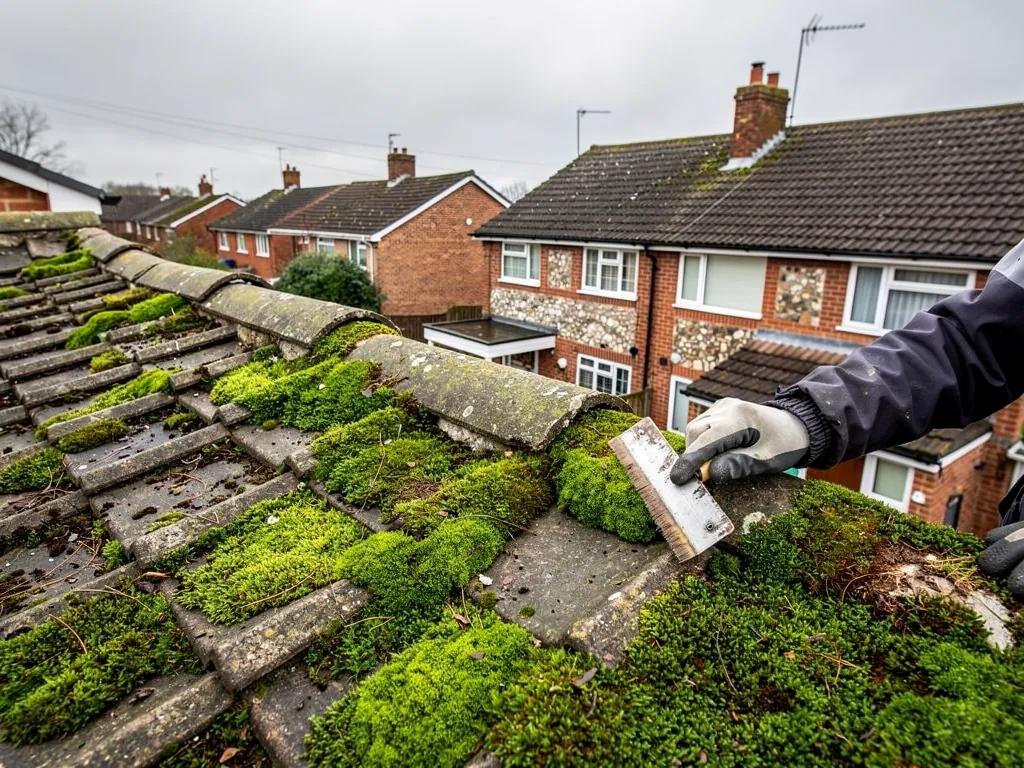
Thick green moss on concrete roof tiles being removed by hand with a scraper

Three ways we clean a roof

  • A clean concrete tiled roof after moss removal, half cleaned half mossy for comparison

    Hand removal of moss

    We lift moss and the thick mats beneath it off with scrapers and soft brushes, working up the slope so nothing is driven under the tile laps. It suits heavy growth and fragile or old coverings.

  • Brick estate houses with concrete tile roofs among pine trees

    Biocide treatment

    A biocide is a liquid that kills moss, lichen and algae at the root. We spray it on after the bulk is cleared, and the dead growth lets go over the following weeks, leaving the surface clean.

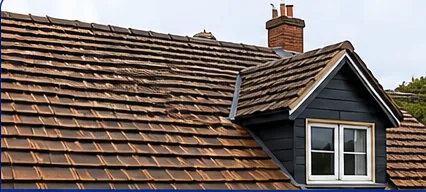
  • Slipped and cracked clay roof tiles

    Low-pressure washing

    Washing with the pressure turned down lifts loose dirt and dead growth without blasting the tile face. We use it on sound, modern coverings, and not on every roof, because some will not stand it.

Signs your roof needs cleaning or treating

  • Green cushions of moss packed along the tile laps and ridge line
  • Black or grey streaks running down a slope from the ridge
  • Gutters holding green sludge, loose grit or sprouting seedlings
  • Orange or grey crusty patches spreading across the tile faces
  • Water overflowing the gutter edge even in ordinary rain

A roof clean from first visit to final sweep

  1. 1Survey of the moss and coveringWe look at the covering, the ridge, the gutters and the moss itself, from the ground and up close.
  2. 2Photos, advice and pricePictures of the growth and the tiles beneath it, what we advise and why, and a single price in writing.
  3. 3Clear, treat and cleanWe remove the growth by hand, clear the gutters, then apply biocide or wash as the roof allows.
  4. 4HandoverGutters are run with a hose to prove they drain, and before-and-after photographs of every slope are sent to you.

The roof cleaning long read

Moss, lichen and staining on Basingstoke roofs, and the clean that suits each

Moss is easy to ignore and hard to judge from the ground. A roof can look merely green when the growth is already holding water against the tile, filling the valley and pushing debris into the gutters. Equally, a roof streaked black may be perfectly sound and only needs a tidy. Next comes what we find on the tiled roofs of Basingstoke's estates and the older slate and clay roofs in the villages nearby, and how we decide between scraping, treating and washing. Each chapter ties what we see to what we do. Where cleaning will not help, because the covering has failed, we say so and point you to pitched roofing or roof inspections. Gutters are cleared as part of the clean, but gutter repairs and replacements sit on the guttering, soffits and fascias page.

Chapter 1: What is the moss actually doing to my tiles?

What we find

Moss does not eat roof tiles, but it does change how a roof behaves. A mat of moss acts like a sponge. It soaks up rain and holds it against the tile surface long after the sky has cleared, so the covering stays wet for days instead of drying in a few hours. On concrete tiles, the most common covering on the post-war and 1980s housing around Basingstoke, that constant dampness slowly roughens and softens the surface skin of the tile. Moss roots then grip into the rough surface, and the cycle feeds itself.

The worst growth gathers where water lingers. We find it thickest along the lower edge of each course of tiles, in the shaded angle of a valley (the trough where two slopes meet), behind a chimney stack, and in the lap where one tile slides under the next. In those laps a thick cushion can block the path water is meant to take, and in a hard frost the water held inside the moss freezes and expands against the tile edge. Left for years, tiles on the north slope of a house can show a flaking, pitted face that scrapes off in your hand.

What we fix

We start by looking at how heavy the growth is and whether the tiles beneath are sound. Moss is removed by hand: a flat scraper lifts the mats, working from the ridge downwards so the debris travels down the slope and not under the laps, and a stiff brush then clears what is left. We never rake upwards against the lap, because that lifts the tile edge and can crack it.

Once the bulk is off, the surface is treated with biocide to kill the roots and spores that remain, which is what stops the bare patch from greening up again by next autumn. Our guide to moss removal methods compared sets out when each approach earns its place. Along the way we check each tile for cracks, slips and missing pieces, because the clean is the first time anyone has seen the whole slope close up.

If a tile is cracked, we replace it as part of the job and list it in the photo report. If dozens are crumbling, the survey shows you which, because cleaning a roof whose covering is nearly spent only flatters it. In that case we quote for repair or replacement and let you compare the two.

Before: Slipped and cracked clay roof tilesBefore
After: Clay tiled pitched roof gable on a red-brick houseAfter
Typical of what we find and what we leave behind. Every survey includes photos of your own roof.

Chapter 2: Why are my gutters full of green sludge and grit?

What we find

Gutters are where a mossy roof announces itself. Moss that dries out in summer breaks into crumbs, and rain washes those crumbs, along with the loose grit shed from weathered concrete tiles, down into the gutter. There they mix with leaves and dust into a dense, dark paste. The paste sits in the bottom of the run, grows its own moss, and sprouts the seedlings we often find standing in gutters above a front door.

A gutter choked like this stops doing its job. Water that cannot get to the downpipe spills over the front edge, runs down the wall below and can soak the fascia board behind the gutter, which is the timber board along the eaves that the gutter fixes to. The overflow can also get behind the bottom course of tiles and into the roof timbers at the eaves. The weight matters as well. A gutter full of wet sludge is much heavier than an empty one, and old plastic brackets can bend or snap under it.

What we fix

Gutter clearing is part of every roof clean we do, and we do it in the right order. The roof is cleaned first, so what comes off the tiles does not drop into a gutter we have already emptied. The gutters are then scooped by hand, flushed to confirm the water reaches the downpipes, and the outlets checked for blockages. All the sludge goes into bags and leaves with us.

While we are there, we look at the gutters themselves: joints that weep, brackets that have sagged, falls that have gone so water pools in one section. Clearing a gutter will not cure a leaking joint or a run that has dropped, and we tell you which you have. Any repair or replacement is quoted separately, and the guttering, soffits and fascias team can price it from the same survey photos.

Our guide to moss, gutters and drainage explains why drainage and cleaning belong together. If tile granules or moss keep returning to the gutter a few weeks after a clean, that is a signal the roof surface itself still needs attention, and we would sooner look again than let you pay for the same job twice.

Chapter 3: Should I have my roof scraped, treated or washed?

What we find

People ring asking for a pressure wash because that is what they have seen on a driveway. For a roof, it is rarely the first thing we reach for. Each method does a different job. Hand scraping removes thick growth and is gentle on the tile. Biocide kills what is left and slows regrowth. Washing shifts the surface staining and the loose film of dead growth.

The right choice depends on the covering and on how bad the growth is. A modern concrete tile in good order will tolerate a careful low-pressure wash. An old clay tile, a hand-made tile or a thin slate may crack, shed its surface or have its nibs and nail holes strained by water forced under the laps. A roof with a thick moss blanket needs scraping first whatever else follows, because washing thick moss just mashes it into the laps. The cheapest-looking quote often leaves out the step that does the real work, which is why two quotes for the same roof can differ widely.

What we fix

At survey we identify the covering, test the condition of the surface, and judge the growth. Then we put the method in your quote in plain words: what gets scraped, what gets treated, and whether any washing is involved at all. Most tiled roofs end up with a hand clear and a biocide, with washing kept to the gentler end of the range or left out altogether.

The table below shows typical UK prices reported for the two main approaches. They are third-party figures, and your fixed quote follows the survey. The things that move a price are access and height, how thick the growth is, the roof's size and pitch, whether scaffold is needed and how many gutters are to be cleared.

For a closer look at what each approach involves, our guide to roof cleaning costs breaks the numbers down. If someone offers to do the whole roof for a figure far below these ranges, ask what is missing from it: treatment, gutters, waste removal or the clearing of debris from your garden.

Chapter 4: Will a high-pressure jet strip my tiles or push water into the loft?

What we find

A tile is made to shed water running down it, not water fired up at it. A jet aimed from below the lap can drive water up and under the tile, into the batten space and onto the underlay, the waterproof sheet that lies beneath the tiles. On a sound roof the underlay copes with a small amount of that. On an older roof, where the underlay has split or was never fitted, the water goes straight through to the loft insulation and ceiling.

Pressure also damages the tile face. Concrete tiles are coloured by a thin surface layer, and a hard jet cuts through it, leaving a pale, rough, thirsty surface that holds moss better than before. We have seen roofs that were cleaned hard and looked bright for one summer, then greened faster than the neighbour's roof that was never touched. On clay and slate, a hard jet can chip edges, loosen pegs and lift weathered tiles that were held in place mainly by their own dirt. The runoff matters too. A jet sends moss, grit and chemicals everywhere at once, into flower beds, patios, neighbours' windows and car roofs.

What we fix

Where we wash, we keep the pressure low and the nozzle moving across and down the slope, never up under the laps. Our full answer is in the guide on whether pressure washing damages roof tiles. Before starting we test a patch, check that the covering is firm underfoot, and look in the loft for signs the underlay is thin or torn. If it is not safe to wet, we change the plan.

Asbestos cement roofs are a firm exception. Corrugated sheets of that kind, common on garages and outbuildings, must never be pressure-washed, because washing can break the surface and release fibres. The HSE asbestos pages explain why, and our answer on whether an asbestos roof can be cleaned covers the options. If we suspect a sheet is asbestos cement, we stop and tell you.

Everywhere else, the question is how much cleaning force the roof can stand, and the answer is often less than the owner expects. A gentle clean on a sound roof gets most of the benefit with none of the damage.

Chapter 5: What are the black streaks and orange patches, and do they need treating?

What we find

Moss is not the only thing that grows on a roof. Black or grey streaks running down from the ridge are usually algae, a thin film that forms on damp, shaded surfaces and darkens with age. Grey-green and orange crusts, flat against the tile like spilled paint, are lichens: a partnership of an alga and a fungus that grows slowly and clings hard.

Streaks are mostly a matter of looks. They tend to appear first on the slope that stays wet longest and spread as the film thickens. Lichen is different. It grips the surface with fine root-like threads that get into pores in the tile, and it is much harder to remove than moss. If it is scraped off dry, it often takes a layer of tile with it, leaving a pale, scarred patch. Orange and yellow lichens love the nutrients in bird droppings and in dust from nearby roads, so we often see them on ridges where gulls and pigeons perch, and on roofs facing a main road or a field.

Neither is a sign that the roof is failing. They do suggest a surface that stays damp, so we look at why.

What we fix

Algae and lichen are treated rather than scrubbed. We apply a biocide that soaks the growth and gets to the roots, then leave it to work. Dead lichen loosens over the following weeks and rain carries the residue away, which is gentler on the tile than scraping a living crust off. Light colonies may need nothing more than that and a soft brush.

Biocides are regulated products, so we use them as the label directs, keep them off plants and ponds where we can, and protect the ground and any water butts before spraying. Our guide to biocide treatments and how long they last explains what to expect, and the page on lichen, algae and black streaks shows how to tell them apart.

We are straight about results. A treated roof looks cleaner within weeks, not hours, and the black fade will not vanish the same day. Because the growth comes back wherever the roof stays damp and shaded, a treatment slows regrowth and does not stop it for good. If you want a quick, bright finish and are happy to pay for repeat visits, tell us at survey and we will plan around that.

Before: Crumbling mortar under a clay ridge tileBefore
After: House roof stripped to battens during a roof replacementAfter
Typical of what we find and what we leave behind. Every survey includes photos of your own roof.

Chapter 6: Why is only the north side of my roof green, and will cleaning it make a difference?

What we find

Walk around almost any house in Basingstoke and you will find the same pattern. One slope is green, the other is clean. The green side faces away from the midday sun, so it dries slowly after rain, and moss and algae need constant dampness more than they need anything else. The effect is stronger where a neighbouring house, a tall hedge or a tree throws shade for much of the day.

Trees add a second problem. Overhanging branches drop leaves, seeds and twigs onto the roof, and the debris collects at the foot of each slope and in valleys, where it rots into a feeding bed for moss. Branches that touch the tiles also rub the surface and keep the area beneath them damp. On estates where gardens were planted decades ago, trees that were once small now brush the roofline, and the shade has deepened with them.

The older Victorian and Edwardian streets of the surrounding towns show the same thing on clay and slate: green on the shaded roof pitch, and clean tile on the sunny side. The covering itself is rarely the cause. The shade, the trees and the damp around the roof are.

What we fix

Cleaning will transform how the shaded slope looks and take weight and wetness off the covering, but it will not change the shade. We say that at survey. What we can do is give the slope its best chance of staying clean. We clear the leaf litter at the eaves and in the valleys, which would otherwise start the growth again, and we note any branches that need cutting back.

Tree work is yours to arrange, and we recommend you do. A branch that rests on the tiles hurts the roof twice, by shading it and by rubbing it. Our answer on why moss grows on one side of the roof goes into the reasons. Some owners also fit zinc or copper strips below the ridge, so rain running over them carries metal salts down the slope. Our answer on whether zinc strips stop moss sets out what they do and do not do.

Nesting birds and bats are protected, so work near nests or roosts may need to be timed or checked first. If we find either in the roof, we stop and talk to you before going any further.

Chapter 7: How do I tell a roof that needs cleaning from one that needs repairing?

What we find

Cleaning is the right job for a roof that is sound but dirty. It is the wrong job for a roof that is worn out, and the trouble is that moss hides the difference. Under a thick mat you cannot see a slipped tile, a cracked one, or a tile whose surface has crumbled to nothing. Once the moss is off, the roof is bare and you may find what it was concealing.

The roofs we are most cautious about are the old ones: clay tiles with softened faces, slates that have delaminated into thin layers, and 1960s concrete tiles that have thinned with weathering. Another warning sign is the ridge. If the mortar bedding under the ridge tiles has cracked or fallen away, those ridge tiles may be loose and will not tolerate scraping. Inside the loft, daylight through the roof, dark water stains on the rafters or damp insulation tell you the covering is already letting water in, whatever it looks like on top. Cleaning it would not stop the leak, and it would cost money that belongs in the repair.

What we fix

We inspect before we quote, and the photo report separates what is a clean from what is a repair. Where the roof has years left in it, we clean and treat it. Where a handful of tiles are cracked, we replace them as part of the job. Where the ridge is loose, it is quoted separately. If the covering has failed, we show you the evidence and explain what replacement would involve on our roof replacement page.

A good clean is also a useful test. With the moss gone, it becomes clear how the tiles sit, and any weakness shows. If you are weighing whether it is worth the money, our answer on whether roof cleaning is worth it covers the case for and against. If a leak is already coming through, an emergency roof repair comes first and the clean can wait.

The table below shows what we look at on a roof before deciding.

The survey for a roof clean settles whether the covering is firm enough to be worth cleaning at all. We press the tiles on the shaded slope and look at the ridge bedding, the valleys and the gutter joints before quoting. Firm tiles get the scrape and the treatment, gutters included, and every bag of debris leaves with us. Crumbling ones are better spent on a repair, and the photographs show you why. Cleaning carries a 10-year workmanship guarantee. A WhatsApp photo of the mossiest slope to 01256 213956 is enough to book the visit.

Roof cleaning: questions we get asked

Will moss grow back after a roof clean?

Where the roof stays damp and shaded, it can. A treatment kills the roots and spores on the surface, which slows regrowth, but it cannot change the shade, the trees or the north-facing slope. A roof that is hand-cleared, treated and kept free of leaf litter in the gutters and valleys stays cleaner for longer than one left alone. We explain what to expect in the survey, and our answer on how long before moss grows back goes into more detail.

Do you need scaffolding to clean my roof?

Not always. A low, accessible roof can often be worked from ladders with roof ladders and crawling boards. A steep or tall roof, or one with a conservatory or extension underneath, may need scaffold or a tower for safe access. We decide at the survey and put any scaffold in your fixed quote, so there is no surprise on the day. Our guide on roof cleaning safety, access and scaffold explains how we choose.

Is the biocide safe for my pets and garden?

Biocides are regulated products, and we use them as the label directs. We cover plants where we can, keep run-off away from ponds and drains, and ask you to keep pets and children inside while we spray and until the surface has dried. We will tell you the product we use and the drying time before we start, so you can plan the day around it.

Can you clean a roof that has solar panels on it?

Yes, with care. The panels and the tiles around them are cleaned by hand, working from the ridge down so debris does not catch behind the panel frames. We avoid high-pressure water around panel fixings and cabling, and we never walk on the glass. If the roof carries panels, tell us at the survey so we can plan access and agree what is in the quote.

Will cleaning my roof damage the tiles?

Done gently, it should not. Hand scraping with the right tools and a low-pressure rinse are kind to a sound covering. Damage comes from hard jets, scraping upwards against the laps and treading on brittle tiles. If your tiles are old or fragile, we may recommend treatment alone, or a repair first. Our answer on whether roof cleaning makes a mess covers the garden side.

How do I know the clean was done properly?

You see it. The photo report records the roof before we start and again once the work is complete, with the gutters and valleys included. We walk you round the finished job, answer questions, and take away every bag of moss and debris.

Get your free roof survey

Tell us what’s happening and we’ll call you back to arrange a visit. You’ll get photos of your roof and a fixed written quote.

  • No obligation
  • Photo report of your roof
  • 10-year workmanship guarantee

Rather talk? 01256 213956

Call Free survey