Beacon Basingstoke Roofing

Roofers in Colt Hill (Odiham)

Colt Hill is on the north-east edge of Odiham, 9.8 road miles east of Basingstoke, where the road meets the Basingstoke Canal wharf. Many of its roofs are canalside and old, with listed buildings in and beside a conservation area. We photograph your roof first and then send you a fixed written price.

White uPVC fascia, soffit and guttering under a tiled roof

Roofs we see at Colt Hill

  • Clay tiled pitched roof gable on a red-brick house

    Listed cottages and houses

    Colt Hill House, 1 to 4 Albert Cottages and Wisteria House, just south of the conservation area, are all listed Grade II. Buildings of this kind carry roofs that were made to last for centuries, but they now ask for steady, like-for-like care: matching tile or slate, lead in the right places, and chimneys pointed in a mortar that suits the old brickwork.

  • Slipped and cracked clay roof tiles

    Wharf and canalside buildings

    Wharf House, The Water Witch pub and the Talley Office are listed buildings in the Basingstoke Canal Conservation Area, and Odiham Gas Works was built here in 1847, apparently to use the wharf for coal deliveries. Working buildings like these can have lower pitches, deep eaves, parapet gutters and outbuildings with different coverings joined together, which means more junctions where water can enter.

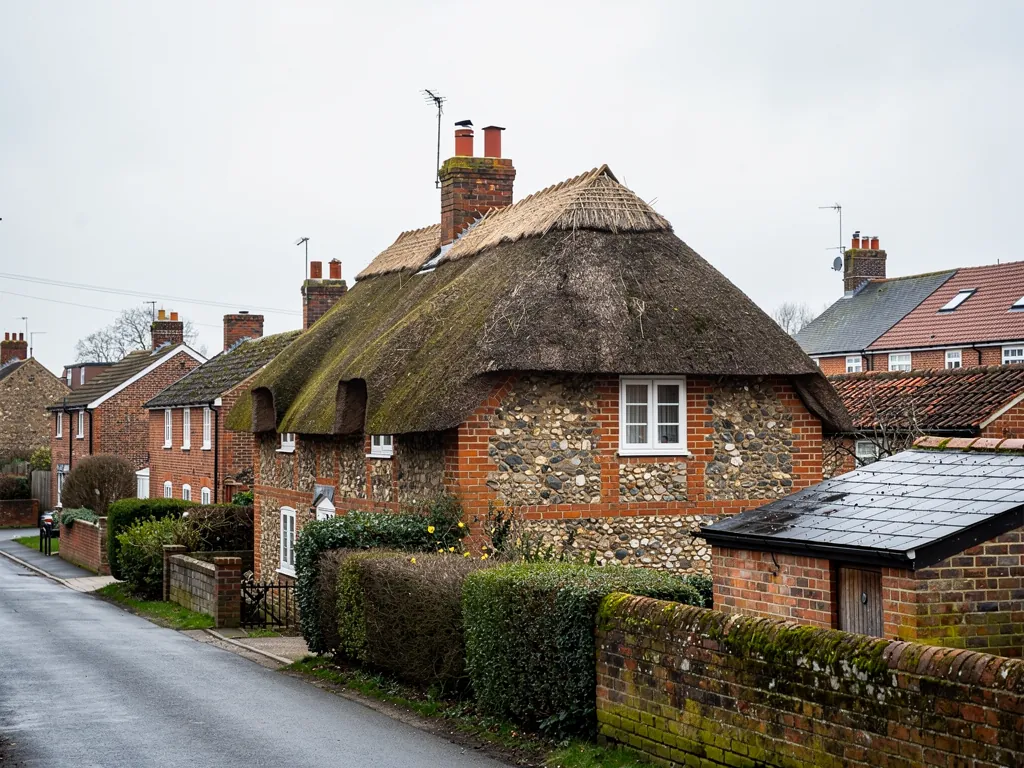
  • A thatched cottage in a Test Valley village with a brick chimney

    Houses by the water

    Colt Hill meets the canal at the wharf, with trees and water close by. Shaded roofs near water stay damp for longer after rain, so moss, algae and blocked gutters are the everyday concerns. Rotten timber at the eaves and bargeboards is a common result on houses beside water.

9.8 road miles east of Basingstoke

Planning and building control at Colt Hill

Colt Hill falls under Hart District Council for planning and building control. Much of Colt Hill lies within Hart's Basingstoke Canal Conservation Area, with a group of listed houses just south of the boundary, and Colt Hill Bridge is one of nine canal bridges that are listed buildings. Wharf House, The Water Witch pub and the Talley Office are listed too. Hart publishes an appraisal of the area on its Hart District Council website, which records the character the council wants to protect. It is worth reading before any roof work on an older building.

Like-for-like repair in a conservation area is normally straightforward, but changing the material or appearance of a roof may need consent, and a listed building needs consent for a wider range of changes. Talk to the council's conservation officer well ahead of ordering, and keep the work to matching materials. A complete re-roof may also be notifiable under Building Regulations, and we look after that for you. If you are considering a roof window, read our conservation rooflights guide first, as this is not a spot for a standard rooflight.

What we find on Colt Hill roofs

Colt Hill is a short stretch of road, not a large district, but it packs in an unusual number of listed buildings for its size. Anyone who works on a roof here has to think about listing and conservation first, and about damp and water second. The buildings range from old cottages to the working buildings by the wharf.

If your property is further into Odiham than the wharf, our main page on roofers in Odiham covers the wider village.

Chapter 1: Can we replace the tiles on our listed Colt Hill cottage with a cheaper modern tile?

What we find

Listed status means that the roof is part of what is protected, and the materials count as much as the shape. Cottages like those at Albert Cottages are likely to have handmade clay tile or natural slate in a specific colour and texture, and a machine-made substitute will look different from the road even if the colour is close. The council will usually ask why a material has to change, and a roof that is merely tired is not a good reason.

Most owners ask this question when they are quoted for a full strip and find the price steep. The underlying cause is often a handful of failed tiles, nail sickness along one slope, or a lead flashing at the chimney, none of which need a new covering at all.

What we fix

We start with a photographic survey of every slope, which shows which tiles are cracked, which are sound, and where the fixings have failed. Repair is usually possible: we take out only the damaged tiles, keep the good ones for reuse and match the replacements for colour, texture and thickness from reclaimed or handmade stock. New battens go in under the repaired area and tiles are fixed with stainless nails or clips. See our page on matching new tiles to an old roof for how matching works.

Where the survey shows that a bigger job is justified, we give you the photographs to take to the conservation officer before any materials are ordered. Single slate repairs are reported at £100 to £250 for labour in typical UK ranges, with scaffold extra, and the survey comes before any fixed quote.

Chapter 2: Why does the roof of our old wharf building leak at the parapet gutter?

What we find

Working buildings from the canal age, such as the old wharf and gas works premises, were sometimes built with low-pitched roofs behind a parapet wall, or with a gutter set into the roof slope rather than hung outside the wall. These are called parapet and valley gutters, and they are lined with lead or, in later years, with bitumen felt or a single-ply membrane. They handle large volumes of water from the roof above, and they are not forgiving when they block.

A parapet gutter that holds standing water will find any weak point in its lining, and leaves, moss and bird droppings in the outlet make the problem worse. The first sign inside is often a stain beside the outer wall at the top of the building, long after the water has started tracking through the brickwork.

What we fix

We clear the gutter and outlet first, check the fall so that water runs away, and inspect the lining for splits, lifted joints and failed laps. A small split in lead can be bossed back or patched; a gutter lined in failed felt is better relined. Where lead is the right material, we use it at an appropriate thickness for the length and fix it with properly formed rolls and drips. Our lead roofing and leadwork page explains the choices.

For an old working building, the survey also looks at the chimneys, the stone or brick copings, and the roof to wall junctions, because water often enters elsewhere than where the stain appears. Your fixed quote follows the survey, and if the repair is a local one, we quote for that and not for a new roof.

Chapter 3: What causes the green growth and rotten fascia on our house beside the Basingstoke Canal at Colt Hill?

What we find

Canal frontage means damp air, standing water nearby and often tall trees at the water's edge. Roof slopes that stay wet through the day grow moss and algae, which hold more water against the tiles and feed on it. The gutters fill with leaves and moss debris, then overflow onto the fascia, the board along the eaves that carries the gutter.

Timber that gets wet again and again goes soft. We often find that a fascia on a canalside house looks sound with a coat of paint but pushes in with a screwdriver, and the soffit (the board under the eaves) and the rafter ends behind it are damp. If the problem is left, water runs down the inside of the wall.

What we fix

We clear the moss by hand and treat the slope with a biocide, then clear the gutters and downpipes. Rotten fascia and soffit boards are cut out and replaced, with the rafter ends checked and treated or spliced if they have been affected. Our page on rotten fascia boards sets out how that repair works. Because Colt Hill is in a conservation area, we use profiles that match the existing style, and we suggest checking with the council before you change colour or material.

Typical UK prices for a full uPVC roofline on a semi run from £1,800 to £3,500, and hand moss removal is reported at £748 to £978. Both are for guidance, so your fixed quote follows the survey. Bats and nesting birds can use old eaves along the canal, so we check before opening them up.

Chapter 4: Is the chimney on our old Colt Hill house safe, and can it be repaired without a rebuild?

What we find

Chimney stacks on old houses are exposed on all four sides, and they take wind, rain and frost directly. The pointing between the bricks weathers away first, then the flaunching (the mortar cap that holds the pots in place) cracks, and water goes in at the top. Inside the stack, flue gases turn damp brick into a salty mess that can stain the chimney breast in the room below.

The junction with the roof is the other weak point. Lead flashings and soakers around the base can lift or split, and on listed houses the original lead may be centuries old. A leaning stack, loose bricks, or a lump of mortar on the roof below are signs that the work cannot wait for much longer.

What we fix

We look at the stack from the roof, photograph each face, and check the flashing and flaunching. Often the right repair is repointing in lime mortar, a new flaunching and new lead flashings, not a rebuild. Lime suits old soft brick because a hard cement mix traps moisture and causes the brick faces to spall. Where bricks are loose or the stack leans, we take down only the top section and rebuild it in matching brick. See our guides to chimney repointing and rebuild or repair for how we decide.

Chimney repointing is reported at £450 to £1,200 in typical UK ranges, and the fixed written quote follows the survey. On a listed house, we keep the work to like-for-like and give you the photographs for the conservation officer.

Colt Hill roofing questions

Do the listed canal-side buildings at Colt Hill need consent for roof repairs?

Like-for-like repairs usually do not, but a change of material, colour or appearance may need listed building consent or conservation area approval. Colt Hill sits within the Basingstoke Canal Conservation Area, and several buildings are listed. Always ask the council's conservation officer before you start. We can survey and photograph the roof, then price a repair that matches the existing tile or slate.

Which Colt Hill buildings are listed, and does that affect a small roof repair?

Colt Hill Bridge, Wharf House, The Water Witch pub and the Talley Office are listed, as are Colt Hill House, Albert Cottages and Wisteria House, which are Grade II. A small like-for-like repair, such as replacing a few tiles with matching ones, is normally fine. Anything that changes the look or material needs consent first, so ask the council's conservation officer at Hart District Council before you start.

Can you work on a roof beside the canal wharf without blocking the towpath?

Usually, yes. We plan access from the property itself where we can, and where a scaffold or ladder has to go near the towpath, we set it up so walkers can still pass, with the area fenced and signed. Waste is taken away and the ground is kept clear of debris. Whether permission is needed for equipment on the towpath side is something to check with the Basingstoke Canal Authority, which manages the canal, before we book a date.

Will the roof of an old canal building need a bat survey before repair?

It may. Bats and nesting birds are protected, and old brick buildings with open eaves, timber and quiet roof voids near water are the kind of place they use. If we see signs during the survey, such as droppings or gaps being used, we stop and tell you, and the work is timed or planned around them. A survey costs time rather than a fixed sum we can predict here.

Do you quote for a repair first, or is a listed roof always a re-roof?

We quote for repair first. On a listed building, keeping the original material is the point, so a re-roof is the last option and not the first. Our survey photographs show which parts have failed, though a fixed quote comes after the survey. If the roof has years left in it, we say so. Work we carry out comes with our written 10-year workmanship guarantee.

Get your free roof survey in Colt Hill (Odiham)

Tell us what’s happening and we’ll call you back to arrange a visit. You’ll get photos of your roof and a fixed written quote.

  • No obligation
  • Photo report of your roof
  • 10-year workmanship guarantee

Rather talk? 01256 213956

Call Free survey