

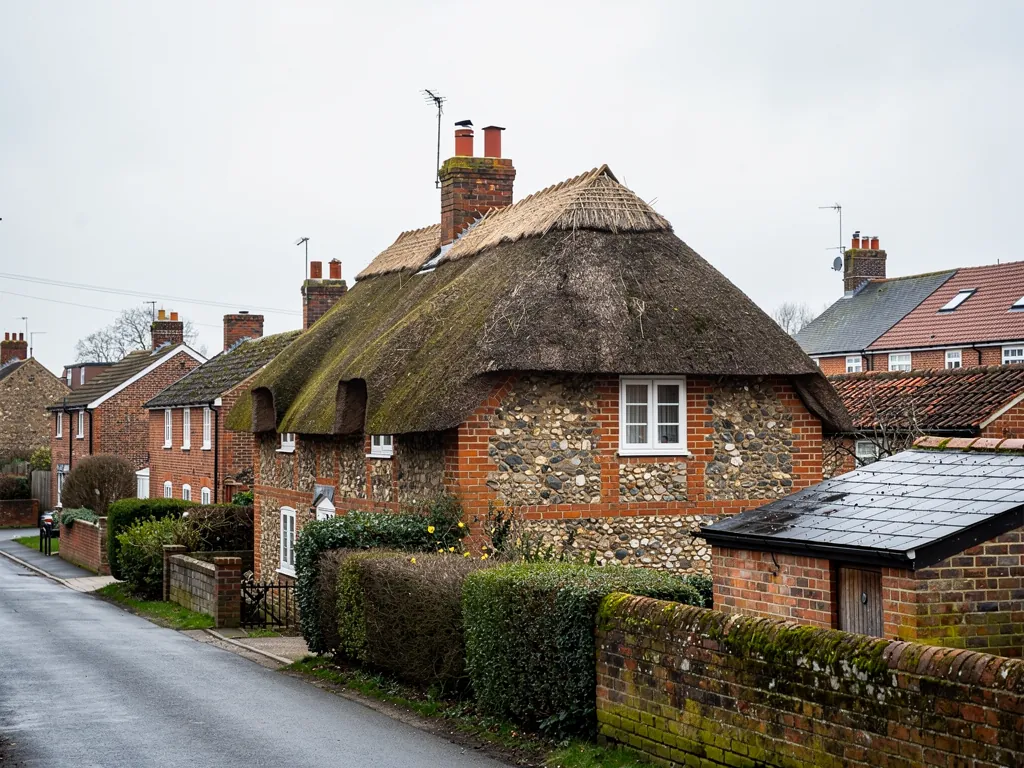


Chapter 1: Why are the handmade clay tiles on our steep Odiham roof slipping out of place?
What we find
Plain clay tiles are small, and on a steep pitch each one is held by two nibs hooked over a batten, plus a nail or a wooden peg through every second or third course. After a century or two, iron nails rust and snap, and oak pegs rot at the hole. The tile then drops by a few centimetres, leaving a visible gap in the course or a tile resting on its neighbour. Hart's appraisal notes that many of the steep pitches here suggest the buildings were once thatched.
Hand-made tiles are softer than machine-made ones, so frost can flake the face and leave a pitted surface that holds water. A roof can look sound from the road and still have dozens of loose tiles on the rear slope, which is why the clue is usually in the garden: broken pieces on the lawn, or one slope noticeably greener than the rest.
What we fix
We open up just the failed section, set aside every tile that is still sound, and renew the battens beneath. Missing and cracked tiles are replaced with reclaimed or handmade plain tiles picked to suit the colour and curve of the originals, which is also what a conservation officer would expect to see. The tiles are then fixed with stainless or copper nails, or clips, instead of reusing corroded iron.
It matters that the roof is not stripped further than it needs to be: patching sound old tiles is both cheaper and more faithful to the building than a new roof. If the underlay below has perished, we say so and renew a section with breathable membrane. Where more than a patch is needed, our pitched roofing page describes a full re-cover, and the quote for any repair follows from the survey photographs.
