
Beacon Basingstoke Roofing

Roofers in Ramsdell

Ramsdell is a village 6.7 road miles north-west of Basingstoke, about a mile from the A339 towards Newbury, and its buildings range from timber-framed thatch to 19th-century brick, with slate on the occasional later building. In and around the conservation area we survey with photographs, explain each fault plainly, and put a fixed price in writing.

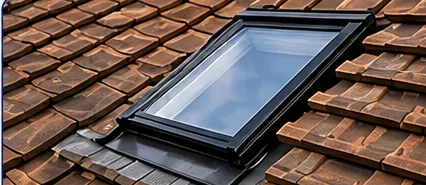
Roof window fitted in a tiled pitched roof

The roofs of Ramsdell

  • A Hampshire village cottage of flint and brick with a steep clay plain tile roof

    Timber frame and thatch

    The council's appraisal says Ramsdell's earliest buildings are timber-frame and thatch, and those cottages set the look of the village. Thatching is its own craft. What reaches us is the roof detail around it: the brick stack that rises through the straw, the lead where a tiled extension meets the thatched range, and the gutters on later lean-tos. Roofs like these fail first at the joints between materials, so that is where we look hardest.

  • 1930s semi-detached houses with hipped clay tile roofs and bay windows on a suburban road

    Brick-built cottages

    Brick took over from the 18th century with the local brickworks, and the appraisal notes that most unlisted buildings in the village are 19th-century brick. Where those cottages carry plain clay tile, the tiles are small and double-lapped, hung on battens (the timber laths the tiles hook over). Frost flakes the softer faces, fixings corrode, and a sound roof can still lose tiles one at a time from the exposed slopes.

  • House roof stripped to battens during a roof replacement

    Slate on the later buildings

    The appraisal records slate and flint arriving in the late 19th century, and only on more consciously designed buildings such as the church. The Vicarage, with its large hipped slate roof slopes, is one the appraisal picks out. Slate is still the exception in Ramsdell, which makes matching matter: a modern, flatter slate beside an old one looks wrong from the lane. We check size, thickness, colour and fixing before we recommend a single replacement.

6.7 road miles north-west of Basingstoke

Consent and building control for Ramsdell roofs

Basingstoke and Deane Borough Council is the authority for every permission and inspection that touches a Ramsdell roof. The village has its own conservation area, first designated in April 1992, and the council's Ramsdell Conservation Area appraisal sets out what it treats as the character of the place: timber frame and thatch, then brick, with slate used sparingly. Read it before planning work on an older house, because it tells you which materials the council expects to see on a roof and which it would question.

Repairing like for like is normally straightforward. Changing the material or the appearance of a roof, for example clay tile to concrete, or thatch to anything else, may need consent, and the conservation officer is the person to ask before any tile is ordered. A tidy repair or a partial re-cover will often fall below the Planning Portal line for building control, which is work touching under a quarter of the building envelope and under half of the roof, and where a bigger job is notifiable we deal with that side. Fitting a roof window? Our planning guide for roof windows covers the rules, which are stricter in a conservation area. A protected species can live under old tile, so timing or an ecology survey may come before the scaffold does.

What we find on Ramsdell roofs

Ramsdell sits in countryside the council's conservation appraisal describes as clay, gravel and sand with some woodland, and the roofs show it. Old clay tile slips, brick chimneys let go of their mortar, shaded slopes stay green and the occasional slate needs a careful hand.

Chapter 1: Why are tiles slipping out of the roof of our old brick cottage in Ramsdell?

What we find

On a cottage that has stood for a couple of centuries, the usual cause is not the tile itself but what holds it. Plain clay tiles were hung on oak pegs or iron nails, and over time the nails rust through and the pegs rot, so a tile that looks fine from the lane quietly loses its hold. Roofers call this nail sickness. The first sign is a tile sitting a little lower than its neighbours, or fragments of clay in a flower bed under the eaves.

Frost adds to it. Softer, older clay takes in water in winter, the face flakes off in thin layers, and a tile weakened this way snaps at the nail hole in a gust. In the loft you may see daylight through a course, or damp on the underside of the battens beneath the slipped area. Rural, open slopes take the worst of the wind, so the fault tends to start on the side facing the weather.

What we fix

We start by photographing the whole roof and tapping through the tiles to find which ones are sound. Often only a patch has failed. We strip that section, keep every good tile, and replace broken ones with reclaimed or handmade plain tiles matched for colour and curve, so the repair does not stand out. Fresh battens are laid where the old ones came off, and each tile is secured with nails and clips chosen for the job, not hung back on the old corroded ones.

If the survey shows the nails have gone across the whole roof, patching stops making sense, and the photographs let you see the evidence for yourself. Our guide to nail sickness explains how to spot it from the ground. Conservation area status makes a careful repair the sensible route either way.

Chapter 2: Is the chimney on our Ramsdell cottage leaking where it meets the roof?

What we find

A brick stack on an old cottage is a tall, exposed structure with several joints that move at different rates. The brick is often softer than modern stock and was laid in lime mortar, which flexes and breathes. Rain and frost wear the mortar back from the face of the joints, and water then tracks down into the brickwork. Where the stack leaves the roof, a strip of lead called the flashing seals the gap, with small lead pieces called soakers woven in with the tiles up each side.

When that lead lifts, cracks or was fixed with a smear of sealant years ago, rain gets in at the stack, not through the tiles. Inside you will see a stain on the chimney breast or on the ceiling beside it, usually worse after wind-driven rain. On cottages where a tiled range meets thatch, the stack is often the only brick and lead on the roof and takes all the weather.

What we fix

We repoint the open joints in lime, never a hard cement mix, because cement traps moisture and makes soft brick spall. The flashings and soakers are renewed in code-appropriate lead cut to the existing tile gauge, and the lead is dressed so it sheds water rather than collecting it. Our soakers and step flashing page shows how the pieces fit together.

Typical UK ranges reported for this work are £350 to £920 for chimney leadwork, and £450 to £1,200 for repointing a stack. Your fixed quote follows the survey and lists what is repointed and what is relined. If the stack has leaned or the brick has gone beyond repointing, we say so and show you where. Our chimney repairs page sets out when a rebuild is the better answer.

Chapter 3: Why does the roof of our house near the woods at Ramsdell stay green and damp?

What we find

Ground made of clay, gravel and sand with some woodland holds moisture, and shade from trees keeps it there. A roof slope that gets little direct sun stays wet long after rain has stopped, and moss and lichen settle into the joints between tiles. Moss looks harmless, but it acts like a sponge, holding water against the clay and, in winter, feeding frost damage to the tile faces.

Overhanging branches add leaf litter and twigs that collect in valleys and at the back of gutters, so water backs up and finds a way under the bottom course of tiles. Clogged outlets show as a green streak down the wall, an overflowing gutter in heavy rain, or a damp patch on a ceiling near an outside wall. Nesting birds sometimes use blocked eaves too, which is one more reason to look before climbing up.

What we fix

We remove moss by hand and treat the slope with a biocide, not a pressure washer, because a jet can strip the fired face from old clay and drive water under the laps. Gutters and outlets are cleared on the same visit, and we check the tiles beneath the moss, because they often hide a cracked one that was the reason the roof was staying wet. Where branches touch the roof, we recommend a tree surgeon cut them back; we do not take that on ourselves.

Typical UK prices reported for hand removal and biocide are £748, £863 and £978 for a small, average and large house., with the gutters itemised. Our roof cleaning page explains the methods and how often a roof needs the treatment.

Chapter 4: Can a few slipped slates on a Ramsdell church-era building be replaced one by one?

What we find

The appraisal places slate in Ramsdell towards the end of the 19th century, on carefully designed buildings, so a slate roof here is usually a deliberate, good-quality one. Each slate is held by two nails through its upper part, and the nails are the weak point. Iron fixings rust in damp air until the slate drops, or slides down a few centimetres and exposes the nail head to the rain.

You will notice a slate resting on the lead or sitting in the gutter, or a dark gap in an otherwise even slope. Slates that have delaminated, flaking in thin sheets, point to ageing stone, and when they start going across a whole slope the roof is telling you something about its remaining life. A roof of this kind can be a repair job for many years, provided it is looked after before the felt beneath is soaked.

What we fix

A single slate is replaced by sliding out the broken one, fixing a lead strip called a tingle or a slate hook, and slipping a matched slate into place, so the neighbouring slates are not disturbed. We take care with colour, thickness and size, as a new slate against a weathered one can look wrong for a year or two, so we use reclaimed slate where the roof is visible from the road.

Typical UK figures reported for one replaced slate are £100 to £250 in labour, then a few pounds up to £25 for the slate itself, and a scaffold tower adding £300 to £800 if one is needed., slate by slate. If a slope has gone beyond repair, natural slate re-roofing is typically reported at £120 to £180 per square metre. Our slate roofing page covers the choices.

Questions from Ramsdell homeowners

Our Ramsdell house has old clay tile and some slate. Can the two be mixed on one repair?

They can sit side by side on a house, but each needs its own fixing. Clay tile hangs on nibs over battens, slate is nailed through holes, and a replacement should match the original in size, colour and thickness so the roofline stays even. Brick became the local material from the 18th century, with slate mostly reserved for more consciously designed buildings, so a slate patch on a clay roof is worth questioning first.

Do I need consent to repair the roof of a cottage in the Ramsdell conservation area?

Putting back the same tile or slate is usually fine. Switching to a different material, or altering how the roof reads from the street, is where consent can come in. The conservation area was designated in 1992 and the council keeps an appraisal of it. Ask the conservation officer at Basingstoke and Deane before you order anything, and we will give you our photo survey to take along.

Can you match handmade clay tiles on an old Ramsdell roof?

In most cases we can come close, using reclaimed tiles for the visible slopes and new handmade plain tiles where the match is less critical. We bring samples to hold against the roof in daylight before anything is ordered, because tiles that look right on a pallet can look quite different once they are up. Colour and camber both matter, and we agree both with you first.

Will a larger re-roof in Ramsdell need building control?

It can. Repairs touching under a quarter of the building envelope and under half of the roof do not normally need an application, but past that point approval is needed and the insulation may have to be improved. A new covering that is much heavier than the old one can also need approval. We handle the building control side where the work is notifiable.

Is it safe to leave nesting birds in the eaves while you repair the roof?

Wildlife law covers nesting birds and bats, so we check before disturbing eaves, thatch edges or roof voids. If we find signs of either, the work may need to wait for a different season or be guided by a survey. We would rather tell you that at the first visit than discover it halfway up a scaffold. A short delay is usually all it takes.

Get your free roof survey in Ramsdell

Tell us what’s happening and we’ll call you back to arrange a visit. You’ll get photos of your roof and a fixed written quote.

  • No obligation
  • Photo report of your roof
  • 10-year workmanship guarantee

Rather talk? 01256 213956

Call Free survey