Beacon Basingstoke Roofing

Roofers in Aldermaston

Aldermaston is a Berkshire village 10.9 road miles north of Basingstoke, strung along The Street on the A340. Most of its houses date from the 17th to the late 19th century, many in red and blue brick, and most are listed. We survey the roof with photographs, then put a fixed price in writing.

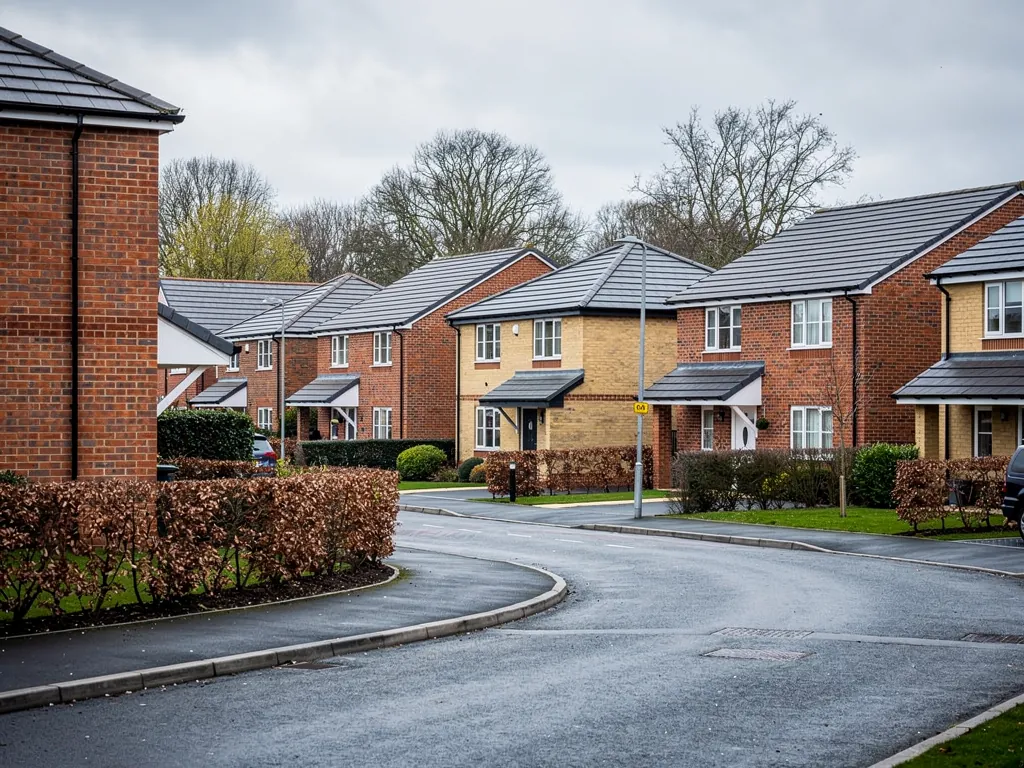
Modern 2000s brick houses with grey concrete tile roofs on a new estate near Basingstoke

Roofs we see in Aldermaston

  • Modern 2000s brick houses with grey concrete tile roofs on a new estate near Basingstoke

    Listed brick houses on The Street

    The village is built mostly of houses from the 17th to the late 19th century, in local red brick with blue brick worked in, and most of them are Grade II listed. Under the roofs are old timbers that have moved over the centuries, so the tile courses are rarely dead straight. That affects how a repair is planned: we work with the roof as it is and match what is already there.

  • Clay tiled pitched roof gable on a red-brick house

    Canalside and Wharf buildings

    Aldermaston Wharf has its own conservation area, set where the Kennet and Avon Canal runs along the parish boundary. Buildings by the water tend to be damp for longer after rain, and older buildings there often have lean-to extensions with roofs of their own. Moss, blocked gutters and failed lead at the abutments are the usual reasons we are asked to look.

  • Slipped and cracked clay roof tiles

    Chimneys, extensions and outbuildings

    Older brick houses carry tall stacks, and the stack is often the first part of the roof to need work, because the mortar joints take the full weather. Behind many of these houses sit later additions: a kitchen flat roof, a lean-to or a brick outbuilding. Each has a different covering and a different way of failing, and each is checked on its own during the survey.

10.9 road miles north of Basingstoke

Planning and building control in Aldermaston

Aldermaston is in West Berkshire, so West Berkshire Council deals with planning, conservation and building control. The council has designated two conservation areas here: Aldermaston, from 1971, and Aldermaston Wharf, from 1990. Most of the houses in the village are Grade II listed, and 51 structures in the parish are listed in total. The council's website is where to look for the conservation team and for building control.

What that means for a roof is simple to state. Like-for-like repair, in the same tile, slate or lead, is usually fine. Changing the material, the colour or the way a roof looks can need consent, and on a listed house that includes the chimneys, so speak to the council's conservation officer before anything is ordered. We photograph the roof as it stands, which gives you a clear record to show them. A full strip and re-cover can also be notifiable under the Building Regulations, and we deal with that side for you. Thinking of adding a roof window? Our guide to planning permission for roof windows explains the rules, which are tighter on listed houses and in conservation areas.

What we find on Aldermaston roofs

The roofs in Aldermaston are old, listed in many cases, and built in local brick, so the sensible approach is to repair first and replace only what has to go. Four faults come up again and again: tired clay tiles on the old houses, weathered chimney stacks, moss and damp on shaded slopes by the river and canal, and the flat roofs and lean-tos added to the backs of old buildings. Here is what causes each one and how we deal with it.

Chapter 1: Can the clay tiles on our listed house in Aldermaston be repaired instead of replaced?

What we find

Plain clay tiles on a house of this age are hung over timber battens (the thin laths the tiles hook onto), and each tile is held by a nib at the top and sometimes by a nail or a peg. Over a couple of centuries the nails corrode and the pegs rot, so tiles creep down their courses and drop out one at a time. The surface of a soft tile also flakes in frost, which shows as orange dust in the gutter and small bare patches on the slope.

You may also see sagging between rafters or a dip in the ridge line. On an old frame that is often just the roof having settled gradually, and it does not mean the timbers are failing. We look from the loft as well as the outside, because daylight through the tiles and dark staining on the underside of the battens tell us where water has been getting in.

What we fix

On a listed house the starting point is repair, and the roof usually supports that. We strip only the area that has failed, set aside every tile that is sound, and make up the gaps with reclaimed plain clay tiles matched for colour and curve, so that the repair does not stand out from the street. New battens go in under the stripped section and the tiles are fixed with stainless steel nails or clips instead of being hung back on the old corroded ones.

Where the underlay has gone, we add a breathable membrane (a sheet that lets moisture vapour out while keeping rain off) under the replaced section. Because the house is listed, we recommend you ask West Berkshire Council whether the work needs consent before ordering anything, and we supply the photographs to go with that conversation. A single slate or tile repair is typically priced at £100 to £250 labour plus £5 to £25 for the material, with access equipment on top; your fixed quote follows the survey. Our pitched roofing page explains how these repairs are built up.

Chapter 2: Why is the brick chimney on our Aldermaston house letting water in?

What we find

A chimney stack is the most exposed part of an old roof. It stands clear of the ridge, takes wind and rain on every face, and in the village the stacks are often built of the same red and blue brick as the walls. Lime mortar in the joints is soft by design, and after generations it washes out, leaving the bricks to shift and the joints open to rain. The flaunching, the sloping mortar crown that holds the pots in place, cracks as well and lets water run down the flue.

The signs are a damp patch on the chimney breast inside, a brown stain on the ceiling nearby, or crumbs of mortar on the roof below. At the base, the lead flashing and the soakers (small pieces of lead that interleave with the tiles) can lift or split, and that is the second route in for water.

What we fix

We raise access, then rake out the failed joints and repoint in a lime mortar that suits the old brick. A hard cement mix would trap moisture and cause the soft brick faces to spall, so we avoid it, and on a listed house the repointing is matched to the existing joint profile. The flaunching is rebuilt, any loose pots are rebedded, and a cowl can be added to a disused flue so that it stays ventilated without letting rain in.

Lead flashings around the base are replaced where they have failed, cut to the existing tile gauge. Typical UK prices for chimney repointing run from £450 to £1,200, with about £750 reported as typical, and chimney lead work averages around £570; your fixed quote follows the survey. If a stack is leaning, we explain what rebuilding would involve. Our chimney repairs page sets out the options.

Chapter 3: What is causing the green growth on our roof near the Kennet in Aldermaston?

What we find

The River Kennet and the River Enborne both run through the parish, and the canal marks part of its edge. Low, damp ground and mature garden trees mean that many roofs here stay shaded and wet for long stretches, particularly on the north-facing slopes. Moss and algae settle on that damp surface, and moss in particular acts like a sponge, holding rainwater against the tile for days after the weather has cleared.

On soft old clay the effect goes beyond appearance. Frost then works on the saturated face of the tile and flakes it. Moss also packs the gaps between tiles and washes down into the gutters, where it blocks the outlets, and an overflowing gutter on an old brick wall puts damp into the masonry below.

What we fix

We clear the moss by hand, scraping it off in sections and brushing the slope down. The roof is then treated with a biocide, a product that kills the spores so that regrowth is slow. We avoid pressure washing on old clay and on listed roofs, because the jet can strip the fired face of the tile and force water up under the laps. The gutters and downpipes are cleared in the same visit so the washed-down debris does not end up blocking them.

Typical UK prices for hand moss removal with biocide are £748 for a small roof, £863 for an average one and £978 for a large one; your fixed quote follows the survey. If the survey shows tiles that are already lifting or flaking, we tell you before cleaning, because there is no point treating a roof that needs the tiles replaced. Our roof cleaning page covers the methods in detail.

Chapter 4: How do we fix a leaking flat roof on an extension at the back of an old Aldermaston house?

What we find

Many of the older brick houses have been extended at the back over the years, and the easy way to cover a small extension was a flat roof, in bitumen felt in earlier decades and in modern membranes since. These roofs sit where the old wall meets the new, which is the hardest joint to keep watertight. The upstand (the strip of covering turned up the wall) loosens, the old flashing pulls away from the brick, and water enters at the junction instead of through the middle of the roof.

Inside, a stain on the ceiling near the old external wall is the usual sign. On the roof, look for blisters, splits at the corners, and puddles that sit for more than a day after rain, which show that the deck has dipped. Lean-tos and outbuildings in brick with old sheeting can show similar faults.

What we fix

If the deck is sound, we strip the covering and renew it in EPDM (a single-sheet synthetic rubber membrane) or GRP (glass-reinforced plastic, laid wet and cured hard), and rebuild the wall junction in lead so that it is sealed and tied into the brickwork properly. Where the deck has softened we replace the boards first. On a listed house, a visible change from the street is unlikely with a rear flat roof, but we still recommend asking the conservation officer before work starts.

Typical UK prices for EPDM run from £80 to £120 per square metre supplied and fitted; your fixed quote follows the survey. A leaking lead abutment can sometimes be repaired rather than replaced, and we say so when it can. Our flat roofing page compares the materials. Roofs this old can also shelter nesting birds and bats, which are protected, so work may need careful timing first.

Aldermaston roofing questions

Aldermaston has two conservation areas. Which one affects my roof work?

It depends where the house stands. West Berkshire designated Aldermaston in 1971 and Aldermaston Wharf in 1990, and most houses in the village are Grade II listed. Listed status adds a layer on top of conservation area rules. The council's conservation officer can tell you which applies to your property, and what is allowed. A like-for-like repair is usually the safest route.

Do I need consent to repair the roof of a listed house in the village?

Like-for-like repair is usually acceptable, but changes to materials or appearance may need consent, and most of the houses in Aldermaston are Grade II listed. Check with West Berkshire Council's conservation officer before work begins. We can supply a photographic survey of the roof as it stands, and we recommend matching tile or slate and lead so that the repair keeps the character of the building.

Is a roof window allowed on an old house in the Aldermaston conservation area?

Sometimes, though the type and position matter much more than they would on a modern estate. Read our conservation rooflights guide, then ask West Berkshire Council before ordering. A slim-framed window set flush with the tiles, on a slope that cannot be seen from The Street, is the arrangement most likely to be accepted.

The roof on our canalside building near Aldermaston Wharf keeps getting damp. Where do we start?

Start with the gutters, the flashings and the moss, in that order. Buildings near water stay damp longer, and a blocked gutter can soak a brick wall for years before anyone notices. We check the gutters and abutments first, then the covering. If the main roof is sound, we repair the junctions and clear the drainage, and we tell you where there is no fault to fix.

Can you repair the roof of a barn or outbuilding as well as the house?

Yes. Outbuildings and garages are surveyed the same way, with photographs and a fixed written quote. Older sheds and garages sometimes carry corrugated asbestos cement sheets, which should not be drilled, jet washed or broken. Look at our garage roof replacement page for how we handle those, and the 10-year workmanship guarantee applies to the work we carry out.

Get your free roof survey in Aldermaston

Tell us what’s happening and we’ll call you back to arrange a visit. You’ll get photos of your roof and a fixed written quote.

  • No obligation
  • Photo report of your roof
  • 10-year workmanship guarantee

Rather talk? 01256 213956

Call Free survey