
Beacon Basingstoke Roofing

Roofers in Ash

Ash is a Surrey village 20.3 road miles east of Basingstoke, where the Basingstoke Canal runs through the north of the parish and the local sandstone shaped the older buildings. We survey roofs here with photographs of your own roof, then put a fixed price in writing.

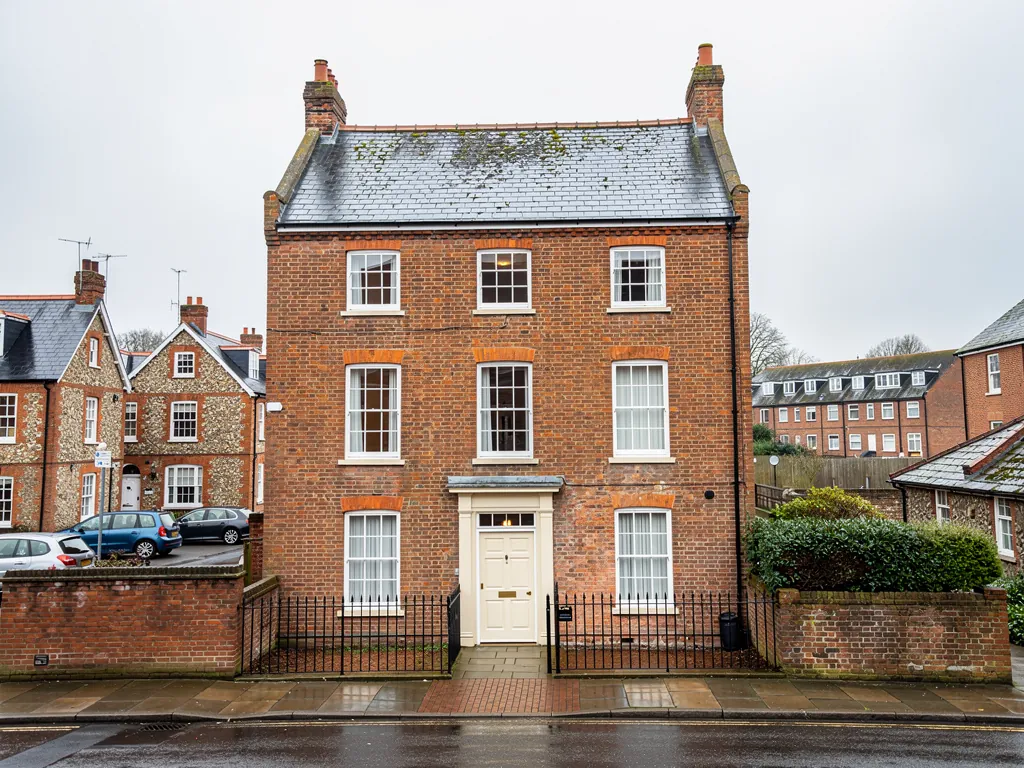
A Georgian brick town house with a slate roof and parapet in a Hampshire market town

Roofs we see in Ash

  • A row of Victorian terraced houses with Welsh slate roofs and brick chimneys in Reading

    Sandstone chimneys and walls

    For centuries the stone dug from Ash's common went into local buildings, and on some older houses it survives in walls and, here and there, in a chimney stack. Where a stack is stone, it was normally bedded in soft lime mortar. The joints erode first, and the lead flashing where the stack meets the roof slope is the usual route for a leak into the bedroom below.

  • A Georgian brick town house with a slate roof and parapet in a Hampshire market town

    Old village and church roofs

    Ash has listed buildings, among them St Peter's Church at Grade II* and the Memorial Chapel at Grade II, and older cottages in the village may carry plain clay tile or slate. These roofs were laid to a pattern that suits repair: a patch of matched tiles or slates, new battens beneath, and the sound covering left alone where it still keeps water out.

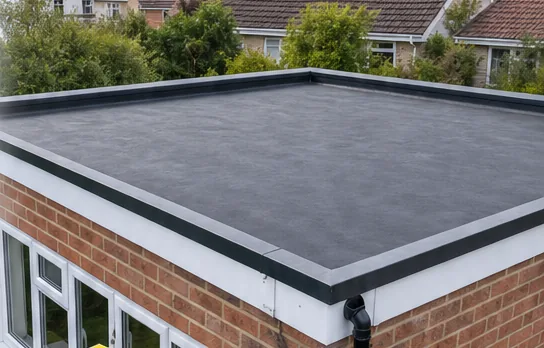
  • New EPDM flat roof on a brick extension

    Canal-side and low-lying roofs

    The Basingstoke Canal crosses the north of Ash, and the village sits on the east bank of the River Blackwater. Houses close to water and mature trees stay damp for longer after rain, so roofs on the shaded side grow moss and lichen, and the gutters fill with leaf litter. We see the effect on the eaves and the valleys first.

20.3 road miles east of Basingstoke

Planning and building control in Ash

Ash comes under Guildford Borough Council for both planning and building control. The borough has 40 conservation areas, and two of them, Basingstoke Canal North and Basingstoke Canal South, follow the waterway that passes through the north of Ash. Ash Manor's moated site on Ash Green Road is listed by the council as a scheduled ancient monument, in part, and the village's listed buildings include St Peter's Church at Grade II* and the Memorial Chapel at Grade II. The council publishes a historic environment information sheet that is a sensible first read if your house sits near any of these.

Like-for-like repair of an older roof, with the same tile, slate or stone and the same lead, is usually straightforward even inside a conservation area. Changing the material or the look of a roof may need consent, so ask the council's conservation officer before anything is ordered, and treat a listed house the same way. On houses outside those areas, the question is more often building control: replacing the whole covering of a house can fall under building control rules, and we deal with that side for you. Weighing up a roof window? The rules are tighter near the canal and around listed buildings, and we explain them in do you need planning permission for a skylight.

What we find on Ash roofs

Ash roofs split by age and by position. The older stone-built houses have chimneys and flashings that need patient, careful work, while houses nearer the canal and the Blackwater deal with damp, shade and falling leaves. Exposed ridges on open plots take the brunt of a gale.

Chapter 1: Why does the old sandstone chimney on our Ash house keep letting water in?

What we find

Sandstone has been dug from Ash's common for centuries, and on some older houses it shows up in the walls and occasionally in a chimney stack. The stone itself is porous and soft. The mortar between the blocks was usually lime, which is deliberately weaker than the stone so that any movement shows in the joints rather than splitting the blocks. Over time frost and rain wash the lime out of the joints and leave open gaps that let water run down into the flue and the brickwork around it.

The second weak point is the flashing, the strip of lead that seals the joint between stack and roof. Where it was fixed with a mortar fillet instead of being tucked into a cut groove, the mortar cracks away and rain finds a path behind it. Inside, you see a brown stain on the chimney breast or the ceiling beside it, usually after a spell of wind and rain from one direction.

What we fix

We start from the roof with a camera, looking at the joints, the flashings and the top of the stack. Open joints are raked out and repointed in lime to match the original, never in hard cement, because cement traps moisture behind it and makes sandstone flake and spall. If the lead has lifted or split, we cut a new groove, fit new flashings and soakers (the small lead sheets interleaved with the tiles up each side of the stack) and dress them tight.

A chimney needs scaffold or a tower for safe access, so the cost swings with the height of the house. Typical UK ranges for chimney leadwork run from £350 to £920, with repointing from £450 to £1,200, and your fixed quote follows the survey. Our chimney repointing page explains how lime work is done, and the lime or cement mortar guide covers the choice in detail.

Chapter 2: Can the clay tiles on our cottage near St Peter's Church in Ash be repaired instead of replaced?

What we find

Older cottages of this kind are often roofed in plain clay tiles, small flat tiles laid in overlapping courses and held on timber battens, the laths that the tiles hang from. Each tile is fixed by a nib that hooks over the batten, and often by a nail or a wooden peg in every few courses. Those nails rust through over generations, and the tile above slips down a little, which roofers call nail sickness. You see it as a tile that has dropped out of line, or a gap that lets rain onto the underlay below.

Frost does the rest. A soft tile that has soaked up water and then frozen sheds its face in flakes, and the broken fragments collect in the gutter. Inside the loft, light through the roof at a single point usually means a missing or cracked tile. A patch of damp on a rafter points to a slow leak that has been running for a while and deserves a look before the timber is affected.

What we fix

Repair is normally the right call here, and it suits the setting. We lift the tiles around a fault, keep every sound one, and replace the lost ones with reclaimed or handmade clay tiles that match the colour and slight curve of the originals. Where battens have rotted, new treated ones go in under the stripped section, and the tiles are fixed to current standards rather than hung back on old nails.

If one of these houses is listed, or stands in a conservation area, we write up the existing roof in photographs before touching it, so you have a record to show the conservation officer. A change from clay to concrete or slate would need a conversation with the council first. We say plainly when a section has reached the end of its life, and when the rest has years left in it, and the fixed quote follows from those photographs. Our pitched roofing page sets out how larger tile jobs run.

Chapter 3: Why is moss building up on the roof of our house near the Basingstoke Canal in Ash?

What we find

The canal passes through the north of Ash, and the land around it is low and often damp, with mature trees along the banks and gardens. A tile roof in the shade of those trees dries out slowly after rain. Moss and lichen settle where moisture lingers, which is usually the north-facing slope and the lower courses just above the gutter. The moss acts like a sponge, holding water against the tile surface and packing into the overlaps between the tiles.

That leads to two problems. In winter the trapped water freezes and lifts tile edges, and on older concrete tiles it can flake the surface. Meanwhile, loose moss washes down into the gutter and the downpipe, and a blocked outlet sends water over the edge and down the wall, or back up under the bottom course of tiles. If you see green growth along the eaves and overflow staining on the wall beneath, the gutters are already carrying the load of the roof above.

What we fix

We clear moss by hand with scrapers and brushes and then apply a biocide, a treatment that kills the spores left behind. We avoid pressure washing on older tile because the jet strips the surface and drives water into the joints. The gutters are cleared at the same visit, and we check the outlets run freely so the roof can do its job.

Typical UK prices reported for hand moss removal with biocide run from £748 for a small roof to £978 for a large one, and your fixed quote follows the survey. If the survey shows damaged tiles beneath the moss, we say so and price the repair separately. Cutting back overhanging branches does more for a shaded roof than any treatment, and we flag it where it applies. Our roof moss removal methods page compares the options, and the moss blocking gutters guide covers the drainage side.

Chapter 4: Why are the ridge tiles on our exposed Ash roof loose after windy weather?

What we find

Ash lies on the eastern side of the Blackwater valley, with the A31 running along the Hog's Back to the south, and roofs on open plots catch the wind. The ridge, the row of capping tiles along the top, and the verge, the edge of the roof at a gable end, take the worst of it. On many houses both were bedded in sand and cement mortar. That mortar shrinks, cracks and loses its grip on the tile after enough winters.

You may notice crumbs of mortar on the path, or a ridge tile that sits a little out of line with the next. From the loft, daylight along the ridge or a damp stain on the timber beneath it suggests water has been getting in. Once the bond fails, a strong gust can lift a ridge tile clean off, and the open ridge then lets rain straight into the roof space.

What we fix

We lift a sample of the ridge first to see whether the tiles are sound and only the mortar has failed, which is the usual finding. BS 5534 requires ridge, hip and verge tiles to be mechanically fixed, with mortar no longer relied on alone. So we normally recommend dry-fix: the tiles are clipped or screwed to a continuous batten over a breathable roll, and nothing depends on mortar holding. Dry-fix systems are covered by BS 8612.

Verges can be dealt with on the same visit using dry verge units that clip over the tile ends. Reported UK figures put a dry-fix ridge job at £900 to £1,600 for a semi-detached house, plus £300 to £900 if scaffold is needed; your fixed quote follows the survey. Our ridge tile repairs page explains the choices, and we photograph the old ridge so you can see what we found before you decide.

Ash roofing questions

Why is the loft of our older Ash house draughty and damp?

Old roofs often lack a modern breathable underlay, so loft air can feel cold and damp. Condensation forms on the underside of tiles and on timber, and gaps at the eaves or ridge let in draughts. We check ventilation at the eaves and ridge, the state of any felt, and whether insulation is blocking airflow, then suggest what to fix.

Do I need consent to repair the roof of a house near the canal conservation areas in Ash?

It depends on the address and the work. Guildford Borough Council lists Basingstoke Canal North and Basingstoke Canal South among its conservation areas, and like-for-like repair is usually fine, but a change of material or appearance may need consent. Ask the council's conservation officer before ordering anything. We record your roof in photographs first, which gives the council a clear picture of what is there now.

Can you repoint a sandstone chimney stack in Ash without damaging the stone?

Yes, with the right mortar. Soft sandstone needs a lime mix that is weaker than the stone, so moisture can leave through the joints rather than through the face of the blocks. Hard cement does the opposite and makes the stone flake. We rake out the failed joints, repoint in lime, and renew any lead flashing at the same visit, working from scaffold or a tower so the stack is reached safely.

What happens if the roof of my older Ash house has bats or nesting birds in it?

Bats and nesting birds are protected, and old tile and stone roofs near water and trees are the kind of place they use. If we see signs during the survey, we tell you and may suggest timing the work around the nesting season or having a survey done first. We never push on regardless, and the delay is usually short compared with the life of the repair.

Is it worth fixing the flat roof on our Ash extension, or should it all be replaced?

It depends on the deck underneath. A flat roof with a few splits or a lifted joint can often be repaired, but a roof where the boards have gone soft needs stripping back to the structure. Typical UK prices for EPDM, a single-sheet rubber membrane, run from £80 to £120 per square metre, and your fixed quote follows the survey. See our flat roofing page for the options.

Get your free roof survey in Ash

Tell us what’s happening and we’ll call you back to arrange a visit. You’ll get photos of your roof and a fixed written quote.

  • No obligation
  • Photo report of your roof
  • 10-year workmanship guarantee

Rather talk? 01256 213956

Call Free survey