

Chapter 1: Why does moss keep coming back on the roof of our house near the Basingstoke Canal?
What we find
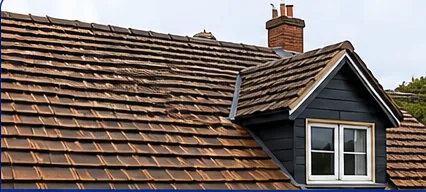
Moss needs moisture, shade and a surface it can grip. A house near the canal often has all three: still, damp air from the water, overhanging trees that block the sun, and porous clay or concrete tile that stays wet for long after a shower. On the north slope the roof may never dry out properly in winter, so moss grows thick, and its roots lift the edges of the tiles.
Heavy moss does more than look untidy. It holds water against the tile, which then freezes and flakes the surface in cold weather. It packs into the gaps between tiles and can push them out of line, and the clumps wash into the gutter and block the outlets. If the downpipes overflow every time it rains, a moss-covered roof above them is the first place to look.
What we fix
We clear moss by hand with brushes and scrapers and then treat the tiles with a biocide that kills the remaining growth. We avoid blasting at high pressure, which can strip the surface from tiles and drive water under the laps. Gutters are cleared in the same visit, and any broken or slipped tiles found under the moss are replaced before the treatment goes on.
Hand moss removal with biocide is reported in typical UK guides at somewhere between about £750 and £980, depending on roof size. Your fixed quote follows the survey. If branches are shading the slope, we will tell you, since cutting them back keeps the roof drier. Our roof cleaning page covers the method in more depth.
