
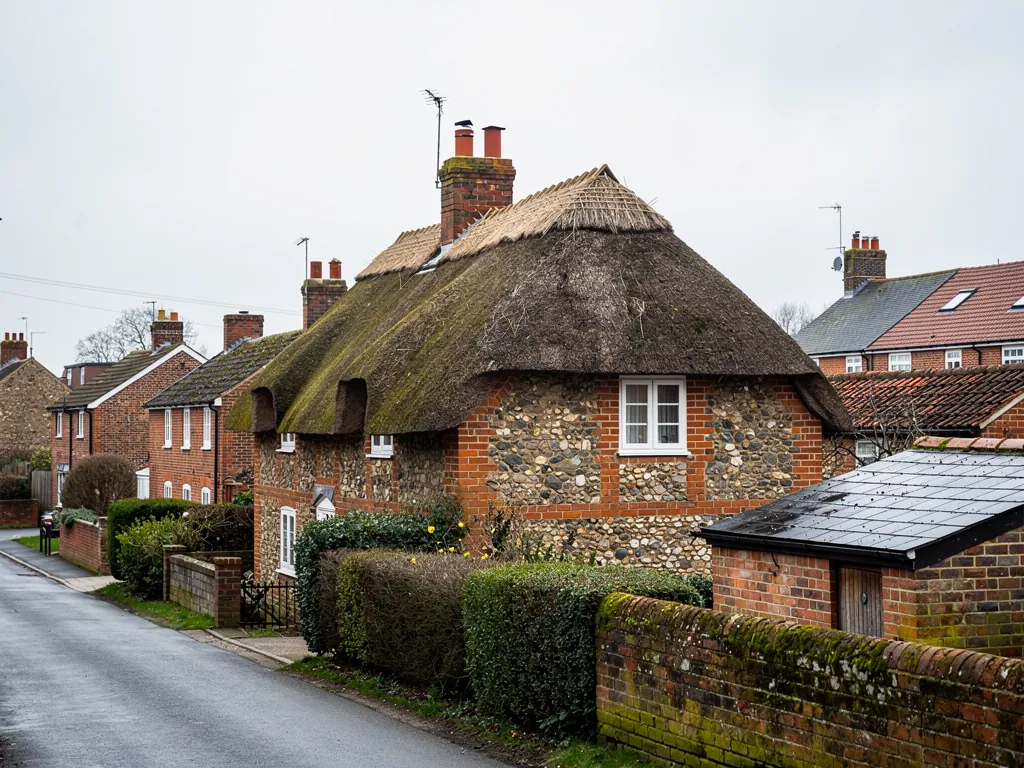


Chapter 1: Can we patch the clay tiles on an old Warfield cottage, or must the whole roof go?
What we find
Hand-made or old clay tiles do not wear out all at once. The weakest ones flake on their faces after frost, or crack across the middle, or slip out of line because their nails or pegs have corroded or rotted. A cottage roof therefore tends to be a mixture: sound tiles, a few failing ones, and some past repairs in modern tiles that do not match.
From the ground you may see a dip, a missing tile or lighter replacements standing out against old ones. Inside the loft, daylight through the tiling and a damp patch on the rafters show where water gets in. In a conservation area, how a roof looks matters, so the question is whether it leaks and also whether any repair preserves its character.
What we fix
Repair is normally the right answer here, and it is what the conservation area expects anyway. We take off only the failed section and keep each sound tile, and fill the gaps from reclaimed or hand-made plain tiles picked to suit the originals. New battens go in under the repaired section, and the tiles are fixed properly rather than hung back on rusted nails.
Where a larger area is needed we photograph the roof as it stands before work starts, so you and the council can see what the old tile looked like. Gaps are usually filled one course at a time, working from the eaves upwards, so the line of the roof is not disturbed. Salvaged tiles also carry the weathering of the originals, which new ones lack for a good while. Our pitched roofing page describes how these jobs run. If a change of material is ever proposed, talk to the conservation officer first.
