Beacon Basingstoke Roofing

Roofers in Twyford

Twyford is 23.8 road miles north-east of Basingstoke, a Berkshire village strung along the old Bath Road, with gabled brick frontages in its conservation area and post-war estates to the north and south. A free survey with photographs comes first, and you then receive a written quote with the price set.

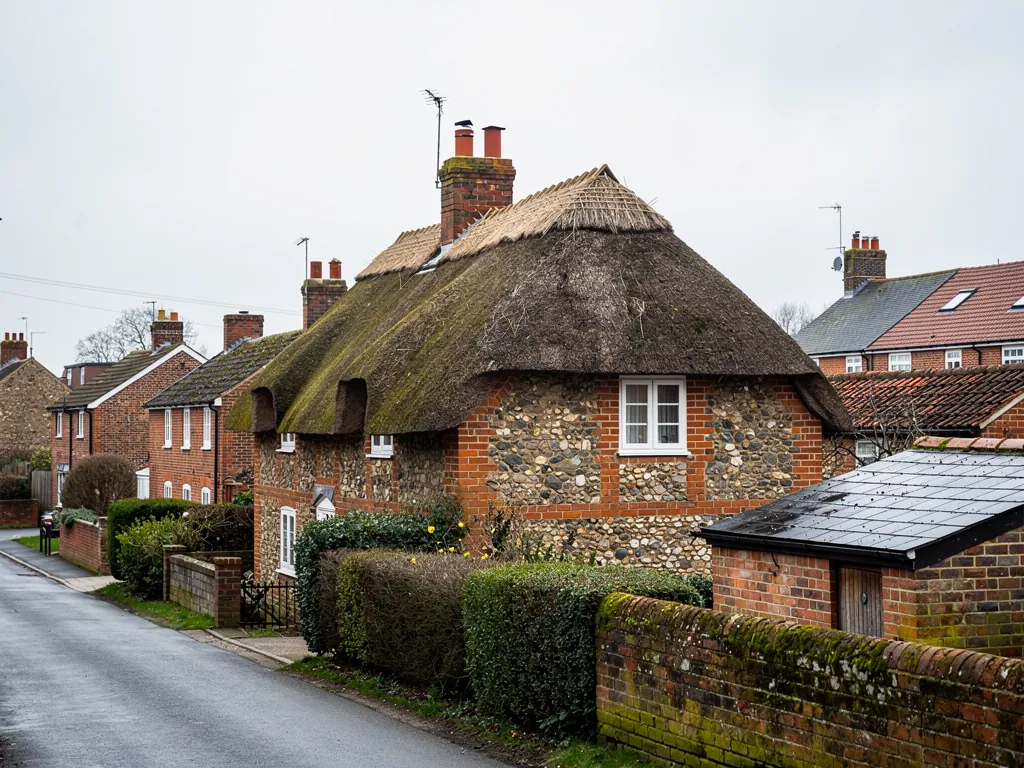
A thatched cottage in a Test Valley village with a brick chimney

Roofs we see in Twyford

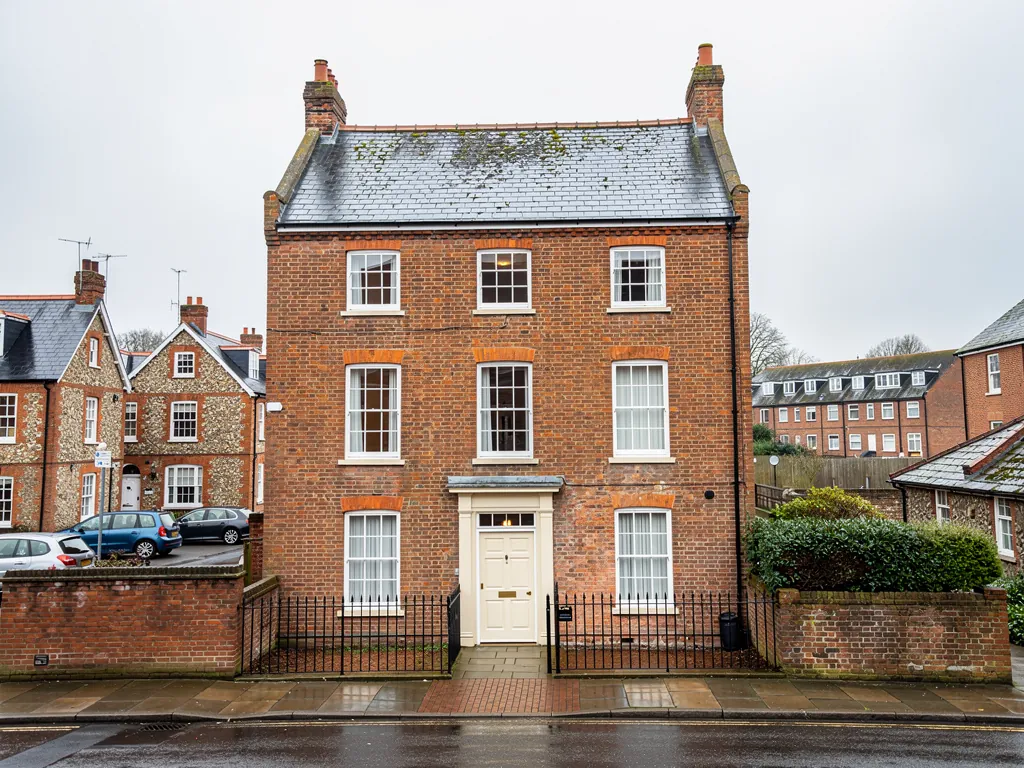
  • A Georgian brick town house with a slate roof and parapet in a Hampshire market town

    Frontages along the High Street

    The conservation area follows the High Street and London Road, and the council describes its buildings as modest, with rendered and red brick frontages two to three storeys high and gabled dormer windows in the roof. Each dormer is a small roof of its own, with cheeks, a valley and lead work, and any one of them can start a leak in an otherwise sound slope.

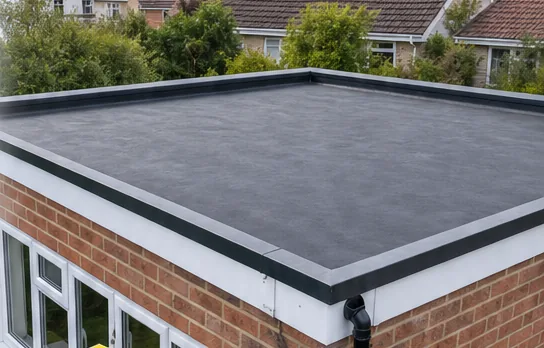
  • New EPDM flat roof on a brick extension

    Very old single-storey roofs

    The Twyford Almshouses on London Road date from the 1640s, one of the oldest groups of buildings in the village. Roofs from that age, on that scale, sit low, with long slopes and old timbers that have moved over centuries. Anything similar needs a gentle approach: sound tiles kept, rafters checked from inside, and no heavy new covering laid on frames that were never designed for it.

  • 1960s and 70s brick semi-detached houses with concrete interlocking tile roofs on a Basingstoke estate street

    Detached houses on the post-war estates

    Twyford's biggest period of growth came after the Second World War, with estates built north and south of the village. The 2011 Census counted 2,611 dwellings in the ward, mostly detached. Detached houses mean larger roofs with more hips, valleys and verges, and a lot more edge for the weather to work on.

23.8 road miles north-east of Basingstoke

Planning and building control in Twyford

Wokingham Borough Council looks after planning and building control for Twyford. The Twyford Conservation Area was first designated in December 1977 and revised in June 1996, and the boundary follows the High Street and London Road along the old Bath Road. The council's conservation area leaflet describes the character it wants to protect, including the gabled dormers and the rendered and red brick frontages.

For a house inside the boundary, ordinary like-for-like repair is generally fine, but a different tile, a new dormer or a roof window on a front slope is a different question. Speak to the conservation officer at the borough before any materials are ordered, and take the same step for a listed building. A short phone call costs nothing and can save a refused scheme or a costly redo. Inside or outside the conservation area, the Planning Portal test for building control applies, so small repairs are not normally notifiable while a large re-cover is, and we take care of that side. Roof windows have their own rules, set out in our conservation rooflights guide.

What we find on Twyford roofs

A village laid along an old coaching road ends up with two kinds of roof: small, characterful ones on the main street, and big, plain ones on the detached estates behind. They need quite different work.

Chapter 1: Why does the roof beside our dormer window leak on a High Street house in Twyford?

What we find

A gabled dormer is a box built up through the roof slope, and its sides, called cheeks, meet the main roof along a line of lead. Where the dormer's own roof meets the main slope, there is a valley, a gutter formed in the angle. On a three-storey frontage these small details sit high up and are rarely looked at, so they decay quietly for years before anybody notices.

Lead cracks where it has been bent hard, and its edges lift in the wind. The soft mortar or sealant at the top of a flashing dries and falls out. Inside, the usual sign is a stain on the ceiling beside the dormer window, or a patch of damp plaster in the cheek. The tiles around the dormer may be perfectly good, which is why the roof often looks fine from the street.

What we fix

We photograph the dormer from above and from inside the loft, then strip back to the lead. Failed flashings and valleys are renewed in new lead sheet, dressed to the tile courses and fixed in the manner lead needs, with allowance for movement. Cheeks are checked for rot in the timber frame behind, and any softened timber is cut out and replaced before the lead goes back.

Inside a conservation area, the aim is to leave the dormer looking as it did, so the same tile, the same lead and the same profile go back. A typical UK range for chimney leadwork, which is comparable work, sits between £350 and £920. We set the price in writing once the survey is done. More is on our lead roofing page.

Chapter 2: How should an old low-slung tiled roof in the village be repaired without ruining its character?

What we find

Roofs on buildings from the 17th century were built to different rules from modern ones. The rafters are often slender and uneven, the roofing battens may be riven oak or handmade softwood, and there is no underlay at all, only the tiles over timber. Over centuries the frame has settled, so the slope is not flat, and tiles have slid or cracked along the lines of greatest movement.

The signs are a wavy ridge, tiles sitting proud in one place, and daylight or rain showing through from inside the loft. Moss collects thickly on the shadier slopes. Replacing the whole covering with a modern, heavier one could overload a frame that has carried far less weight for centuries, so a considered, cautious repair is nearly always the better route.

What we fix

We work slope by slope. Sound handmade tiles are kept, because there is little to be gained from throwing them away, and failed ones are replaced with reclaimed or matching handmade clay. Rotten battens are renewed locally, and where the roof has no underlay a modern breathable one can be fitted under the replaced areas only, protecting the interior without sealing the roof like a plastic bag.

The rafters are inspected from inside for rot and insect damage, and any bad ends are repaired. Because a change of material may need consent, we give you a written report with photographs before you speak to the council. Our pitched roofing page explains the repair routes in more depth.

Chapter 3: Why is the roof of our detached post-war house in Twyford turning green and dirty?

What we find

Detached houses on Twyford's estates usually stand in good-sized gardens, with mature trees and hedges close to the building. That is lovely in summer, but a roof under a canopy dries slowly. Moss and algae take hold on the shaded and north-facing slopes first, and concrete tiles, which are slightly porous, hold the moisture that keeps them growing.

It is more than a cosmetic problem. Moss packs into the overlaps between tiles and holds water against them, so that frost can flake the surface. It also washes down into the gutters, where it mixes with leaf litter and blocks the outlets, and an overflowing gutter soaks the fascia and the wall below. Gutters that are always full are often the first sign that the roof above needs a clean.

What we fix

We clear the moss by hand, brush and scrape it away, and apply a biocide so that regrowth is slowed. Pressure washing is not our first choice on older concrete tiles, because a hard jet scours the tile face and drives water in under the laps. Gutters and downpipes get cleared in the same trip up the ladder, and any cracked tiles or failed pointing found on the way are listed in the photo report.

Typical UK ranges for hand moss removal with biocide run from £748 on a small roof through £863 on an average one to £978 on a large one, with the quote fixed once we have surveyed. Moss on its own does not mean a new roof is needed. See our roof cleaning page for how we decide.

Chapter 4: Does being near Loddon Nature Reserve and its water change how roofs weather in Twyford?

What we find

The reserve on the edge of Twyford is a flooded former gravel pit, and the village sits in a low, damp setting with lakes, meadows and mature trees close by. Houses nearest the water tend to have a damper microclimate, with cooler mornings and slower drying. That favours moss and algae on the roof, and it keeps timber at the eaves damp for longer.

Birds are also a consideration. Trees and water draw in plenty of them, and nests can block gutters and gaps under the tiles. The areas most at risk are the roofline timbers: fascias (the boards along the eaves), soffits (the boards under the overhang) and bargeboards (the boards at the gable edges). Peeling paint, soft spots or black stains on these boards mean the timber is wet.

What we fix

We check the roofline by probing the timber with a bradawl, which separates sound wood from rot quickly. If the damage is local, a section of fascia or soffit can be spliced in. If the boards have gone along most of a run, replacing them with uPVC boards and new gutters is more economical, and the covering over the eaves is checked at the same time.

Nesting birds and bats have legal protection, so we check for them first and time the work around them when needed. Renewing the whole roofline in uPVC on a semi-detached house is typically £1,800 to £3,500 in the UK. The survey comes first, then a fixed quote. Our guttering, soffits and fascias page covers the options.

Twyford roofing questions

We live on the High Street in Twyford. Can we change the roof tiles?

Replacing like with like is normally fine in the conservation area, but a different tile, colour or material may need the council's consent. Wokingham Borough Council's conservation officer is the person to ask, and it is worth doing before any tiles are ordered. We photograph the existing roof thoroughly so you have a clear record of what is there, and we can quote for a matching repair. If the tiles on your frontage have weathered unevenly, we also show where reclaimed ones would blend in best, so that any patch does not stand out on the street.

How long does the drive from Basingstoke to Twyford take you, and do you charge for it?

Twyford is 23.8 road miles north-east of Basingstoke, which is well within our 30-mile area. The survey is free, and the fixed written quote that follows covers the whole job. No separate travel charge appears afterwards, and the figure on paper is the figure you pay. Because jobs are planned by area, we often arrange visits for the same day as others near you.

Is a dormer roof worth repairing, or should the whole dormer be rebuilt?

Repair is usually enough. A leak at a dormer normally comes from the lead around the cheeks or the valley, not from the box itself. We open up the area, check the frame for rot and renew the lead, then photograph the finished junction so you have a record of how it was left. If the dormer window itself is old and its frame has moved, we tell you what that means for the seal around it. Only when the cheeks and the dormer roof timbers have rotted through do we recommend a rebuild, and the photographs will show you why before you decide.

Do the post-war detached houses around Twyford need a new roof at a certain age?

There is no fixed age. Concrete tiles often last a long time, while the underlay, the ridge bedding and the verge mortar wear out earlier. We check these in the loft and on the roof and tell you what is left. Larger detached roofs have more ridge, hip and verge length, so those edge details are worth a close look before anything else is judged. If the main covering has years in it, we quote for repair, and whatever we do is backed by our written guarantee of 10 years on workmanship.

Get your free roof survey in Twyford

Tell us what’s happening and we’ll call you back to arrange a visit. You’ll get photos of your roof and a fixed written quote.

  • No obligation
  • Photo report of your roof
  • 10-year workmanship guarantee

Rather talk? 01256 213956

Call Free survey