Beacon Basingstoke Roofing

Roofers in Liss

Liss is 21.4 road miles south-east of Basingstoke, on the A3 beside the West Sussex border. The village is two settlements divided by the River Rother: old West Liss, now a conservation area, and East Liss, grown around its station and extended by post-war and 1960s estates. Every job starts with a photo survey of your own roof and ends in a written, fixed quote.

White uPVC fascia, soffit and guttering under a tiled roof

Roofs we see in Liss

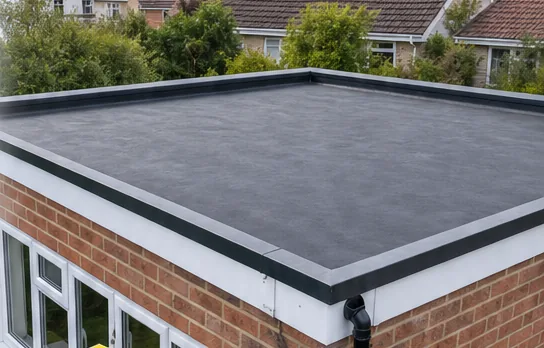
  • New EPDM flat roof on a brick extension

    West Liss and its listed buildings

    The parish has 23 listed buildings, and St Mary's Church at West Liss shows the local palette: sandstone with dressed quoins, the shaped corner stones. Older houses nearby commonly carry clay tile over irregular timber, with chimneys of brick or stone. Roofs like these are repaired by matching what is there, never by replacing it wholesale.

  • 1960s and 70s brick semi-detached houses with concrete interlocking tile roofs on a Basingstoke estate street

    Post-war East Liss housing

    East Liss grew around its 19th-century station, and council housing went up there straight after the Second World War. Those houses are now around eight decades old. Original covering from that time is commonly clay or early concrete tile, with bitumen felt underlay where one was fitted. After this long, the underlay is the weak point, with ridge bedding and fascia boards close behind it, even where the tiles themselves still look well.

  • An Edwardian red-brick detached house with clay tile roof and tile-hung gables in north Hampshire

    Estates from the mid-1960s on

    Since the mid-1960s several large new estates have extended the village, so Liss now has whole streets built in the same short window. Houses of that era commonly have concrete interlocking tiles, mortar-bedded ridges and verges, and flat-roofed garages and extensions. Because the roofs share an age, faults tend to arrive together, which makes it worth checking your neighbours' scaffold as a sign.

21.4 road miles south-east of Basingstoke

Planning and building control in Liss

Liss parish covers 3,567 acres of semi-rural countryside inside the South Downs National Park, so the National Park Authority is the planning body for the village, with East Hampshire District Council alongside it. The South Downs National Park Authority handles planning applications, while building control questions go to the district council or to a private approver. If you are unsure which applies to your house, ask both before you commit to a design.

West Liss is a designated conservation area on East Hampshire's records, and the parish has 23 listed buildings. On those, like-for-like repair is normally acceptable, but a change in material, colour or appearance can need consent; put the question to the conservation officer first. Elsewhere in the village, re-covering a larger part of a roof can be notifiable, and we handle the application. Fancy a skylight upstairs? Start with our skylight planning guide, and remember that National Park and conservation area status make a prior check sensible.

What we find on Liss roofs

Liss is really two places with two sets of roofs. The old village at West Liss has stone, clay tile and listed status; East Liss, around the station, has post-war terraces and the estates added from the mid-1960s. Surrounding both is open, wooded countryside that sends water, leaves and wildlife toward the roof.

Chapter 1: Can we repair the roof of a listed cottage in West Liss without losing its character?

What we find

Listed houses in West Liss have roofs that are part of the building's record. Clay tiles are hand-made and uneven, the pitch is often steep, and the chimneys may be built in local sandstone or brick laid in soft lime mortar. The usual faults follow from age: tiles that have laminated and flaked after repeated frost, battens that have rotted at the eaves, and chimney stacks whose joints have eroded until water gets into the brick itself.

The first sign is often small. A few tiles sit out of line, a damp patch spreads on a bedroom wall below the chimney, or you find shards of clay in the border. Because these roofs are so varied, one repair cannot simply be copied from another cottage, and every house deserves its own look at the structure under the tile.

What we fix

We begin with a photographic survey and record the roof as it stands, tile by tile where needed. That record is useful twice: it shows you exactly what is wrong, and you can give it to the council's conservation officer to support any consent you need. Repair then means keeping every sound tile, replacing failed ones with reclaimed or hand-made clay matched for colour and camber, and renewing battens only where they have rotted.

On stacks and gable walls built of sandstone, we repoint in lime so the soft stone is not trapped behind harder mortar. Where the lead flashing has gone, we fit new lead and soakers to the existing tile gauge. Nesting birds and bats are protected, and old roofs are favoured places, so we may time the job or ask for a survey first. A single tile or slate repair has a typical UK range of £100 to £250 for labour, for a simple job. Your fixed quote follows the survey. You will find the options on the pitched roofing page for how the work runs.

Chapter 2: Do the post-war council houses in East Liss need re-roofing yet?

What we find

Houses put up in East Liss straight after the war were built with the materials and methods of the time: clay or early concrete tile on softwood battens, over a bitumen felt underlay, where one was fitted, that was never meant to last this long. Felt dries out and becomes brittle, so it splits along the laps and tears at the eaves. Rain blown past the tiles then reaches the timber instead of running down the felt into the gutter.

From inside, you may see staining on the ceiling near an outside wall, or light and loose dust on the loft floor. From outside, the tiles themselves may look sound, which is why people assume the roof is fine. The fascia boards that carry the gutters often rot in the same spot where the water has been getting in, and a patch of damp can sit behind the board for years.

What we fix

From the loft we inspect the underlay, and a few lifted tiles to look at the battens and the condition of the felt. If the failure is confined to the eaves, we remove the lower courses, fit an eaves tray and fresh underlay, replace any rotten fascia and relay the tiles. That keeps a sound roof working. If the felt has perished up the slope, which you can usually tell from inside, we say that a re-roof is the right answer, with new breathable underlay and battens and the tiles cleaned and relaid or replaced.

Re-covering a three-bed semi roofed in concrete tiles has a typical UK range of £6,500 to £10,500, where the layout is a plain one. Work on that scale can be notifiable, in which case we handle the building control side. Our roof replacement page explains the steps.

Chapter 3: Why does moss keep returning on our roof near the Rother?

What we find

Liss lies in a river valley, with the Rother dividing the old village from the newer one and woodland close on every side. Damp air collects low down, and roofs under trees take little sun. Moss and lichen thrive in exactly those conditions, and on concrete tiles they establish faster still because the surface is rougher than clay. Once a cushion forms it holds water against the tile and makes the next growth easier.

The effects are quiet but real. Moss packs the gaps between tiles, wicks water under the laps, and its dead fragments wash into the gutters and block the outlets. In winter the trapped water freezes and flakes the tile face. A roof that was cleaned two years ago and is green again is not badly done; it is simply in a place where moss grows.

What we fix

We clear the roof by hand and apply a biocide, then leave it to work. Pressure washing can strip the surface from tiles, and in a village this wooded it only resets the clock. We clear the gutters and outlets in the same visit, because that is where much of the debris ends up. Where overhanging branches shade a slope, we point it out, since a trim helps the roof dry far more than any treatment will.

Hand moss removal is reported at £748, £863 and £978 by roof size, while pressure washing comes in at £553, £638 and £723, on a plain, accessible slope. When the tile faces are already breaking up, we tell you before cleaning, because there is no point treating a roof that needs a repair. Our moss removal and roof cleaning page covers the choice.

Chapter 4: The flat roof on our East Liss garage extension is ponding. Repair or replace?

What we find

Houses from the mid-1960s onward often have flat-roofed garages, kitchen extensions and porches, commonly finished in bitumen felt when new. By now many are on their second or third covering. Felt blisters in the sun, splits where it folds at the edges, and the deck beneath can sag, so water collects in a shallow pool. That standing water is what finds every weak seam, and an extension that has been damp for some time may have soft boards below.

Inside, the clues are a ceiling stain that appears after rain and a patch of lifted paint. Outside, you may see a bubble in the felt that moves when pressed, a dark ring where a pool has dried, or moss growing in the dip. A garage from the same period may also have corrugated sheets of asbestos cement, which need different handling and should not be drilled or jet washed.

What we fix

If the deck is dry and firm and the damage is a single split or a failed upstand (the raised edge where the membrane runs up a wall), a repair is reasonable and we quote for that. If the boards are soft or the pool is permanent, we strip to the deck, replace the boards, lay new falls where we can, and re-cover in EPDM, GRP or felt, whichever suits the roof and the budget.

Per square metre, typical UK ranges start at £60 to £100 for felt, then £80 to £120 in EPDM, and £100 to £160 in GRP, for most houses of this age. For asbestos cement sheets, careful removal in one piece is non-licensed work under HSE guidance; it becomes notifiable if the sheets will be broken up, so we plan to keep them whole, and overlaying is sometimes the better option. See our flat roofing and garage roof replacement pages for more.

Liss roofing questions

How do the woods around Liss affect a roof, and what should I keep clear?

Leaves and twigs collect in valleys, behind chimneys and in gutters, hold moisture against the roof and can send water over the edge or under the tiles. Birds and squirrels also find gaps at the eaves and verges. Keep gutters and valleys clear, and cut back branches that touch the roof. We check these spots on a survey and report what we find.

Does being in the South Downs National Park change what I can do to my roof?

It can, mainly for changes to how a building looks. Matching repairs are normally simple, but a different covering, a new roof window or a dormer is the sort of change worth raising with the National Park Authority first. Building control is separate, and we handle that where a job is notifiable. Ask before ordering materials.

Is my house in the West Liss conservation area?

West Liss is a designated conservation area on East Hampshire's records, so check your address against the council's map or ask the planning team. If you are inside it, keep to like-for-like materials and speak to the conservation officer before changing anything visible. We can supply a photographed survey of the roof to support that conversation.

We live near the A3. Does that affect when or how you work?

Mostly it affects access and deliveries. We look at where scaffold and materials can sit, particularly on the busier roads, and plan the day so the pavement and neighbours are not blocked for longer than needed. Once the job is finished, we clear the site and take the waste away.

Can sandstone chimneys on an older Liss house be repaired rather than rebuilt?

Frequently. Sandstone and soft brick stacks can be repointed in lime, with loose courses rebuilt and the flashing and flaunching renewed. Chimney repair has typical UK ranges of £500 to £2,000, for one trade visit. Should the stack be leaning or the stone is crumbling through, we tell you plainly that a rebuild of the upper courses is the sound fix. See chimney repairs and repointing.

Get your free roof survey in Liss

Tell us what’s happening and we’ll call you back to arrange a visit. You’ll get photos of your roof and a fixed written quote.

  • No obligation
  • Photo report of your roof
  • 10-year workmanship guarantee

Rather talk? 01256 213956

Call Free survey