Beacon Basingstoke Roofing

Roofers in Liphook

Liphook is 25.5 road miles south-east of Basingstoke, a village that grew up along the old London to Portsmouth road. Its roofs include hung clay tile and half-timbered houses around The Square, inside a conservation area designated in 1977, and the later houses that followed the railway. A photo survey of your own roof comes first, then a written quote that stays fixed.

A row of Victorian terraced houses with Welsh slate roofs and brick chimneys in Reading

Roofs we see in Liphook

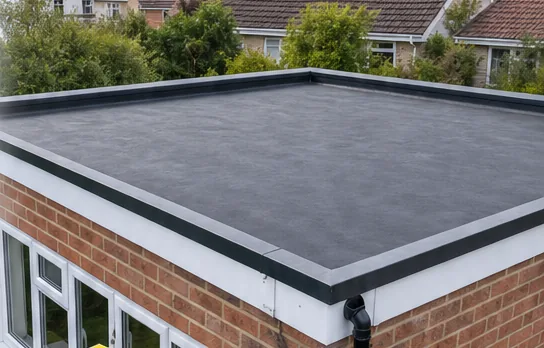
  • New EPDM flat roof on a brick extension

    Hung clay tile in the village centre

    The conservation area appraisal for Liphook lists hung clay tiles, masonry with red brick dressings, galletting and light-coloured renders as the materials that give the village its character. On the roof, that means clay tile on a steep pitch, often meeting a tile-hung wall at an angle. Those junctions, where roof tile and wall tile overlap, are small areas that take a great deal of weather and need careful lead or flashing to stay dry.

  • 1960s and 70s brick semi-detached houses with concrete interlocking tile roofs on a Basingstoke estate street

    Half-timbered houses around The Square

    Half-timbered houses stand around The Square, where they replaced the early market stalls, and the roofs over them have the sag and softness of old oak frames. Slopes are rarely dead straight, rafters are irregular and tile courses follow the frame. A roofer cannot simply strip and relay to a neat modern gauge here; the work has to follow what the timbers have done over centuries.

  • An Edwardian red-brick detached house with clay tile roof and tile-hung gables in north Hampshire

    Housing that followed the railway

    The first train reached Liphook in January 1859, and the village grew beyond the coaching centre afterwards. Houses from that period onwards are often roofed in slate or machine-made clay tile on straighter timbers, and later in-fill carries concrete tile. Slipped slates, failed nail fixings and cracked mortar at chimneys are the usual calls, and the A3 bypass has left the older streets quieter but no less weathered.

25.5 road miles south-east of Basingstoke

Planning and building control in Liphook

For planning and for building control alike, Liphook answers to East Hampshire District Council. The Liphook Conservation Area was designated in April 1977 and extended in October 1992, and it covers the medieval village centre that grew along the London to Portsmouth route. East Hampshire publishes the appraisal on its council website, and it names the local materials: hung clay tiles, red brick dressings, galletting (small stone chips pressed into mortar joints) and light-coloured renders. Read it before you plan roof work on an older house here.

Repair in matching clay tile is usually straightforward. Changing the covering, the colour or the roofline may need consent, and a listed building is treated the same way, so ask the conservation officer at the council before a single tile is ordered. Outside the centre, building control is the more common question, and we deal with it where a larger re-cover makes it notifiable. Thinking of a roof window? Our conservation rooflights guide covers the slimmer styles suited to a protected roof.

What we find on Liphook roofs

A coaching village that grew along a main road, then again with the railway, ends up with roofs from many centuries side by side. In the centre there are old frames, hung clay tile and lime mortar, and further out slate terraces and later estate housing.

Chapter 1: Why does water get in where the roof meets the tile-hung wall of our Liphook house?

What we find

Tile hanging is a way of covering a wall with small clay tiles fixed to battens, and in Liphook it appears across the older houses, often rising straight up from the roof slope. Where the tiled wall meets the roof, the two surfaces overlap and a strip of lead must be dressed under the wall tiles and over the roof tiles to carry water out. If that lead has lifted, split or been bridged with mastic, water runs behind the wall tiles and into the structure.

The signs are a damp patch on an upper-floor wall below the junction, a brown stain on the ceiling edge, and wall tiles that have slipped or cracked just above the roof line. Because the water enters behind a covering, the damage can run on for years before it shows. Timber behind the tiles may be soft by the time anyone looks.

What we fix

We lift the lowest courses of wall tile to see the back of the junction. If the batten behind is sound, we fit new lead in lengths short enough to move with the temperature, tuck the upper edge under the tile course, and dress the lower edge over the roof tiles. Any soft batten is cut out and replaced, and the wall tiles are rehung using matched reclaimed clay where the originals are broken, so that colour and texture still sit with the neighbouring wall.

Mastic is not a repair here, and we do not use it as one. Lead properly dressed lasts for many years and can be seen in photographs, so you can check the work yourself after we leave. Typical UK prices for chimney or abutment leadwork run from £350 to £920, if nothing unexpected turns up. Your fixed quote follows the survey. The lead roofing and leadwork page explains the choices.

Chapter 2: Can the sagging clay tile roof of our half-timbered house near The Square be repaired?

What we find

The half-timbered houses around The Square sit on frames that have moved for generations. The roof slopes reflect it: a gentle dip along a rafter, a ridge that rises and falls, and tiles that follow the hollows. Old hand-made clay tiles are slightly curved, which helps them shed water, but they are also thin and porous, and frost splits the surface off those that have been wet and cold too often.

Inside the loft you may see daylight between tiles, where the nibs that hook them over the battens have broken, and old lime torching, a mortar fill pressed under the tiles from inside to stop wind-blown rain. When that torching crumbles, dust and flakes fall onto the ceiling below, and driving rain finds its way between the tiles.

What we fix

Sagging in itself is not a fault. If the frame has settled and stopped, we leave the shape alone and repair the covering to follow it. We replace only the tiles that have failed, using reclaimed or hand-made clay matched for colour and curve, and secure them to sound battens. Where torching has crumbled we renew it in lime, which lets the roof breathe, rather than in cement.

If the frame is still moving, we say so before touching the tiles, because covering a moving roof only hides the problem. For a protected building in the conservation area, we photograph every stage and give you the survey report to take to the council's conservation officer. A single slate or tile repair carries a typical UK range of £100 to £250 labour, with scaffold or a tower at £300 to £800, on a typical semi. The wider picture is on the pitched roofing page.

Chapter 3: The brick chimney on our Liphook cottage looks tired. Does it need repointing or rebuilding?

What we find

Chimney stacks on Liphook's older houses stand exposed on the ridge to every wind that crosses the village, and the conservation appraisal counts red brick dressings among the materials that give the centre its character. The mortar joints weather faster than the brick. As they crumble, rain soaks the stack, frost forces the joints wider, and bricks at the top can loosen. Soft old brick may begin to flake on its face where it has been wet through.

At the base, the lead strip that closes the gap between stack and slope is another weak point, and at the top the flaunching (the mortar sloped around the pot to throw rain clear) often cracks away from the pot. A leaning stack, loose pots, or damp brown patches on the chimney breast inside are signs that the problem has gone beyond the surface.

What we fix

A binoculars-and-ladder look is the start, and we photograph the stack from the roof and report on each part. If the brick is sound and only the joints have failed, we rake out the old mortar and repoint in lime, which is softer than the brick and lets moisture leave through the joint instead of the brick face. Cement is too hard for old brick and speeds up its decay. Flaunching is renewed, pots rebedded, and flashings replaced with new lead.

If the upper courses are loose or leaning, rebuilding the top few courses is more honest than repointing over the fault. Typical UK prices reported for chimney repointing are £450 to £1,200, for an ordinary stack or abutment. The chimney repairs and repointing page covers the decision between repointing, rebuilding and capping.

Chapter 4: Why are slates slipping on our Victorian house near Liphook station?

What we find

Houses built after the railway reached Liphook in 1859 often carry natural slate or machine-made clay tile on straighter timbers than the coaching-era buildings. A slate roof is held by nails driven through two holes near the top edge of each slate, and those nails corrode over time. When a nail rusts through, the slate drops a few centimetres and hangs from the one below it, or slides out altogether. That is called nail sickness, and it tends to spread along a slope because the nails are all the same age.

Signs are slates lying in the garden or the gutters, gaps showing a darker line of underlay, and slates that have moved out of line. In the loft, daylight at the joints and damp on the sarking boards (the timber boarding under the slates, found on some older roofs) show that water is getting past. A slipped slate is a small thing, but it leaves the felt below to take rain it was never built for.

What we fix

If only scattered slates have slipped, we refix them with copper nails or stainless steel clips and replace the broken ones with matched reclaimed or new slates. Where the nails have gone across a whole slope, patching is a short-term answer, and we tell you straight that re-slating the slope will last longer. We strip the slates, keep the sound ones, renew the underlay and battens, and relay them with corrosion-proof fixings.

A single slate repair has a typical UK range of £100 to £250 in labour and £5 to £25 for the slate itself, with scaffold or a tower at £300 to £800, before any extras. Natural slate re-roofing is typically £120 to £180 per square metre, and man-made slate £90 to £130. Our slate roofing page explains the steps.

Liphook roofing questions

Can the hung clay tiles on a Liphook gable be repaired without touching the main roof?

Often, yes. Hung tiles are fixed to battens on the wall, so slipped or missing ones can be relaid on their own once the cause is found, usually corroded nails or rotten battens behind. The junction where the wall tiles meet the roof needs separate attention, because that is where water usually gets in. We photograph both so you can see which is failing.

Does the conservation area mean I cannot change my roof tiles?

It means you should ask before you change them. Like-for-like repair in the same clay tile is normally fine, but a different material, colour or profile may need consent from East Hampshire. Speak to the council's conservation officer first. We can give you photographs and a written survey of the roof as it stands to take along to that conversation.

What is galletting, and does it affect a roof repair?

Galletting is the practice of pressing small flint or stone chips into wet mortar joints, and the Liphook appraisal lists it among the local materials. It belongs to walls and chimney stacks more than roofs. If we repoint a stack or rebuild a gable, we match the joint finish and mortar so the work looks like what was there before.

Our house is near The Square. Will scaffold get in for work on the roof?

Usually, but the village centre is tight, with narrow frontages and busy approaches, so we look at access in the survey. Where a scaffold cannot sit on the pavement, we agree a route with you and the council before work starts. We clear the site and take the waste away when the job ends.

Can you replace a flat porch roof on an old house near the A3 bypass?

Yes. Small flat roofs on porches and lean-tos are common, usually in felt that has split at the edge. We take it back to the deck, renew soft boards and re-cover. Per square metre, new flat roofing is typically priced in the UK at £60 to £100 in felt, with EPDM at £80 to £120 and GRP at £100 to £160, allowing for the usual extras. The flat roofing page compares them.

Get your free roof survey in Liphook

Tell us what’s happening and we’ll call you back to arrange a visit. You’ll get photos of your roof and a fixed written quote.

  • No obligation
  • Photo report of your roof
  • 10-year workmanship guarantee

Rather talk? 01256 213956

Call Free survey