Beacon Basingstoke Roofing

Roofers in Selborne

Selborne lies 16.5 road miles south-east of Basingstoke, just inside the northern edge of the South Downs National Park, below the wooded slope of the Hanger. Its roofs are clay tile, slate and thatch over Malmstone and brick. We survey them with photographs, work like for like, and send a written quote that stays fixed.

Brick chimney stack with clay pots

The roofs of Selborne

  • Roofer fitting roof tiles on a brick house near Basingstoke

    Clay tile over Malmstone and brick

    The village's building materials are typically local Malmstone with red and yellow brick detailing under clay tile roofs. Plain clay tiles are small, double-lapped and hung from battens, so a damaged area can be repaired with matching tiles instead of a full replacement. The older the roof, the more the work depends on finding tiles of the right colour, texture and camber.

  • White uPVC fascia, soffit and guttering under a tiled roof

    Early nineteenth-century slate

    Thatch once dominated roofing here, and the conservation area appraisal records that clay plain tiles challenged it and, from the early 19th century, slate arrived too. Slate allowed a lower pitch than thatch or plain tile, and it relies on lead at its junctions. The slates are often sound, but the nails holding them and the lead around the chimneys are what we check first.

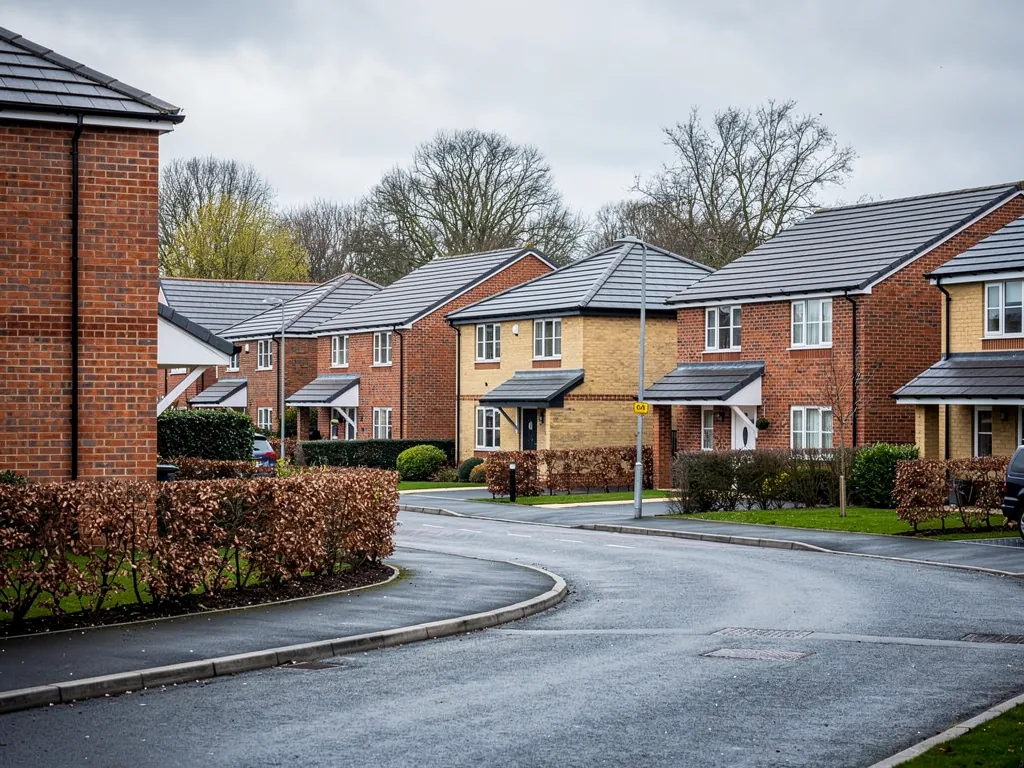
  • Modern 2000s brick houses with grey concrete tile roofs on a new estate near Basingstoke

    Thatched cottages and their neighbours

    Old Thatch and Deep Thatch on Gracious Street are Grade II listed thatched cottages of 17th-century origin, and thatch still shapes the look of the village. Thatching is a specialist trade of its own. Beside it, the brick chimneys, tiled outshuts and slate extensions on cottages in the same lanes are the parts of those roofs we survey, photograph and repair.

16.5 road miles south-east of Basingstoke

Planning and building control in Selborne

Selborne is unusual in having two layers of control. It lies in the South Downs National Park, so the South Downs National Park Authority is the planning authority, not the district council, and it publishes its conservation area material on southdowns.gov.uk. East Hampshire District Council is the local council. The village was among the first conservation areas designated by Hampshire County Council, in 1970, and the authority's appraisal of Selborne, updated in 2026, describes local Malmstone, red and yellow brick and clay tile roofs as the character of the place.

That has a practical effect on re-roofing. Repair in matching clay tile or slate is usually fine. Swapping materials, or altering how a roof looks, may call for consent, so speak to the planning team and conservation officer first. Selborne's Church of St Mary the Virgin is Grade I listed, and the thatched cottages on Gracious Street are Grade II, so a listed house here needs the same care. Windows in a protected area are covered by our pages on conservation rooflights and skylight planning permission. For notifiable re-roofing, we handle building control.

Faults on Selborne roofs, and the fixes

The roofs here are old, local and mostly protected, which sets the approach: keep what is sound, replace like for like, and record everything. The village sits at the foot of a wooded hillside, so shade, damp and falling leaves shape the faults as much as age does.

Chapter 1: Can the clay plain tiles on our Selborne cottage be matched when some slip or crack?

What we find

Plain clay tiles are small, about the size of a hand and a half, and each course overlaps the one below twice, which gives the roof its soft, uneven texture. They were once pegged or nailed to timber battens, the laths that run across the rafters. Over a century or more the nails rust, the pegs rot, and the clay itself suffers: frost gets into the softer tiles and flakes the face off, and individual tiles slip out of line.

You will see this as a ragged patch where tiles have dropped, darker marks where moss has held water against flaking faces, or a dip in the line of the roof. Look inside the loft for chinks of daylight and for tiles lying on the insulation. On a house with Malmstone walls and a clay roof, the colour range of the old tiles is part of how it looks from the lane.

What we fix

Only the failed area comes off. Every tile that is still sound stays, and we fill the gaps with reclaimed tiles chosen for colour and camber, or handmade new ones if reclaimed stock does not match. New battens go under the stripped area, and the tiles go back on stainless or copper nails or clips, not on corroded ones. Our page on nail sickness explains why old fixings fail.

Because Selborne is a conservation area inside a National Park, we photograph the roof before and after, and the survey report can go to the conservation officer if you want consent confirmed. Typical UK prices reported for re-roofing a semi in concrete tile run from £6,500 to £10,500; clay costs more. Your fixed quote follows the survey.

Chapter 2: Why is the damp creeping into the ceiling beneath the slates of our early nineteenth-century Selborne house?

What we find

Slates came to Selborne from the early 19th century, according to the conservation area appraisal. A slate roof rarely fails across the whole surface. The nails are the trouble: each slate hangs on two, and when iron nails rust the slate slips a short way down its course. Water then runs under the neighbours instead of off them.

Look for a slate that has dropped or tilted, dark stains on the ceiling beneath the eaves, and rust stains on slates close to the damaged one. Sarking felt, the underlay laid beneath the battens, can be tired or missing on old roofs, so what looks like a small defect may be letting in more than you can see. Chimney flashings are the other usual source of damp on a house this age.

What we fix

We refix or replace slipped slates one by one using copper nails or hooks, and reuse every slate that is still sound. If a section of sarking has failed we lay breathable membrane under the repaired area. At the chimney, old flashings of lead are checked for cracks, and the soakers, the small lead pieces interleaved with the slates up the side of the stack, are renewed where they have worn through. Lead is cut to suit the slate gauge on the roof so the detail looks right from the road.

Our slate roofing page has more on how repairs and re-slating are decided. Typical UK prices reported for a single slate repair run from £100 to £250 in labour, plus scaffold or access. Full re-slating is a bigger job, and we only recommend it when the survey photographs show widespread failure.

Chapter 3: Why do the roofs below the Hanger in Selborne stay green and the gutters keep filling?

What we find

Selborne sits below the Hanger, the steep wooded slope above the village, where Gilbert White and his brother cut the Zig-Zag Path in the 1760s. Trees shade the roofs close to it, and shade keeps tiles and slates damp long after rain has stopped. Moss and lichen settle on a damp surface. They hold moisture against the clay, and in winter frost can then flake the face off the tile.

Leaves, seeds and twigs from the woodland collect in the gutters and the valleys. A blocked outlet sends water over the lip of the gutter and down the wall, which is hard on Malmstone and soft brick. Signs include green stains on the north-facing slopes, dark streaks below the eaves, and water falling in a curtain off the gutter in heavy rain.

What we fix

We begin with a thorough clear-out of gutters, hoppers and downpipes, and check that water runs away freely. Moss is lifted off by hand, since scraping a hard tool across old clay can take the surface with it, and a biocide is applied to slow regrowth. Pressure washing is a poor idea on historic tiles, so we avoid it. Read our page on why moss grows on north-facing roofs for the reasoning.

Cast iron guttering is common on older cottages and is worth keeping where it is sound; see cast iron guttering on period homes. For hand moss removal with biocide, UK cost guides report £748 to £978 by size of roof. Regular clearing in autumn is cheaper than the damage caused by a blocked gutter.

Chapter 4: Why is the chimney on our Malmstone cottage in Selborne leaking, and what mortar should be used?

What we find

A chimney stack stands in the weather on all four sides, and on an old cottage it is built from the same local stone or brick as the walls, bedded in soft lime mortar. In time the mortar joints recede, the flaunching (the sloping mortar crown that holds the pots) cracks, and the lead flashing where the stack meets the roof lifts at its edges. Each of these lets water in.

The damage often shows far from the cause: brown stains on the chimney breast inside, wallpaper peeling in the bedroom, or damp patches on the ceiling around the stack. On a thatched cottage, the stack is often the one section of brick and lead on the whole roof, and it receives the full weight of the wind off the downs. Loose pots and a stack leaning slightly out of true deserve a prompt look.

What we fix

We repoint with lime mortar matched to the original in colour and texture, because a hard cement mix traps moisture in the softer stone and brick and makes it spall. Our page on lime or cement mortar for chimneys sets out the reasoning. The flaunching is renewed, pots bedded properly, and lead flashings and soakers are cut and fitted to the roof covering around them.

Where a stack is leaning or badly decayed, we photograph it, explain the options, and a partial rebuild may be quoted separately. Cost guides show repointing a chimney at £450 to £1,200, with leadwork at £350 to £920 across the UK. On a listed house, check with the conservation officer before changing materials or pot styles. Nesting birds and bats are protected, so we check before work starts.

Selborne roofing questions

How do you repair an early nineteenth-century slate roof without losing the sound slates?

We lift the slates round the fault, test them for cracks by tapping, and re-fix the sound ones with copper or stainless steel nails, replacing only the broken or missing slates with reclaimed stock of a matching size and colour. That keeps as much original covering as possible. In a protected village, discuss with the council before any change to how the roof looks.

Do we need National Park consent to re-roof a house in Selborne?

It depends on the work. Matching repairs on a clay or slate roof are usually straightforward, but swapping the material or altering the roof's look may need consent from the South Downs National Park Authority, which is the planning authority here. Telephone its planning team with photos before ordering anything. We can supply survey photographs and a plain description of the work to go with your enquiry.

Is a listed cottage near Gracious Street something you can re-roof or patch?

Yes, with the right approach. Old Thatch and Deep Thatch are Grade II listed, and listed buildings here need consent for changes to materials. We survey the tiled and slated parts, chimneys and leadwork, recommend like-for-like repair, and give you a photographic report for the conservation officer. The thatch itself is a specialist trade, and we keep to our own work.

Can a conservation rooflight go into the tiled roof of a cottage in Selborne?

Often, though the village's conservation area status means type and position matter. A slim-framed conservation rooflight that sits flush with the tiles is the style least likely to be questioned. Read our conservation rooflights guide, then contact the planning team before ordering. We fit and flash it neatly into the existing roof covering.

Is it worth repairing an old roof in Selborne, or should we replace it?

Repair first, wherever the roof still has years in it. Clay tiles and slates outlast most modern coverings if the fixings and lead are kept up, and replacement in a conservation area brings its own consent questions. We tell you plainly from the survey photos whether a patch, a partial re-roof or a full strip makes sense, and the quote is fixed in writing.

Get your free roof survey in Selborne

Tell us what’s happening and we’ll call you back to arrange a visit. You’ll get photos of your roof and a fixed written quote.

  • No obligation
  • Photo report of your roof
  • 10-year workmanship guarantee

Rather talk? 01256 213956

Call Free survey