Beacon Basingstoke Roofing

Roofers in Wargrave

Wargrave lies 23.3 road miles north-east of Basingstoke, on the Thames where the River Loddon joins it, with the ground climbing steeply towards Bowsey Hill. We survey its roofs, from Georgian slate to riverside tile, with photographs, and the price we then give you is fixed and in writing.

An Edwardian red-brick detached house with clay tile roof and tile-hung gables in north Hampshire

Roofs we see in Wargrave

  • Roofer fitting roof tiles on a brick house near Basingstoke

    Georgian stucco and hipped slate

    Wargrave Manor, a Grade II listed late Georgian house, is a good example. It is built of painted stucco under a hipped slate roof, and houses built in that manner share its weak points. A hipped roof has no gable ends, so the slopes meet along hips (the sloping ridges at the corners) that are finished in lead or mitred slate. Those junctions and the nail fixings behind the slates are where leaks usually start.

  • White uPVC fascia, soffit and guttering under a tiled roof

    Village centre cottages and riverside houses

    The historic village centre is a conservation area, and older cottages and townhouses of this kind are commonly brick under plain clay tile or slate. Near the river the air is damp and the trees are heavy, so shaded slopes grow moss and gutters fill with leaves. Chimneys on older houses can be tall and exposed, and their lead flashings and soakers need regular checking.

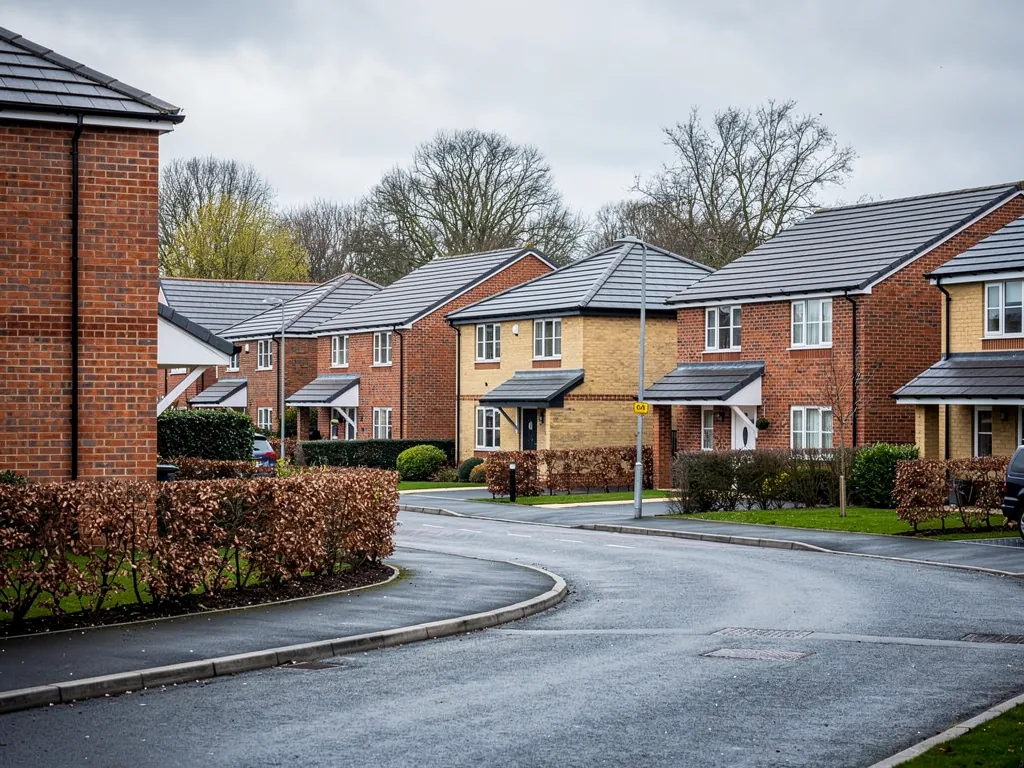
  • Modern 2000s brick houses with grey concrete tile roofs on a new estate near Basingstoke

    Hillside plots towards Bowsey Hill

    The land rises steeply to the north-east of the village, so houses on the upper streets stand on sloping plots and catch more wind than those near the river. Slipped ridge tiles and lifted verges are a hazard in a gale. Steep ground also affects how a job is done, since scaffold has to be built level on a slope and materials carried up a narrow approach.

23.3 road miles north-east of Basingstoke

Planning and building control in Wargrave

Wokingham Borough Council is the planning authority here, and it lists the village among its historic village centre conservation areas. Within that area and around the churchyard and village green, the character of the old roofs is part of what the designation protects. St Mary's church is Grade II* listed, with a 12th-century north door and a tower of 1635, the rest rebuilt after a fire in 1914. Wargrave Manor is Grade II, and the war memorial on the green, designed by Sir Edwin Lutyens and unveiled in 1922, is also Grade II. The Wokingham Borough Council website has the planning team's contact details.

Like-for-like repair of a roof in the conservation area is normally straightforward, but replacing slate with tile, or clay with concrete, could need consent, and the council's conservation officer should be asked before you buy materials. A listed house should be handled the same way. Taking off and renewing the whole covering of a roof can fall under the Building Regulations as notifiable work, which we take care of. For roof windows, our planning guide for roof windows explains what applies, and the position is stricter in a conservation area. Slate and clay roofs here also reward a careful look at the lead and the fixings, so we photograph both whenever we are up.

Faults behind the leaks on Wargrave roofs

Wargrave's roofs reflect its setting: Georgian houses in slate and stucco, older cottages in clay tile, and later houses on the sloping ground above the river. The river brings damp and trees, and the slope brings wind and awkward access. That shapes how we survey, what we look for and how we plan the day.

Chapter 1: Why does the hip on our slate roof drip after heavy rain?

What we find

On a hipped roof, every corner has a hip, where two slopes meet at an outward angle. On Georgian slate roofs like the one on Wargrave Manor, hips are finished either with lead rolls laid over the slates or with slates cut and mitred to meet exactly. Both rely on small details: the lead is held by clips and its laps shed water, the mitres by sound slates and sealed edges.

With age, the lead roll cracks at the folds, a clip lets go, or one of the mitred slates slips. Rain then runs down the inside of the hip, along the rafter and out onto a ceiling. The stain usually appears in an upstairs corner, some distance from the opening, which makes it hard to trace without getting up there. A stucco house adds a further complication, because water that gets behind the render can run down inside the wall and show up far below the roof.

What we fix

We trace the water from the loft along the hip rafter, then examine the lead and slates from above. Small splits may be repairable, but if the lead has cracked or the fixings have failed, we replace the hip covering with new lead sized and lapped to suit, and refix any loose slates beside it. Mitred hips are carefully re-cut rather than covered over, since the roof should keep its original look.

A single slate repair is typically quoted at £100 to £250 for labour, with the slate itself £5 to £25, as typical UK ranges. Your fixed quote follows the survey. The slate roofing page covers the wider picture, including when to repair and when to re-slate.

Chapter 2: Why does our roof near the river keep growing moss, and does it matter?

What we find

Where the Loddon meets the Thames, the air near the water stays humid. A roof that faces north, or sits under trees, dries slowly, and moss and algae take hold. Moss soaks up water and holds it against the tiles, packs into the gaps where tiles lap, and pushes them slightly out of position as it grows.

When it dies back or is washed off, it ends up in the gutters. A gutter full of moss and leaf mould cannot carry water away, so it overflows against the wall and soaks the fascia. On older clay tiles, a damp roof also suffers more from frost, which can spall the face of a soft tile.

What we fix

We clear moss by hand, scraping the growth out of the laps without lifting the tiles, and apply a biocide that kills the roots. We avoid pressure washing, which can wear the surface from old tiles and force water under the laps. Gutters are cleared and checked for fall and sound brackets at the same visit, and we photograph the bare roof for any cracked or slipped tiles.

Typical UK prices reported for hand moss removal are £748 for a small roof and £978 for a large house roof; your fixed quote follows the survey. The roof cleaning page explains the method. Where the cause is a tree, we suggest cutting it back, since cleaning only helps for as long as the roof stays dry.

Chapter 3: How do you get at a roof safely on a steep plot above the village?

What we find

Houses on the slope towards Bowsey Hill often have a tight drive, a sloping garden and a roof that is high at the back and low at the front. That makes the work harder than on a flat site. Scaffold needs a level base, and on a slope the legs may need to stand on boards or be adjusted to different heights. Carrying slates, tiles and lead up a narrow path also takes time.

The exposure matters too. A house high on the hill is more exposed to wind, and ridge tiles, verge edges and the tiles on the windward slope take the most strain. A tile that lifts in a gust may sit a little out of line before it finally slides, and once one goes, its neighbours lose their cover.

What we fix

We look at access on the survey, photographing the approach, the ground at the foot of the elevation and the eaves height, so that the scaffold and any skip placement are planned before the day, not discovered on it. The scaffold goes up before roof work, giving a safe working platform and a place to stack materials.

On exposed slopes we check every ridge, hip and verge for fixing; the standard for roof tile fixing, BS 5534, wants every ridge, hip and verge component held mechanically, so mortar is not trusted alone, and BS 8612 sets the performance standard for dry-fix systems. Hiring scaffold round a roofline is reported at anything between £200 and £2,600 depending on the house. The ridge tile repairs page explains the fixing options.

Chapter 4: Can the chimney flashings on a village cottage be renewed without rebuilding the stack?

What we find

Older houses often have chimney stacks of brick laid in lime or soft mortar, standing tall above the ridge and exposed to weather from every side. Where the stack passes through the roof, a lead flashing and a set of soakers seal the joint. Lead is long-lived, and a good flashing outlasts several roof coverings, but it can lift at its edges, crack along folds, and be undermined where the mortar line it sits in has eroded.

Inside the house, the sign is a brown stain on the chimney breast or on a ceiling beside it, usually after wind-driven rain. The brick itself may be perfectly sound, and a failing flashing is a far smaller job than a failing stack. It is worth finding out which before anyone suggests a rebuild.

What we fix

We examine the stack and the lead close up and photograph each face. If the brick is sound, we strip the flashing, cut new lead with a stepped cover flashing and soakers matched to the tile gauge, and repoint open joints in lime so the soft brick is not trapped behind a harder mortar. On a conservation area house, this keeps the stack as it was.

If the stack has gone beyond repair, we say so and quote to rebuild the unsound courses. Chimney leadwork is reported at £350 to £920 across the UK, averaging about £570. The chimney repairs page covers the choices.

Wargrave roofing questions

Why does stucco stain and crack below the eaves of a Georgian house?

Stucco is porous, so when a gutter leaks or a roof edge sheds water onto it, the wall stays wet and the render begins to stain, lose paint and crack. The cause is usually above the stain. We fix the gutter, fascia or roof edge first so the wall can dry out. Repair to the stucco itself is a separate job, and we can tell you where it is needed.

Is the whole village a conservation area, and does that stop roof work?

Wokingham Borough Council lists Wargrave among its historic village centre conservation areas, so check whether your street falls inside. It does not stop roof work. Repair in matching materials is usually acceptable, and a change of material is worth discussing with the council's conservation officer first.

Can you repair a hipped slate roof on a Georgian house in Wargrave?

Yes. We inspect the slate fixings, the hips and the valleys, tell you which slates are worth keeping and which have to be replaced, and give a fixed written price. Listed houses need extra care, and we give you the photographs and report to take to the conservation officer.

Does being close to the river or the marsh affect what you do to a roof?

Not the method, but it affects the upkeep. Wargrave Marsh downstream is drained farmland that acts as the local floodplain, and the damp air and trees near the water mean moss and leaf fall on roofs and in gutters. We check both on every visit and clear them when needed, and we note in the report anything that is likely to need attention again after the next autumn.

Will I need to get consent to replace slate with tile on my Wargrave house?

Possibly. Changing the material or appearance of a roof in a conservation area, or on a listed house, may need consent, so ask Wokingham Borough Council's planning team before ordering. If you stay with slate and keep the same look, the answer is usually simpler.

Get your free roof survey in Wargrave

Tell us what’s happening and we’ll call you back to arrange a visit. You’ll get photos of your roof and a fixed written quote.

  • No obligation
  • Photo report of your roof
  • 10-year workmanship guarantee

Rather talk? 01256 213956

Call Free survey