Beacon Basingstoke Roofing

Roofers in Headley

Headley sits 21.3 road miles south-east of Basingstoke, and the parish takes in Headley Down, Standford, Arford, Barford and Sleaford, with 69 listed buildings and structures among them. Old clay-tiled cottages and later village houses need different roofing. Before any work starts you get photographs of your own roof and a written quote that stays fixed.

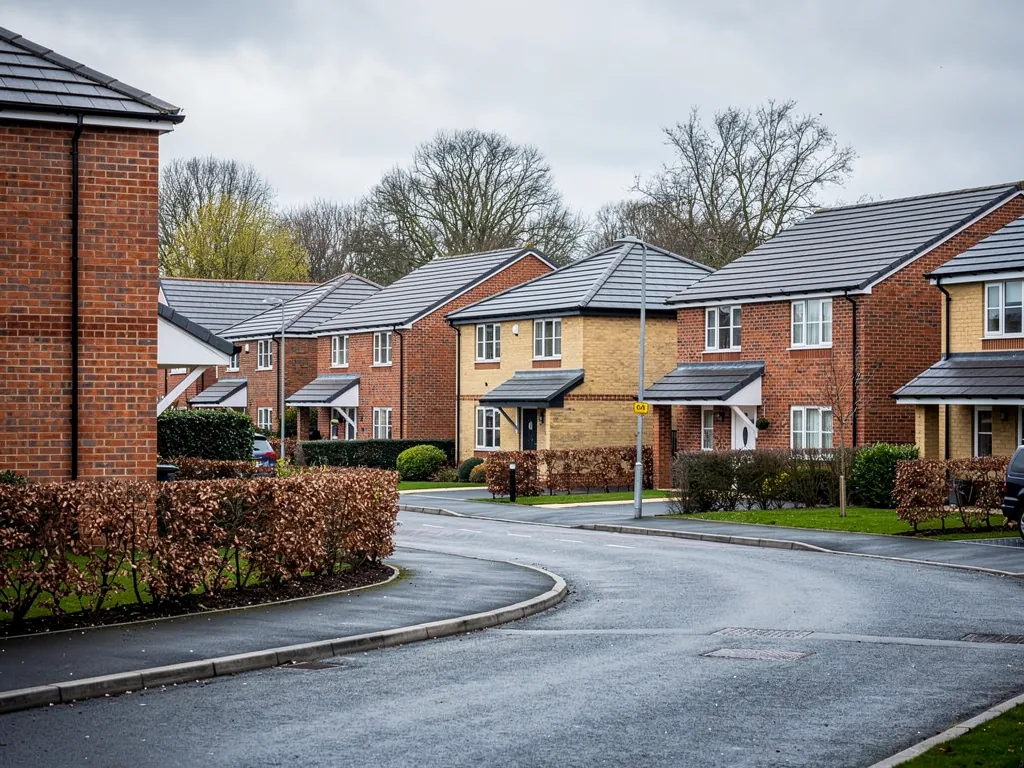
Modern 2000s brick houses with grey concrete tile roofs on a new estate near Basingstoke

Roofs we see in Headley

  • A Hampshire village cottage of flint and brick with a steep clay plain tile roof

    Listed cottages and farmhouses

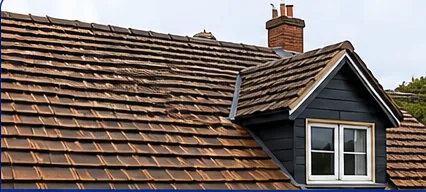
    There are 69 listed buildings and other structures in and around Headley civil parish, and many of them have a roof to look after. On older houses, hand-made plain clay tiles, slightly uneven, are a common covering, hooked over battens (the timber laths the tiles hang from). Repair on these houses means matching what is already up there, not swapping it for something newer.

  • 1930s semi-detached houses with hipped clay tile roofs and bay windows on a suburban road

    Large Georgian-era roofs

    Headley Grange was built in 1795 as the parish workhouse, and large roofs from that period often have long, wide slopes on heavy timber, sometimes with a gentle sag that has settled over two centuries. A sag is not always a fault. We check the timbers from the loft before deciding whether a slope needs strengthening or can simply be re-covered.

  • House roof stripped to battens during a roof replacement

    Village houses and outbuildings

    Around Headley Down, Standford and Arford you also find later houses under concrete or clay tile, with garages, porches and flat-roofed extensions beside them. Their usual troubles are familiar ones: crumbling ridge mortar, tired felt at the eaves and flat roofs that have simply run out of years. Our survey photographs show which of these you actually have.

21.3 road miles south-east of Basingstoke

Planning and building control in Headley

In Headley the local planning authority is East Hampshire District Council, so planning questions go to the council and building control goes either to the council or to a registered building control approver of your choosing. The parish holds 69 listed buildings and other structures, and East Hampshire's conservation area records include Headley Mill as a designated conservation area. If your house is listed, or stands in or beside that area, ask the council what applies before any materials are ordered. The East Hampshire District Council website is the place to start.

On an older house, repair with matching tile, slate or lead is usually uncomplicated. Changing the material, the colour or the look of the roof is another matter and may need consent, so talk to the council's conservation officer first. Re-covering part of a roof often sits outside building control, but a full strip can be notifiable, and we deal with that paperwork for you. If a roof window is on your wish list, the planning rules for a skylight or roof window and our conservation rooflights page show where the limits fall.

What we find on Headley roofs

This is a spread-out parish, and its roofs vary as much as its hamlets do. Some are centuries old and listed, some are big and plain from the Georgian era, and some are ordinary village houses with the usual wear of a later build. Each answer sets out what is going wrong, why it happens and what we would do about it.

Chapter 1: Our Headley cottage is listed. Can the roof be repaired without a fuss over consent?

What we find

Usually the work is simpler than people fear, provided it matches what is there. On older clay tile roofs the failures are specific: iron nails rust through and tiles slide out of their courses, wooden pegs rot, and the softer tile faces flake after hard frosts. A slipped tile exposes the batten beneath it, and the batten starts to rot in turn. By the time a stain shows on a bedroom ceiling, a patch of damp timber is often already waiting in the loft.

The trouble starts when a repair changes the look of the roof. A modern machine-made tile in a different colour, or a new ridge in a different profile, can be read by the council as an alteration, even when the intention was only to stop a leak.

What we fix

We photograph the whole roof, then strip back only the failed area and keep every sound tile. Gaps are filled with reclaimed tiles picked for the same shade and the slight curve of the originals, fixed to new battens with modern corrosion-resistant fixings in place of the old nails. The photographs also give you a clear record to show the council's conservation officer.

Where consent could be needed, we say so at the survey and wait for your go-ahead. A single slate or tile repair carries typical UK labour costs of £100 to £250 plus the slate. Your fixed quote follows the survey. Our pitched roofing page explains how larger tile jobs run.

Chapter 2: Why does the lead valley on our old Headley house keep leaking, even after patching?

What we find

A valley is the trough where two roof slopes meet, and on older houses it is commonly lined with lead sheet. Lead is a long-lived metal, but it moves with the weather, expanding in warm spells and shrinking in the cold. Over a century or more it can split along its folds or work loose, particularly where the original sheets were laid too long or fixed rigidly with nails through the face. Water finds the crack and runs down onto the timber underneath.

Patching with sealant or bitumen tape tends to hold for a season and then fail, because the lead underneath keeps moving and the sealant cannot follow it. The next leak usually appears a little further down the valley, which makes it look like a different fault.

What we fix

We open the valley, check the boards and rafters for rot and let in a new lead sheet cut to the right size, with the laps and clips arranged so the metal can move without tearing. Where the tile edges beside the valley have crumbled, we replace those as well, since new lead laid against broken tile does not stay watertight long.

The same approach applies to the lead flashings (the strips that seal a roof where it meets a wall or chimney) and the soakers, the small folded pieces that thread between the tiles up the side of a chimney. Typical UK figures for chimney leadwork run from £350 to £920, with an average near £570. The lead roofing and leadwork service page goes through how we lay and fix the sheet.

Chapter 3: How do you re-cover a big old house in Headley with a long, slightly sagging roof slope?

What we find

Buildings from the time of Headley Grange, which dates from 1795, were framed in oak or softwood timbers that were sized by eye and have carried their load for more than two hundred years. Some sag between the purlins, the horizontal beams that support the rafters. That deflection often stopped long ago and is harmless, but a sag combined with leaking tiles can hide rot at the rafter feet, where water has run down onto the wall plate.

Old roofs of this scale usually have no underlay at all, only the tiles themselves. Wind-driven rain and powdery snow find their way between them, and the loft looks dusty and dry until a storm shows otherwise. Repairing one slope at a time can leave odd lines where old and new meet.

What we fix

The first job is a proper look at the structure from the loft. If the timbers are sound, we strip the slope, fit a breathable underlay (a vapour-open membrane that lets the roof void dry out), add new battens, and relay the original tiles with reclaimed ones making up the numbers. Rotten rafter feet are cut out and scarfed with new timber rather than the whole rafter being replaced.

Scaffolding on a house of this size is a significant part of the price, so we plan the work to do whole slopes in one go. A full re-roof of a roof this size is notifiable, and we handle the building control side. If a slope does need strengthening, we tell you before the quote is written, not halfway through the job.

Chapter 4: The gutters on our Headley Down house overflow every autumn. Is it the gutters or the trees?

What we find

Both play a part, and they feed each other. Where mature trees stand close to a house, leaves, seeds and twigs collect in the gutters and silt up the downpipe outlets. Once water has nowhere to go, it spills over the front edge and runs down the wall, or backs up under the first row of tiles and soaks the fascia (the board that carries the gutter) and the rafter ends behind it. A shaded slope also stays wet longer, so moss grows and sheds into the gutter as well.

On older houses, the gutters may also have sagged from the weight of debris. A run that no longer falls towards the outlet holds a puddle at its low point, and the standing water rusts cast iron or distorts plastic joints.

What we fix

We clear the gutters and downpipes, check every joint, and re-set the fall so water travels to the outlet instead of waiting in the middle of the run. Rotten fascia boards are cut out and replaced, and any sagging brackets are renewed. If the tiles beside the eaves have been soaked for years, we lift the bottom courses to check the felt and battens before closing up.

For houses with a lot of overhanging tree cover, leaf guards over the gutter can reduce blockages, though they still need an occasional clear., and as a guide the typical UK range for a complete uPVC roofline on a semi is £1,800 to £3,500. Our guttering, soffits and fascias page covers the options.

Headley roofing questions

Our Georgian house in Headley has a hipped roof. Where do hipped roofs usually leak?

The weak points on a hipped roof are the hip lines and the joints where hips meet the ridge. Hip tiles are bedded in mortar that cracks over time, and the valleys and lead flashings where roof planes meet are the other common culprits. We look at each of these during the survey and photograph any open joints so you can see exactly where water is getting in.

Headley Mill is a conservation area. Does that change how a roof on a nearby house is repaired?

It can. East Hampshire's records list Headley Mill as a designated conservation area, and work inside one that changes the roof's appearance may need consent. Like-for-like repairs are normally acceptable, but put the question to the conservation officer at East Hampshire District Council first. We keep a photographic record of the roof as it stands, which makes that conversation straightforward.

Can you work on a roof near Bordon or Whitehill, as well as in Headley itself?

Yes. Headley lies 1.8 miles east of Bordon, and our cover runs well beyond it. If you are closer to the Bordon side, see our Whitehill and Bordon page, or Grayshott if you are nearer the Surrey edge. The survey, the photographs and the written quote are the same everywhere.

My Headley house has a crumbling chimney stack next to a listed neighbour. Who do I speak to first?

Start with us for the survey, so you know exactly what needs doing, then speak to East Hampshire's conservation officer if the stack or the neighbour is listed. A shared or adjoining stack can raise questions of ownership as well as repair, and we will photograph both sides of the roof so your discussions are based on evidence, not guesses. Repointing is done in lime where the brick or stone is soft.

We have bats in the roof of our Headley cottage. Can the work still go ahead?

Often it can, with care. Both bats and nesting birds have legal protection, and old cottages with open eaves and gaps behind the tiles are exactly the roofs they use. Tell us before the survey, so we can plan the timing, and if bats are confirmed, an ecologist may need to advise before tiles are lifted. We would sooner pause a job than disturb a roost.

Get your free roof survey in Headley

Tell us what’s happening and we’ll call you back to arrange a visit. You’ll get photos of your roof and a fixed written quote.

  • No obligation
  • Photo report of your roof
  • 10-year workmanship guarantee

Rather talk? 01256 213956

Call Free survey