Beacon Basingstoke Roofing

Roofers in Grayshott

Grayshott is 25.2 road miles south-east of Basingstoke, a heathland village on the Hampshire and Surrey border with Hindhead a mile away. Most of it grew from the 19th century onwards, so we spend our time on Victorian and later houses sitting under pine, birch and oak.

Clay tiled pitched roof gable on a red-brick house

Roofs we see in Grayshott

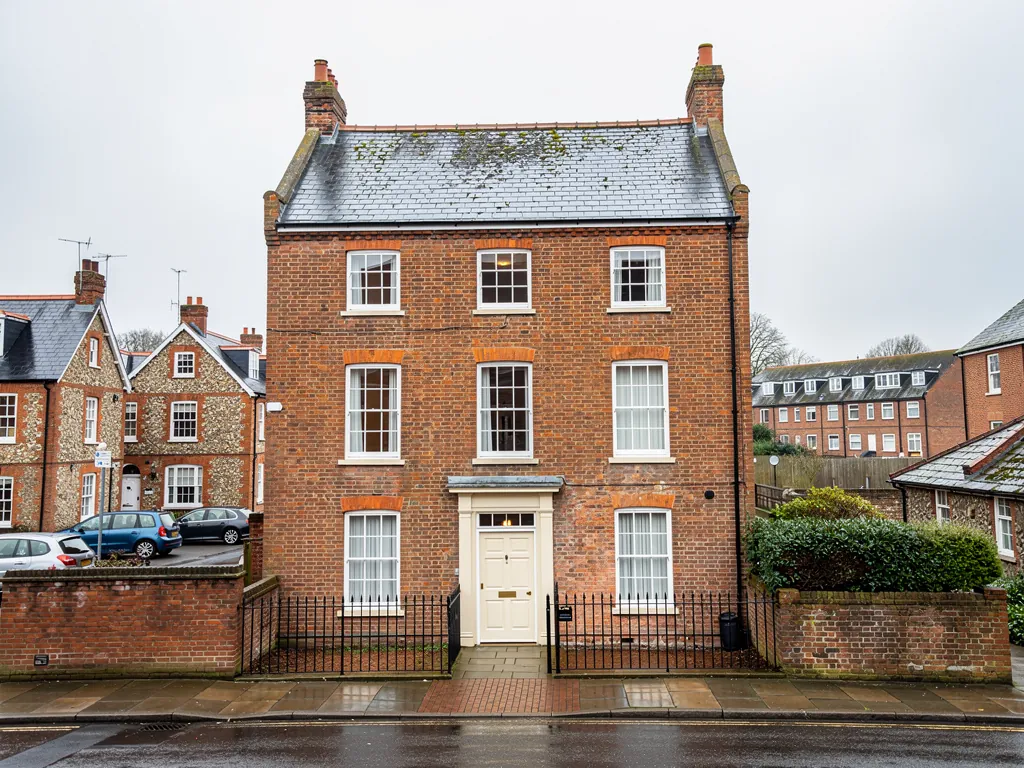
  • A Georgian brick town house with a slate roof and parapet in a Hampshire market town

    Villas of the 19th-century settlers

    Grayshott did not start to develop until the 19th century, when wealthy incomers began to settle on the heath. The houses they built tend to be sizeable, with several gables, tall chimney stacks and hips and valleys that multiply the number of joints a roof has to keep watertight. Each valley, the internal angle where two slopes meet, is a lead or tile detail that can fail on its own.

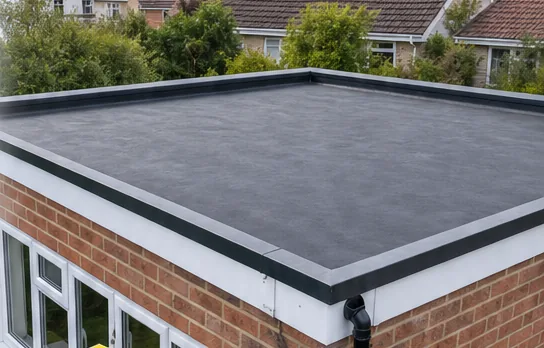
  • New EPDM flat roof on a brick extension

    Roofs under the trees

    Ludshott Common, a mile to the west, is heathland and woodland, and many gardens in the village run into the same trees. Roofs that sit beneath conifers and oaks are shaded for much of the day, drop their needles and leaves into the gutters, and grow moss and algae well beyond what a roof in open ground would show. Shade is the cause far more often than age.

  • 1960s and 70s brick semi-detached houses with concrete interlocking tile roofs on a Basingstoke estate street

    Church Victorian and later infill

    St Luke's Church, begun in 1898 and listed at Grade II, is one of only three listed buildings in the parish. Across the village, older houses and cottages sit alongside twentieth-century infill, so one road can mix hand-made clay tile, machine-made tile and concrete. We identify the covering first, because the repair, and the supply of matching tiles, depends on what is actually up there.

25.2 road miles south-east of Basingstoke

Planning rules for Grayshott roofs

East Hampshire District Council is both planning authority and building control body for Grayshott, and the village is recorded as a designated conservation area on the council's conservation area data. That matters for roof work on the older houses. There are three listed buildings in the parish, including St Luke's Church, so it is rare to find a listed roof on an ordinary street, but the conservation area status covers the general look of the place: materials, colour, chimneys and the outline of the roofs against the trees.

Matching what is already there is the simple case. If you want to change tile for slate, swap the colour or profile, or alter a chimney or roof shape, ask the planning team at East Hampshire District Council before you order anything. Replacing a whole roof can fall under the Building Regulations as notifiable work, and that is paperwork we take on. If a loft room is in your plans, our page on roof window building regulations covers the rules, and the conservation area guide explains how a designation can narrow the choices.

Grayshott roofs: faults and fixes

Grayshott's roofs mostly share one problem, which is the setting. They are tucked among tall trees on sandy heath, among them large Victorian houses with intricate roof shapes. That shows up as valleys that overflow, gutters that fill with needles, moss that will not stay away, and chimneys that stand taller than average. Each question below gives the cause and the repair.

Chapter 1: Why does water overflow at the valley on our Grayshott villa after heavy rain?

What we find

A valley is the internal angle where two roof slopes meet, and on a house with several gables there may be five or six of them. Each one collects the run-off from two slopes and funnels it down to the gutter, so it takes more water than any other part of the roof. In the older houses the valley is often lined with lead, or formed from tiles cut to curve into the angle.

Leaf litter and pine needles settle in the channel and dam it. Water backs up, spills over the lead edge and soaks the underlay beneath the tiles. Sometimes the lead itself has cracked after generations of expansion in summer and contraction in winter. Inside, the stain usually appears on the ceiling of a bedroom or landing under the angle, and it gets worse each time it rains hard.

What we fix

We clear the valley by hand and look at what is underneath. If the lead is intact and was only choked with debris, cleaning may be all that is needed, and we say so. Where the lead has split or the laps are too short, we strip the adjacent tiles, lay new lead to the correct code with proper laps and a clip-fixed edge, and relay the tiles so the roof looks as it did.

On a roof with many valleys, we check every one on the same visit, because the fault often repeats. A chimney-side valley may share a flashing with the stack, and we deal with the two together. Our lead roofing and leadwork service explains how lead is specified, and you see photographs of each repair before we leave.

Chapter 2: How do we stop pine needles and leaves from blocking the gutters on our Grayshott house?

What we find

A gutter holds a modest amount of water, and a roof the size of a Victorian villa pours a good deal into it during a storm. When needles, birch seed and oak leaves collect in the channel, they break down into a wet, dense mat that traps more debris. The outlets, where water drops into the downpipe, are the first spot to clog, and once they close the gutter fills and overflows.

The consequences build slowly. Water spills over the front edge and runs down the wall, staining the render or brick and soaking the foundations. It also gets behind the gutter onto the fascia board, which then softens and rots, and onto the soffit (the board that closes the underside of the eaves), where it can find its way into the loft. Old cast iron and early plastic profiles are especially prone to sagging when loaded with wet debris.

What we fix

We clear the gutters and downpipes by hand, then check the falls (the slight slope that carries water towards the outlet) and the brackets, which often need re-spacing on a gutter that has sagged. Joints that have opened are resealed or refitted. If the fascia has rotted, we cut out the bad section and splice in new timber, or replace the run in uPVC if that suits the house and the conservation area.

Where trees will keep dropping into the gutter, a fine mesh or leaf guard can cut the frequency of clearing, though it does not remove it. We tell you whether a guard will help on your roof. Our guttering, soffits and fascias page sets out the choices.

Chapter 3: Is it safe to leave moss on a roof shaded by trees in Grayshott?

What we find

Moss itself does little harm for a season or two, but on a shaded roof it never stops. It takes root in the granular surface of concrete tiles and the pores of clay, thickens year by year, and holds water against the tile long after the rain has stopped. In winter the trapped water freezes and expands, and the surface of the tile begins to break up.

Moss also packs the joints between tiles and the overlaps along the ridge, and it nudges tiles upwards so wind-driven rain can get underneath. Heavy growth sheds into the gutters in clumps, which brings us back to blocked outlets. On the north slope of a house screened by trees, the growth may be green and furry, while the south side looks clean, and that contrast tells us shade, not age, is the main culprit.

What we fix

We brush the moss off by hand and treat the tiles with a biocide, which keeps killing growth for some time afterwards. We avoid pressure washing, because high-pressure water can blast the surface off tiles and drive water under the laps. We also look closely at the tiles as we go, since cleaning often shows up cracks and slips that the moss had hidden, and we report them with photographs.

Moss will return on a shaded roof, so we talk through the options: trimming back branches where you have the right to do so, repeating treatment after a few years, or fitting zinc or copper strips along the ridge, which reduce regrowth in the water that runs down from them. UK cost guides put hand removal with biocide in the high hundreds of pounds, rising with the size of the roof. Our roof cleaning page covers each method.

Chapter 4: The chimney on our Grayshott Victorian house leaks when the wind is from the south-west. What is wrong?

What we find

Victorian villas in a village like this one commonly carry tall stacks, with pots on top and sometimes several flues side by side. The taller the stack, the more weather it takes, and the south-west is where driving rain tends to arrive. A rain-lashed stack can fail in four places: the top where the pots sit in a mortar crown, the brick joints along the shaft, the flashing at the base, and the sides where the soakers run.

Wind-blown rain lodges in open mortar joints and passes through porous brick to the flue lining. You see it as a brown stain on the chimney breast in a bedroom, wet patches around the fireplace, or a musty smell in the loft. The leaks that only show in a south-westerly are the giveaway, because it tells us which face of the stack is taking the water.

What we fix

We start on the roof, photographing each part of the stack, then work from the top down. A cracked crown is rebuilt. Open joints are repointed in a mortar that suits the brick, using lime where the bricks are soft. Lead flashings and soakers that have lifted or split are replaced with new, cut to the tile gauge. Where a stack is leaning or the brick has gone, rebuilding the top few courses may be the right answer.

UK guides put chimney leadwork at £350 to £920, with an average near £570, and the survey comes before any fixed quote. Disused flues can be capped and ventilated so damp does not build in them. Our chimney repairs page walks through each option.

Grayshott roofing questions

Why are chimneys on Victorian Grayshott houses so prone to leaking?

A tall chimney takes the full force of wind and rain. The usual leak points are cracked flaunching at the top of the stack, failing mortar between the bricks and lead flashings that have lifted where the stack meets the roof. We inspect all three, from the roof and the loft, and repair the part that has failed, which is often just the flashing or the pointing.

Does the Grayshott conservation area stop me re-roofing my house?

It does not stop you, but it can shape the work. Putting back the same material is generally easy to agree, while a change of material, colour or roof shape may need consent from East Hampshire District Council, so ask its planning team first. We photograph and describe your existing roof so you have a clear record to take to the council, and we handle building control where a re-roof is notifiable.

What can I do about branches overhanging my roof near Ludshott Common?

Branches that brush the tiles scrape the surface, keep the roof damp and drop debris into the gutter. If the tree is yours, pruning it back is the first step, though trees in a conservation area may be protected and need notice to the council. If it belongs to a neighbour, a polite word usually works. We can clear and treat the roof afterwards, and advise whether the shade will bring the moss back.

Can you repair the roof of St Luke's-era houses with clay tile and slate mixed?

Yes, and mixed coverings are not unusual on houses altered over time. We identify each material, source matching clay tile or slate, and make the repair so the join is watertight and neat. Slate and clay need different fixings and different handling, so we do not treat the roof as one surface. Where a house is listed, check with the council before changing anything.

Will you fit a roof window in a Grayshott loft conversion?

Yes, though a conservation area can restrict the type and position, so check with the planning team first. Our guide to roof windows for loft conversions explains how they work in a converted roof space, and our Basingstoke roofing homepage lists every service we offer across the area.

Get your free roof survey in Grayshott

Tell us what’s happening and we’ll call you back to arrange a visit. You’ll get photos of your roof and a fixed written quote.

  • No obligation
  • Photo report of your roof
  • 10-year workmanship guarantee

Rather talk? 01256 213956

Call Free survey