
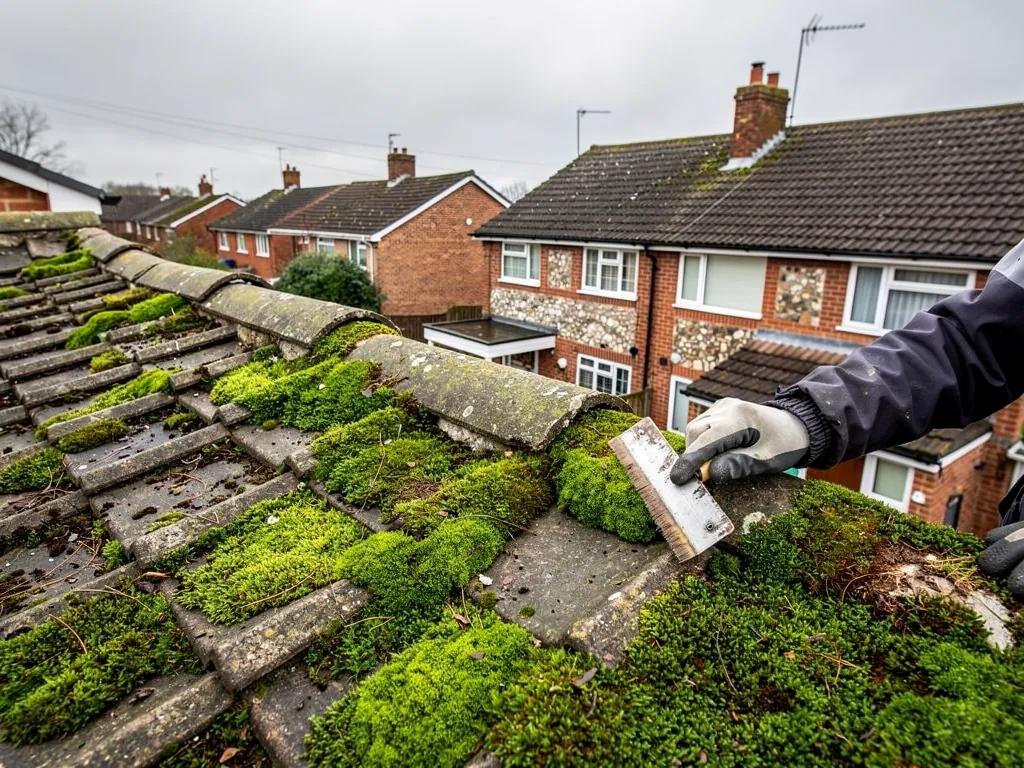
A biocide is a product that kills living things. On a roof it is applied to moss, lichen, algae and the bacteria behind black streaks, so that they die back at the root and release from the tile. The attraction is plain: the roof is not scraped or blasted, and the tiles keep their surface. The treatment is not instant, and it does not last for ever. This guide covers what a roof biocide is, how it is applied, what to expect in the weeks after, and the honest answer to how long a treated roof stays clean.
What a roof biocide is
Roof treatments are liquid products, usually water-based, which contain an active ingredient that damages the cells of the growth. Different products use different actives, and some are sold as concentrates for dilution while others come ready to use. They are designed for hard outdoor surfaces. What they have in common is that they are meant to be applied, left on the surface and then allowed to work for days and weeks, not rinsed off straight away.
Biocides are regulated products in Great Britain, which is one reason the label matters. The label states what the product is for, how to dilute it, how to apply it, what to protect and what precautions to take. Using a product contrary to its label is a breach of the instructions, and some household products are not designed for use on a roof at all. We will not name chemicals here, since the right choice depends on the roof and the product range changes, but we follow the label on every job.
How the treatment is applied
Application is simple in principle and fussy in practice.
First, the roof is checked. Thick moss in laps and valleys is removed by hand, as a heavy layer will stop the treatment from reaching the tile. Loose debris and leaves are cleared. The gutters are checked and the area below the roof is protected, including plants, ponds and pets' areas where practical.
The treatment is then applied evenly across the whole surface, usually by a low-pressure sprayer so that it coats the tiles and soaks into the growth without force. It needs to cover the shaded areas and the laps as well as the exposed faces. It is allowed to stay on the roof, and the weather and time do the rest. Some treatments are best applied in dry weather with no rain forecast for a day or so, so that they are not washed off before they have worked.
What happens in the weeks after
People are often disappointed on day one, because the roof looks no different. That is normal. Over the next days the growth changes colour. Moss turns brown or black as it dies, algae fades and lichen begins to lift at its edges. Rain, wind and frost then loosen the dead material, and over several weeks it flakes and washes off the roof. On smooth tiles this can happen quite quickly. On rough concrete and porous clay, it takes longer, and a full result may take a season.
During this time you may see small pieces of dead moss in the gutter or on the ground. That is the process working. We advise leaving the roof alone and checking the gutters now and again. Raking off the dead moss early is a common mistake, and the reasons high-pressure force is a poor idea are set out in our pressure washing explainer.
Biocide compared with other methods
Biocide is one of three common approaches, and it is often combined with another. Scraping and brushing removes growth mechanically but leaves roots and spores, and risks the tile surface. Pressure washing removes it faster but carries the biggest risk of damage. Biocide is the gentlest method on the tile, and is slower to show its results. Our full comparison, moss removal methods compared, weighs all three, and the answer on what soft washing is describes the low-pressure application most roofers use with biocide.
| Method | Speed of result | Effect on tile | Regrowth |
|---|---|---|---|
| Scraping and brushing | Immediate | Can scratch or lift the face | Roots and spores remain |
| Pressure washing | Immediate | Highest risk of harm | Often quick |
| Biocide treatment | Weeks to a season | Gentle on the tile | Slower, depends on conditions |
| Hand removal plus biocide | Mixed | Gentle if done with care | Slowest to return |
How long does it last?
No honest roofer can give you one number, and you should be wary of anyone who does. How long a roof stays clean depends on conditions on your roof, not on the product alone.
Shade and aspect
A north-facing slope under trees stays damp and will green up first. A sunny south slope may stay clean for much longer. The same treatment on the same house gives different results on different faces.
Tile surface
Rough, porous tiles give growth something to hold, so regrowth is quicker. Smooth glazed tiles and dense slate stay clean for longer.
Air and neighbouring growth
Spores arrive from the air, from neighbouring roofs and from trees. A roof in a damp, wooded setting is reinfected sooner than one in an open, dry one.
The state of the roof
Poor drainage, overflowing gutters and shallow pitches keep tiles wet. A roof with a leaking gutter at the eaves will green up there first.
The product and the coverage
Better coverage and a suitable product help. A treatment that missed the laps or was rinsed away by rain on day one will not perform as well. We apply to the whole surface and choose a day when rain will not undo it.
A treated roof can look good for a long stretch and then start to green up again, shaded slopes first. Our answer on how long before moss grows back gives the realistic picture, and the guide to how often a roof should be cleaned answers the follow-up question. A repeat light treatment is cheaper and easier than a heavy clean after years of neglect.
Safety, pets and the garden
A biocide is meant to kill living things, and it can harm others too. The label sets out the rules. In general, keep people and pets away from the area during application and while the product dries, keep wash water out of drains and ponds as the label directs, and protect plants below the eaves. We cover the details in whether roof moss treatments are safe for pets and roof cleaning, run-off and wildlife. Birds nesting under tiles and bats in roof spaces are protected, and work may need timing around them.
Bleach and homemade mixes are not an alternative. They can discolour tiles, corrode fittings and harm plants, and they are not designed for the job. See our page on whether you can use bleach on roof tiles.
Choosing the day and the season
Timing makes a visible difference. Biocide works best when the growth is active and damp, which means mild, moist weather in spring or early autumn, followed by a settled spell without heavy rain. In a hard frost the product does little and may not stay on the tile. In a baking summer the moss is dormant and dry, and the treatment is absorbed less well. Wind is a practical issue as well, since spray drifts, and a breezy day can put product on a neighbour's car or washing. We watch the forecast and move the date if we need to.
Roof pitch, access and the number of elevations also affect the day. A bungalow with an open garden can be treated in a short visit, while a terraced house with shared walls and a narrow side passage needs more planning. Neighbours should be told when you will have workers on the roof, particularly where the spray or run-off could reach their side.
Can you reuse the roof straight away?
Yes, there is nothing to wait for before the house is used. The treatment sits on the outside of the roof, not in the loft, and you do not need to vacate. The care is outdoors. Bring in washing, close windows during application, keep pets in, and cover any water butt fed from the roof, because the first rainwater after a treatment carries product with it. Disconnect or cover the butt for the period the label gives, and use the water on the garden only when it is safe to do so.
What a repeat treatment involves
When growth returns, the second visit is usually lighter than the first. The roof has already been cleared of thick moss, so the job is often a check of the laps and valleys and a fresh coat on the areas that have greened. That is quicker and cheaper than starting from nothing, which is why a roof that is looked at every so often costs less to keep clean than one left for years. We note on the report which slopes are likely to return first, so you know where to look from the garden.
Does treatment affect tile guarantees?
Possibly, depending on the maker and the product. Some tile manufacturers set out which cleaning products they accept and which they do not. If your roof is newer and a manufacturer's guarantee is still in force, check the paperwork before treatment. Our page on whether roof cleaning can void a tile warranty sets out what to look for.
When biocide is not the answer
Treatment is not a repair. If the roof has slipped tiles, cracked ridge mortar or failing felt, killing the moss will not fix them, and may show them up. Biocide is also unsuitable for some surfaces, and asbestos cement roofs should not be treated or cleaned by owners at all, since the HSE advises against damaging the sheets and sets out the rules on its asbestos pages. For flat roofs and metal sheeting the answer is different again.
What our survey tells you
We look at your roof before offering a treatment. The report identifies the covering, the growth, the shading and the state of the gutters, with photographs, and says whether treatment, hand removal or nothing is the sensible step. One fixed price follows in writing, and anything we apply carries a guarantee on our workmanship for ten years. There is more about our work on the roof cleaning in Basingstoke page. To ask about a treatment for your roof, message us on WhatsApp or dial 01256 213956.
