Beacon Basingstoke Roofing

Roofers in Overton

Overton is 8.3 road miles west of Basingstoke, in the valley where the River Test begins its run, and much of its nineteenth-century housing is small red brick cottages under slate, with thatch on a few of the oldest houses along Winchester Street. We survey them with photographs of your own roof, then send you a written quote at a set price.

Clay tiled pitched roof gable on a red-brick house

Roofs we see in Overton

  • White uPVC fascia, soffit and guttering under a tiled roof

    Slate over red brick cottages

    Most of Overton's nineteenth-century housing was built as rows of small red brick cottages under slate, and those slate roofs make up a large part of the older village. Slates are thin, hung from battens (the timber laths fixed across the rafters) on nails, and the faults are predictable: corroded nails let single slates slide, and the lead where a roof meets a party wall or chimney wears thin. Repair is usually the sensible answer.

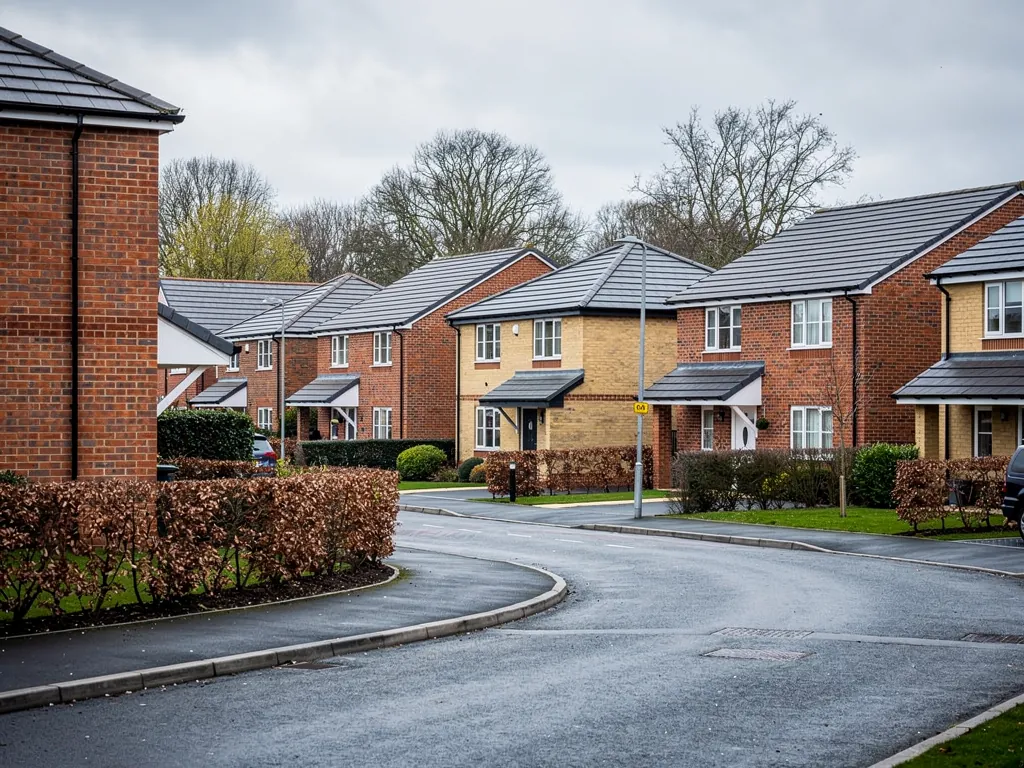
  • Modern 2000s brick houses with grey concrete tile roofs on a new estate near Basingstoke

    Thatch and timber on Winchester Street

    Several sixteenth-century listed houses line the High Street and Winchester Street, and numbers 66 and 73 Winchester Street are thatched. Thatching is a specialist craft of its own, but the brick chimney stacks, lead flashings, porch roofs and gutters around a thatched house are ordinary roofing work. We photograph those parts closely, because a small leak at a stack can spread into old timber before anyone notices.

  • Clay tiled pitched roof gable on a red-brick house

    Downland wind on the edges of the village

    The north of the parish lies in the North Wessex Downs, and houses on the higher, open ground take more wind than the cottages tucked down in the Test valley. Wind finds the ridge, the verge (the sloping edge of the roof where it meets a gable wall) and any porch or garage roof that was built light. These are the places we check first after a gale.

8.3 road miles west of Basingstoke

Planning and building control in Overton

Planning decisions in Overton are made by Basingstoke and Deane Borough Council, whose building control team also covers the Building Regulations side. The village centre is a conservation area, first designated in 1971, and the council's conservation area appraisal and management plan describes the character it wants kept: small brick cottages with slate roofs, and the older listed buildings on High Street and Winchester Street, several of them Grade II and some thatched. The northern part of the parish also sits in the North Wessex Downs, a protected landscape.

Where a slate cottage sits within the village's designated area, matching repairs are normally the easy route. Changing slate to concrete tile, or altering how a roof looks from the street, may need consent, so ring the conservation officer at the borough council before any materials are ordered, and treat a listed house the same way. Stripping and recovering a whole roof may need to be notified to building control first, and we take care of that paperwork. Fancy a roof window? The skylight planning guide on this site covers where the rules tighten.

Common Overton roof faults and their fixes

The roofs in Overton fall into three groups: the slate terraces and cottages, the older listed houses around the High Street, and the exposed edge where the village meets the downs. Each group fails in its own way. Our Basingstoke base is only 8.3 miles away, so a survey visit is easy to arrange.

Chapter 1: Why do slates keep slipping on our red brick terrace in Overton?

What we find

On the nineteenth-century cottages, each slate hangs from a single pair of iron nails driven into a batten. Iron rusts. Over a century or more the nail shank thins where it passes through the slate, until the weight of the slate and a few winters of frost are enough to pull it free. Roofers call this nail sickness, and it tends to spread across a slope at about the same rate, because every nail on that roof is the same age.

You may notice a slate lying in the garden or on a path, a gap that shows the dark felt or bare batten beneath, or a ceiling stain after heavy rain. A slate that has dropped is only the one you can see. Neighbouring slates on the same course are often hanging by a thread, and a gust can take several together.

What we fix

We look at the whole slope from a ladder or scaffold tower, then lift a few slates to see how far the nails have gone. If the slates are sound and only the fixings have failed, they can be re-hung on stainless nails or on hooks that clip over the batten, a combination that outlasts the old method. Cracked ones are swapped for reclaimed slate of the right size and thickness, so the roof keeps its character.

Your fixed quote follows the survey, but as a guide, UK roofers typically charge between £100 and £250 in labour to replace one slate, the slate itself costs £5 to £25, and hiring a tower can add £300 to £800. Where the slate itself is delaminating, we say so plainly. Our slate roofing page sets out when repair stops making sense.

Chapter 2: Why does it leak by the chimney on our older house near the High Street?

What we find

Brick chimney stacks on the older Overton houses stand through the roof like a column, and the joint between stack and roof is where a lot of leaks begin. The seal there is lead: a flashing along the brickwork, a back gutter behind the stack where water collects, and soakers (small lead pieces interleaved with the roof covering) up each side. Lead lasts a long time but it can split along folds, lift where the pointing has failed, or be pulled loose by a stack that has moved slightly.

Inside, a stain high on a chimney breast or beside it after rain usually points here. On a thatched house the stack is the one brick and lead feature of the whole roof, so water can run down into old timber quietly. Crumbling pointing and a leaning pot or cowl are worth noting at the same time.

What we fix

We photograph the stack from several angles, and from a ladder where the roof allows, then check the lead and mortar by hand. Often the repair is new flashings dressed neatly into raked-out joints, a new back gutter and repointing the courses above the roof line. On a listed or conservation area house we keep to lime mortar so the old brick is not trapped behind something harder than it.

Reported UK costs for new chimney leadwork span £350 at the low end to £920, averaging about £570, and the figure on your own quote follows the survey. More detail sits on our chimney repairs and lead roofing and leadwork pages.

Chapter 3: Why did the ridge tiles lift on our house at the top of Overton in the last gale?

What we find

Ridge tiles on the roofs that face the open downs take the full force of a south-westerly. The ridge is the capping along the top where two slopes meet. Traditionally it sat on a mortar bed, and that bed eventually cracks, shrinks and lets go of the tile. The verge, the exposed edge at a gable, was handled the same way and faces the same wind.

You may see a ridge tile sitting proud of its neighbours, a trail of mortar in the gutter, or a gap along the verge where a tile has gone. Daylight along the top of the loft or a draught from the ridge board is a further sign. An extension or garage roof that was built light can lose a loose edge strip in the same gust.

What we fix

Under BS 5534:2014, the ridge and verge pieces should be fixed with screws or clips, which means a mortar bed on its own no longer counts. We normally recommend a dry-fix ridge: tiles are clipped or screwed to a continuous batten with a ventilated roll underneath, and no weight rests on a bed of mortar. The dry-fix kits themselves are tested to BS 8612:2018. Verges can be finished the same visit with dry caps that grip the tile ends.

Fitting dry-fix to a semi-detached house is typically priced across the UK at £900 to £1,600, scaffold extra at £300 to £900, and your own fixed quote follows the survey. Which tiles can be reused is covered under ridge tile repairs.

Chapter 4: Why is there so much green growth on the roof of our Overton house by the river?

What we find

The Test is a chalk stream, and the valley around Overton is damp for much of the year, with the river, mature trees and old walls holding moisture. A north-facing slope or a roof beneath a tree stays wet long after the sun has dried its neighbour. Moss and algae take hold, and on slate or clay they can sit in the laps between courses, drawing water in rather than shedding it.

Moss alone is rarely the cause of a leak, but it can lift tiles slightly, hold leaves against the surface and wash down into the gutter, where it blocks outlets and sends water over the fascia. On a cottage with soft old brick, an overflowing gutter can mark the wall below for years.

What we fix

We remove moss by hand with a scraper and soft brush, then apply a biocide that kills the spores and lets the roof clean itself over the following weeks. We avoid a hard pressure wash, which can strip the face from old clay and soft slate and push water behind the laps. Gutters are cleared in the same visit, and any slate or tile that was hidden under the growth is checked for cracks.

Hand clearance with biocide is reported nationally at about £748 (small roof), £863 (average) and £978 (large), and the quote you receive follows the survey. Our roof cleaning page covers how often it is worth repeating.

Overton roofing questions

Can a slate roof on one of Overton's Victorian cottages be repaired rather than replaced?

Often, yes. Most of Overton's 19th-century housing was small red brick cottages with slate roofs, and slate can outlast the nails that hold it. A slipped slate is usually a failed nail, and a slate can be re-fixed with a copper tingle or replaced individually. If the nails have gone across a whole slope, a strip and re-slate is the lasting fix. The survey photographs show which applies.

Can you work on the roof of a thatched or listed house in Overton?

We can work on the parts that are not thatch: chimney stacks, lead, gutters, porches and any tiled or slated extension. Listed buildings on High Street and Winchester Street need consent for changes to materials or appearance, so we recommend like-for-like repairs and give you the photographs for your conversation with the council's conservation officer. Birds and bats are protected, so an old roof may need a survey or careful timing first.

Could I swap my slate roof for concrete tiles to save money?

Inside Overton's conservation area, that change may need consent, and a concrete tile roof would look quite different from the slate terraces around it. Before any ordering, ask the borough's planning officers what they would accept. Slate also lasts a long time when it is maintained. Typical UK prices run from £140 to £180 per square metre for Welsh slate and £100 to £130 for Spanish; your fixed quote follows the survey.

Do you do roof windows in a cottage near the High Street?

Often, though the type and position matter more in a conservation area. A slim conservation rooflight sits flush with the slates and draws less attention from the street. Read our conservation rooflights guide, then ask the council before you buy anything. We handle the Building Regulations side where the work is notifiable.

The paper mill has closed. Do you look after larger and commercial roofs around Overton?

Yes. Beacon does commercial roofing as well as domestic, including flat roof systems on units and larger buildings. Overton's paper mill, where Portals made Bank of England banknote paper from 1724, closed in 2022, so sites like that may change hands or use. Whatever the building, we begin with a free survey and photographs, and see our commercial roofing page for the types of work.

Get your free roof survey in Overton

Tell us what’s happening and we’ll call you back to arrange a visit. You’ll get photos of your roof and a fixed written quote.

  • No obligation
  • Photo report of your roof
  • 10-year workmanship guarantee

Rather talk? 01256 213956

Call Free survey