Beacon Basingstoke Roofing

Roofers in Ashe

Ashe is a small Hampshire parish 7.2 road miles west of Basingstoke, where the River Test begins and the land rises to 500 feet at each end over light soil on chalk. Its roofs range from a James I rectory to a Victorian church. We survey them with photographs, then quote in writing.

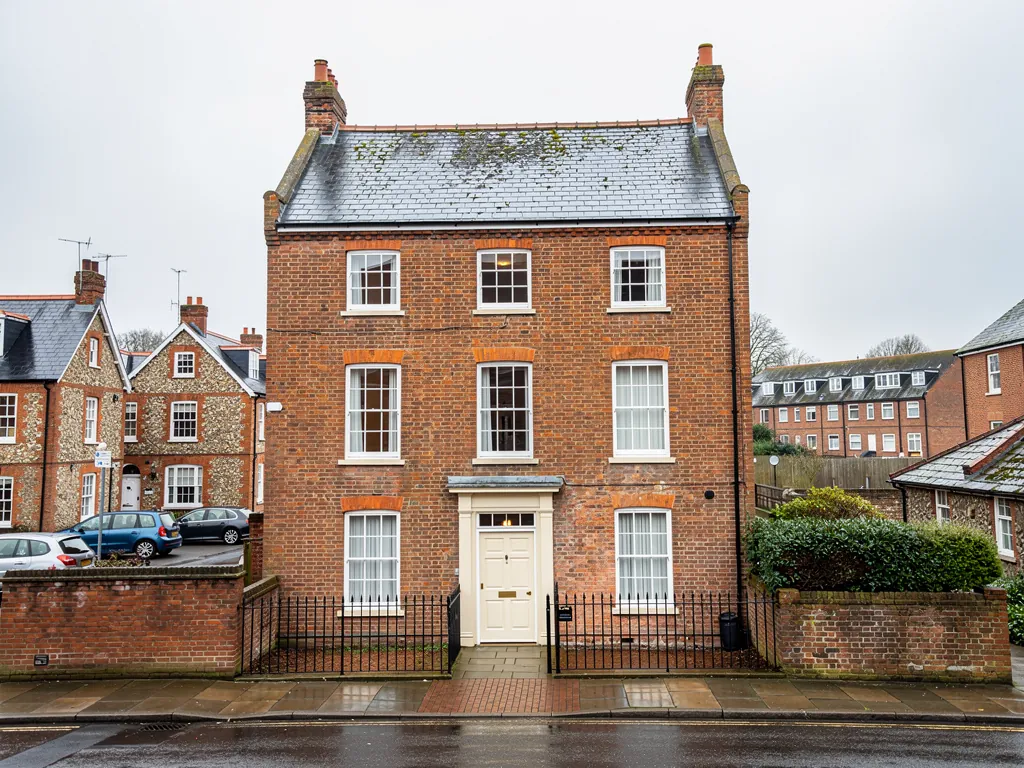
A Georgian brick town house with a slate roof and parapet in a Hampshire market town

Roofs we see in Ashe

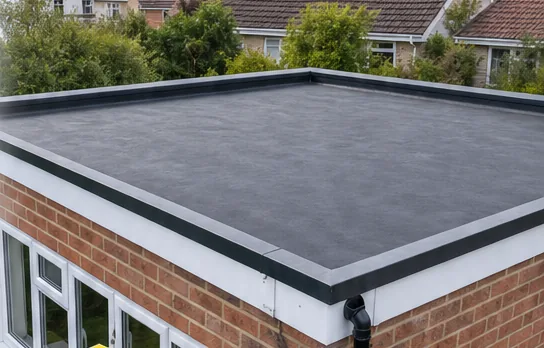
  • New EPDM flat roof on a brick extension

    Old rectory and farmhouse roofs

    Ashe House, the old rectory, dates from the reign of James I, and houses of that kind in a parish like this carry steep, heavy roofs on old timber frames. Roofs of that age were repaired many times, so a survey often finds mixed tile, old lead and rafters that have shifted slightly. The honest approach is a careful repair, not a stripped roof.

  • 1960s and 70s brick semi-detached houses with concrete interlocking tile roofs on a Basingstoke estate street

    Victorian church-era roofs

    The Church of the Holy Trinity and St Andrew is Grade II listed and was rebuilt by George Gilbert Scott Jr. in 1878, and Victorian houses of that period were commonly roofed in plain clay tile or Welsh slate, with lead at the chimneys and valleys. Roofs of the Victorian period were built to last, and mostly they have: the faults now are at the chimney, the flashings and the eaves.

  • An Edwardian red-brick detached house with clay tile roof and tile-hung gables in north Hampshire

    Exposed hilltop and valley houses

    The parish rises to 500 feet above ordnance datum at each end, and the Victoria County History records light soil over chalk. A house on the high ground catches the wind with little shelter, and one in the dip around the source of the Test stays damp. Both kinds of roof need their own approach to fixing and drainage.

7.2 road miles west of Basingstoke

Planning and building control in Ashe

Ashe lies under Basingstoke and Deane Borough Council for both planning and building control. It is a small parish, and its most notable buildings are historic: the Church of the Holy Trinity and St Andrew is Grade II listed, and Ashe House, the old rectory, dates from the reign of James I. If your house is listed, or stands in the curtilage of a listed building, changes to materials or appearance need consent before work starts. The council publishes guidance on conservation appraisals that is worth a read before you plan roof work on an older property.

Like-for-like repair, with the same tile, slate and lead, is usually straightforward even on an old house, but swapping clay for concrete or changing how a roof looks can call for permission, so talk to the council's conservation officer before anything is ordered. On newer houses in the parish the question is more often building control: a re-roof that covers a large share of the house may need approval from building control, and we deal with that side. For a roof window on an older Ashe house, read the skylight planning permission answer first, because listed status changes what is allowed.

What we find on Ashe roofs

Ashe is a small place with an old roofscape and an exposed position. Houses on the high ground feel every gale, those near the source of the River Test stay wet, and the oldest roofs have been mended so often that the first job is working out what is original.

Chapter 1: Why do the tiles on our hilltop house in Ashe slip and lift in strong winds?

What we find

The parish rises to 500 feet above ordnance datum at each end, and on those high stretches a house has little shelter. Wind pushes under the edges of the roof, at the verge (the edge at a gable end), at the eaves, and along the ridge, and it tries to lift the covering off. On roofs where the ridge and verge were bedded in mortar, the mortar eventually loses its grip, and one gust can shift a tile that has been loose for months.

The warning signs are small. A tile out of line in a course, a ridge tile that rocks when you look at it from the road, or mortar crumbs in the gutter. Inside the loft, daylight along the ridge, or a draught coming through the roof, points to gaps. Older tiles nailed with only a couple of fixings per course are more at risk, because each tile is held by very little.

What we fix

We start with a survey of the ridge, verge and eaves, checking the fixings as well as the tiles. BS 5534 requires ridge, hip and verge tiles to be mechanically fixed, with mortar no longer relied on alone, so on an exposed roof we usually recommend dry-fix, with the tiles screwed or clipped to a continuous batten over a breathable roll. Dry-fix systems are covered by BS 8612. Loose tiles elsewhere are re-fixed with extra clips so they resist uplift.

For a semi-detached house the typical UK range for a dry ridge is £900 to £1,600; scaffold, where required, is extra at £300 to £900. Your fixed quote follows the survey. Detached houses on the hill may need more scaffold and so cost more. Our ridge tile repairs page explains the choices, and we send photographs of the problem areas before you commit.

Chapter 2: How do you repair the roof of an old rectory-style house in Ashe without losing its character?

What we find

Ashe House, the old rectory, dates from the reign of James I, and older houses of that kind carry roofs that have been added to and patched over centuries. A roof on a timber frame of that age is rarely true: the rafters sag a little, the ridge dips, and the tiles are fitted to suit. Lime mortar, hand-made clay tiles and lead flashings are common, and modern materials behave differently from them.

The usual problems are slipped tiles from rusted nails, rotten battens where a leak has run for years, and chimney flashings that have failed. Inside, you may find old stains that have dried out and new ones that tell a different story. Without a close look from the roof and from the loft, it is hard to tell which leak is the current one, and guessing leads to money spent on the wrong repair.

What we fix

We photograph the whole roof and the loft first, so you can see what we see. Repair is the starting point: we strip only the failed section, keep every sound tile, and replace the lost ones with reclaimed or hand-made clay tiles matched to the originals. New battens go in under the stripped area, and the tiles are fixed properly rather than hung back on rusted nails. Chimneys get new lead flashings and soakers cut to the existing tile gauge, and any repointing is done in lime.

If the house is listed, a change of material may need consent, so we give you the photographs and a written description for the conservation officer. Our leadwork on period and listed homes guide explains how lead is handled on buildings of this kind.

Chapter 3: Why is the roof on our house near the source of the River Test in Ashe always damp and mossy?

What we find

The source of the River Test lies near the old rectory at Ashe, and the river flows west to Overton. Low ground at the head of a chalk stream stays damp, and a house near it sits in air that stays humid. Add trees and hedges, and a roof that faces away from the sun dries slowly after each shower. Moss, lichen and algae settle on the surface and thrive in the overlaps between tiles.

Moss holds water against the tile and packs into the joints. In winter, that water freezes and can lift or flake the surface, and the loose moss washes into the gutter, where it blocks the outlet. A blocked gutter overflows onto the wall and, on a house with timber eaves, can rot the fascia, the board that carries the gutter. If you see green growth, overflow staining and a soft fascia board together, the damp is working on the roof from several directions at once.

What we fix

We clear moss by hand and apply a biocide to kill the spores, avoiding pressure washing, which strips older tiles and drives water into the joints. The gutters are cleared at the same visit, and we check the outlets and downpipes run freely. If the fascia has started to rot, we cut out the soft section, fit new timber and refix the gutter to a proper fall.

Typical UK prices reported for hand moss removal with biocide run from £748 for a small roof to £978 for a large one, and your fixed quote follows the survey. Cutting back nearby branches does more for a shaded roof than any treatment, and we say so where it applies. Our why moss grows on north-facing roofs page explains the cause.

Chapter 4: Can you repair the roof of a barn or outbuilding on a farm plot in Ashe?

What we find

The main road from London to Exeter runs through the parish, and the land around it is open farmland with scattered houses and outbuildings. Garages, stores and workshops on plots like these were often roofed in profiled sheet, bitumen felt or corrugated asbestos cement. Each ages differently. Felt splits at the joints, metal sheet loses its fixings and rusts at the laps, and asbestos cement turns brittle and cracks around the bolts.

On open ground with little shelter, wind works on every lap and fixing. Water gets in at a lifted sheet edge, and the first sign is often damp stock or a stain on the roof timber. Grey corrugated sheets on an older outbuilding should be treated as suspect until tested. Do not drill, jet wash or walk on them, because broken fibres are the risk.

What we fix

Asbestos cement sheets can be taken down carefully, without breaking them, as non-licensed work under HSE guidance, with a risk assessment, controls and trained workers. If they would be broken up, the job becomes notifiable, so we plan removal to keep them whole. On a small building, overlaying is sometimes the better route, and we say which suits yours after the survey.

Felt or sheet roofs on outbuildings can be re-covered in EPDM, a single-sheet rubber membrane, once the deck is sound. Typical UK prices for an EPDM roof on a single garage run from £1,200 to £2,500, and your fixed quote follows the survey. Our asbestos garage roof removal page explains the process.

Ashe roofing questions

The ground at Ashe is high and exposed. Does that change how a roof should be fixed?

It can. A roof on high ground takes wind from several directions, so loose ridge tiles, lifted verge tiles and slipped slates show up first. Ridge, hip and verge components should be mechanically fixed, not left to mortar alone. When we survey an Ashe roof we look at how those edges are held and whether the underlay below is still sound, because wind driven rain finds any weakness.

Does my house need listed building consent for roof repairs in Ashe?

Only if it is listed or inside the curtilage of a listed building, and the council can tell you which. Like-for-like repair is usually fine, but changes to material or appearance may need consent from Basingstoke and Deane. Ask the conservation officer before work begins. We photograph the roof first so you can show them exactly what is there.

Can you work on the chimney of an old house in Ashe?

Yes. Old stacks often have soft brick and lime mortar, so we repoint in lime rather than hard cement, and renew lead flashings and soakers where they have failed. Typical UK prices for chimney leadwork run from £350 to £920, and your fixed quote follows the survey. See our chimney repairs page for how the work is done.

Do bats or nesting birds affect roof work on older Ashe houses?

They can. Bats and nesting birds are protected, and old roofs with gaps under tiles and in the eaves suit them. If we see signs during the survey, we tell you, and the work may need timing around the nesting season or a survey first. We do not push on regardless.

Is a new roof on a hilltop house in Ashe any different to one in town?

It is, mainly in how the roof is fixed. On high, open ground the wind is stronger, so we specify extra clips on tiles and dry-fix ridges and verges so the edges resist uplift. Access can also be harder, which shows in the scaffold cost. Our roof replacement page explains how the job runs, and the quote is fixed after the survey.

Get your free roof survey in Ashe

Tell us what’s happening and we’ll call you back to arrange a visit. You’ll get photos of your roof and a fixed written quote.

  • No obligation
  • Photo report of your roof
  • 10-year workmanship guarantee

Rather talk? 01256 213956

Call Free survey