


Chapter 1: Why is the ridge on our Lychpit house shedding mortar after forty years?
What we find
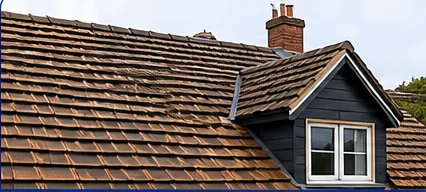
Houses put up in the 1980s were generally finished with a mortar-bedded ridge: capping tiles laid along the apex in a trough of sand and cement. The verge, which is the sloping edge of the roof at a gable end, was pointed in the same way instead of being clipped. After four decades of frost, sun and rain, mortar like that shrinks away from the tile and breaks into crumbs.
You tend to notice it from the ground first: grey grit in the gutter, a ridge tile sitting proud of its neighbours, or a hairline gap along a gable edge. Inside the loft, look along the underside of the ridge for daylight, or a dry trail of mortar dust on the felt. Wind does the rest, because a loosened ridge tile can lift in a gust and land on a drive or a car.
What we fix
First we lift a handful of ridge tiles and judge the tile itself. On estates of this age it is normally the bedding that has let go, not the concrete. The standard has changed since the houses were built: BS 5534 asks for a mechanical fixing at the ridge, the hips and the verges, so a plain re-bed in mortar is not what we would recommend. A dry-fix ridge uses a continuous batten, clips or screws and a vented roll, and a dry verge uses caps that clamp over the tile ends.
One scaffold serves the whole elevation, so doing ridge and verges together is usually better value than separate visits. Reported UK prices for dry-fixing the ridge of a semi sit between £900 and £1,600, with scaffold adding £300 to £900 on top of that. Your fixed quote follows the survey. To see how the job runs, read ridge tile repairs; and our guide to roof tiles lifting in the wind helps if a gust has already shifted something.
