
Beacon Basingstoke Roofing

Roofers in Eversley

Eversley lies 14.1 road miles north-east of Basingstoke, out along the A327 towards Arborfield, and its roofs follow the village's older centres: hand-made clay tile, slate and orange tile hanging across its four conservation areas. Our survey comes with photographs of your own roof, and the quote that follows is fixed and written down.

An Edwardian red-brick detached house with clay tile roof and tile-hung gables in north Hampshire

Roofs we see in Eversley

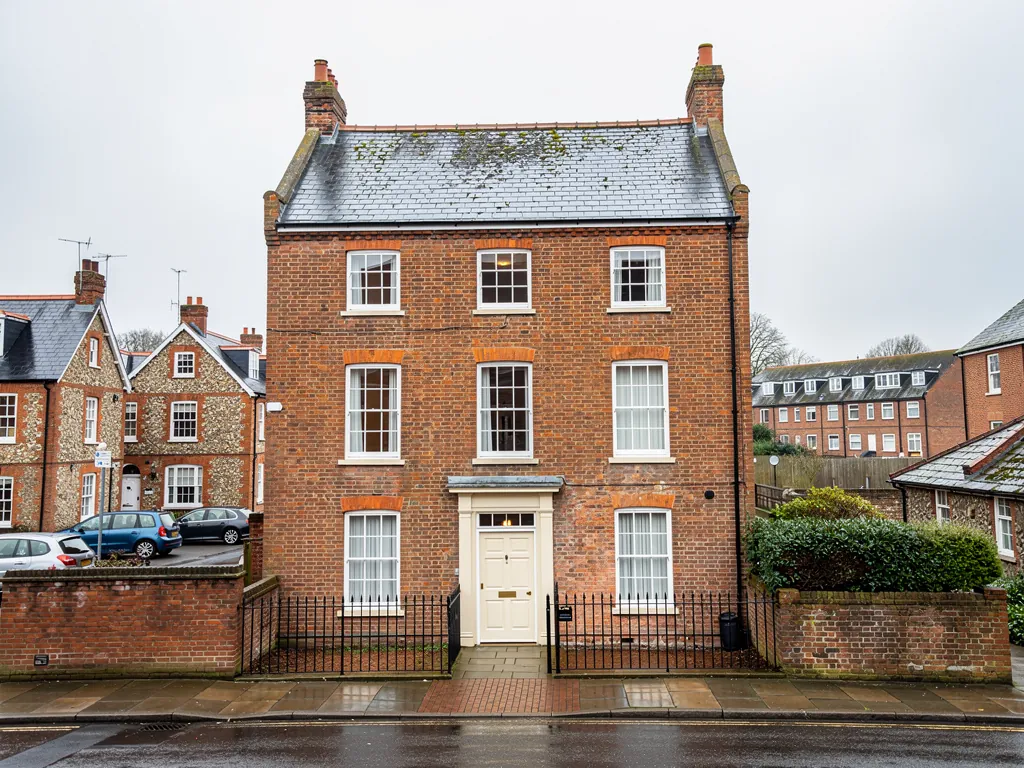
  • A Georgian brick town house with a slate roof and parapet in a Hampshire market town

    Hand-made clay tile roofs

    Hart's conservation statement for Eversley describes buildings with hand-made clay tile roofs, and they are easy to spot: tiles with a slight camber and uneven edges, in mixed shades of red and brown that modern machine-made tiles rarely match. Each tile is small and sits in a double lap on timber battens (the thin laths the tiles hang from). A roof like this can usually be patched tile by tile, as long as matching tiles are found before the work starts.

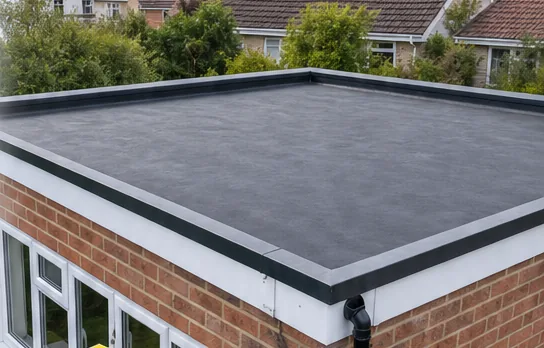
  • New EPDM flat roof on a brick extension

    Slate on the later houses

    Alongside the clay, the same statement records slate roofs. Slate is a long-lived covering, yet the fixings behind it are not. Iron nails rust through, and the slate then slips down its course while looking perfectly sound from the road. A single slipped slate lets water onto the felt and battens below, so a gap that seems minor from the ground can be soaking timber in the roof space for a whole winter.

  • 1960s and 70s brick semi-detached houses with concrete interlocking tile roofs on a Basingstoke estate street

    Tile hanging at first-floor level

    Orange tile hanging to the first floor is another feature the statement picks out. These are clay tiles hung vertically on the walls rather than laid on a roof, and they meet the main roof at an abutment (the junction where a wall rises out of a slope). That junction is sealed with lead, and it is where we most often trace damp on the upper floor of an older Eversley house.

14.1 road miles north-east of Basingstoke

Planning and building control in Eversley

Hart District Council is the planning authority for Eversley. Hart has designated four conservation areas here: Church Farm, Eversley Street, Eversley Cross and Up Green. The area around the church was designated in 1976, Eversley Street followed in 1980 and Eversley Cross in 1983. The council's conservation areas page leads to the statement that describes the character of each one, and it is worth reading before you order materials for an older house.

Inside a conservation area, like-for-like repair is normally routine. Changing the covering, for instance concrete tile in place of hand-made clay, or altering how the roof looks from the street, may need consent, so ask Hart's conservation officer before you commit to anything. The same applies to a listed building such as The Chequers, a Grade II listed building dating from the 17th century. Outside the designated areas, a full strip and re-cover can be notifiable under the Building Regulations, and we deal with that side for you. If you are weighing a roof window, read do I need planning permission for a skylight before you plan one, because a conservation area changes the answer.

What we find on Eversley roofs

Eversley is a spread-out parish rather than a single street, so its roofs vary a good deal from one lane to the next. Near the church and along Eversley Street the covering is traditional clay, slate and tile hanging. Further out the houses are newer, with their own set of faults, and everything sits in open country with the Blackwater valley to the north.

Chapter 1: Why are the tile-hung walls on our Eversley house shedding tiles and letting damp in upstairs?

What we find

Vertical tile hanging looks light, but each tile depends on a small fixing. A tile-hung wall carries clay tiles with two holes, hung from battens on nails or pegs, and many have a nib on the back that hooks over the batten. When the nails rust or the battens behind rot, tiles slip, tilt and drop to the ground. Where the wall rises out of the main roof, the junction relies on lead (a flashing is the strip that seals that joint), and lead that has lifted or split lets water run down inside the wall.

On an Eversley house the signs are fairly consistent: a bare patch on the wall where tiles are missing, a stain on the bedroom ceiling or wall near the abutment, and sometimes green growth in the joint where water never dries. Clay tile hanging also takes a lot of weather on its south and west faces, and the damage tends to show there first.

What we fix

We work from scaffold or a ladder, taking off the slipped area and checking the battens behind it. Rotten battens are cut out and replaced with treated timber, a breathable membrane goes behind if the old backing has failed, and the sound tiles are rehung with stainless steel or copper fixings that will not rust through again. Where tiles are missing, we source reclaimed ones in a matching orange, because new tiles seldom blend with weathered ones.

The abutment gets new lead flashing and soakers (small pieces of lead interleaved with the tiles so that water is carried over them and out). Our lead roofing and leadwork page explains how that is formed. Chimney leadwork is typically priced between £350 and £920 in UK cost guides, and the fixed quote only comes after the survey.

Chapter 2: Can slipped slates on an older Eversley house be fixed without re-roofing?

What we find

Slate roofs fail from the fixings first. Most older slate was nailed with iron, and the nail shanks corrode in the damp of the roof space until the head can no longer hold the slate. The slate drops down its course and hangs on the tail of the one below. From the lane it just looks a little untidy. In the roof space it means a gap that rain can blow through, and once the roofing felt beneath has worn, the water reaches the rafters.

Slate itself rarely fails on a roof of this kind, apart from slates that have delaminated into thin layers. The test is to look at some from close up: slates flaking in layers are at the end of their life, while slates that are sound and merely loose are good for decades more. We photograph both situations for you, so you can see which applies to your roof.

What we fix

If the slates are sound and the nails are the problem, the repair is slate by slate. We lift the course above, remove the damaged slate and fit a new or reclaimed one, held by a copper strap or a clip called a tingle, which grips the tail of the slate without needing a nail through the face. Several slipped slates together suggest the whole slope is going, and we say so plainly when a section needs stripping and relaying.

Typical UK prices for a single slate repair are £100 to £250 for labour with £5 to £25 more for the slate itself, while a tower or scaffold adds £300 to £800 if access is awkward; your fixed quote follows the survey. For a whole roof, see our slate roofing page, which sets out relaying against replacing.

Chapter 3: Why does the chimney stack on our old Eversley cottage keep letting damp into the bedroom?

What we find

On cottages with a hand-made clay tile roof, the chimney stack is usually the most exposed part of the building. It stands clear of the ridge, catches wind from every direction, and the mortar between its bricks takes more weathering than any wall in the house. Over decades the joints erode back until the bricks are loose and water runs into the stack, down the flue lining and into the bedroom plaster beside it.

The second weak point is the flashing, the lead that seals the stack to the roof on all four sides. On older work it was often replaced with a bead of mortar or sealant, which cracks as the roof moves. Look for a dark stain on the chimney breast, damp patches on the wall in the room below, or crumbling mortar at the top of the stack. A cowl (the cap over the pot) that has been knocked loose can add to it.

What we fix

We start with the survey photographs from the roof and the roof space, so you can see where the water goes in. Loose brickwork is rebuilt, and joints are raked out and repointed. On a listed or conservation-area house we use a lime mortar that matches the original in colour and softness, because a hard cement mix can trap water in the brick and flake its face off. Lead flashings are cut and dressed in new, with a stepped flashing up the sides and a back gutter behind the stack.

Typical UK ranges reported for chimney repointing run from £450 to £1,200, and the fixed quote only comes once we have surveyed. There is more on the options on our chimney repairs page, including when a stack needs rebuilding instead of repointing.

Chapter 4: Our roof near the Blackwater is covered in moss and the gutters overflow. What do we do?

What we find

The River Blackwater and the Berkshire border form the northern boundary of the parish, and the land around it is low, wet and well treed. Roofs close to the valley and under tall oaks and pines stay damp for long periods, especially on north-facing slopes where sun seldom reaches. Moss establishes in the joints between tiles and holds water against them, and on concrete tiles in particular it can lift the edges as it grows.

The same trees feed the gutters. Leaves, needles and moss washed off the roof pack into the outlets, so the gutter fills, spills over the front and soaks the fascia (the board that carries the gutter) and the brickwork below. Look for green streaks on the wall under the gutter line, water running down the face of the house during rain, and a fascia that feels soft when you press it with a screwdriver.

What we fix

We remove moss by hand and treat the surface with a biocide, which kills the growth at its roots, instead of blasting it off with a pressure washer that can strip the face of older tiles. Gutters are cleared and flushed in the same visit, and we check the falls and the joints for leaks. A sagging run is rehung on new brackets, and rotten fascia boards are cut out and replaced. Overhanging branches are your decision, but cutting back the worst of them will slow the moss returning.

Typical UK costs for moss removal by hand with biocide are £748 for a small roof, £863 for an average one and £978 for a large one; your fixed quote follows the survey. Our roof cleaning page explains the methods, and guttering, soffits and fascias covers the repairs.

Eversley roofing questions

Can slate on a later Eversley house be repaired slate by slate?

Yes, where the slates are sound and the nails are the weak point. We lift the slates around the fault, replace failed fixings with copper or stainless steel nails and slip in matched slates. If nail failure runs right across a slope, re-laying the whole slope while keeping every good slate is the better route. The photographs from the survey show which of these applies to your roof.

Can you match hand-made clay tiles for a repair in the Eversley conservation areas?

In most cases we can come close. The village roofs carry tiles with the camber and mixed colour that Hart's conservation statement describes, so we look for reclaimed tiles of the same size and shade rather than new machine-made ones. A good match keeps the roof looking right from the street. Before any change of material, check with Hart's conservation officer, and we will give you the photographs to take along.

Do I need consent to re-tile The Chequers, or a house like it?

Any listed building needs care. The Chequers is Grade II listed and dates from the 17th century, so work on the roof of a house of that standing should be agreed with the council's conservation officer before it starts, even when you intend a like-for-like repair. We record the roof in photographs and suggest matching materials. Old roofs can shelter bats and nesting birds, which are protected, so timing or a survey may come first.

Is the tile hanging on my first floor a roof job or a builder's job?

It is both, in practice, and we treat it as one. The tiles on a hung wall and the lead where the wall meets the roof fail together, and fixing one without the other leaves the damp where it was. We repair the wall tiling, replace the battens behind it and renew the flashing at the junction in one visit, so the water has no way in.

Why do roofs towards the Blackwater seem to need clearing so often?

Open, wet ground and trees do most of it. Eversley sits low towards the river, and leaf fall, damp air and shade keep moss active on roofs that stay dull for long spells. Regular clearance of gutters, and moss treatment by hand when the growth builds up, costs far less than repairing a rotten fascia or a saturated roof timber. We can look at both on the same survey.

Get your free roof survey in Eversley

Tell us what’s happening and we’ll call you back to arrange a visit. You’ll get photos of your roof and a fixed written quote.

  • No obligation
  • Photo report of your roof
  • 10-year workmanship guarantee

Rather talk? 01256 213956

Call Free survey