


Chapter 1: Why is my Finchampstead roof so green and mossy under the pines?
What we find
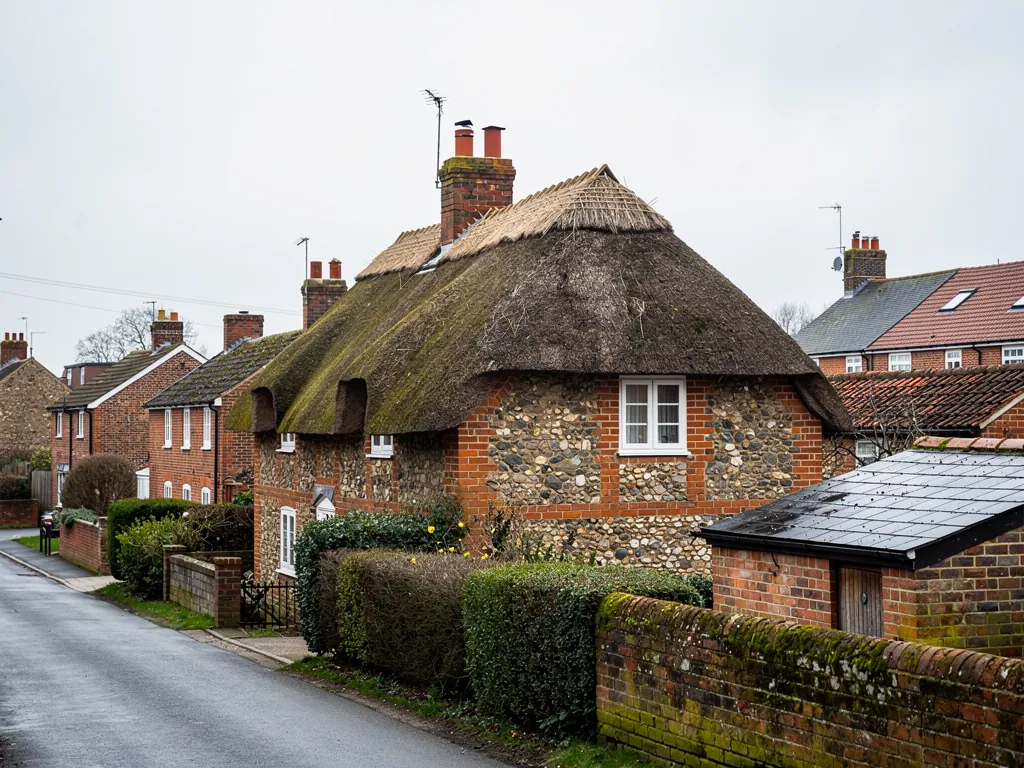
A tile roof with trees on its north side can stay wet for days after every shower. Moss and algae spread across the shaded slopes, and the moss holds water against the tile like a sponge. On concrete tiles, that water works into the surface over winters of frost, and the tile face starts to flake. Moss also packs into the gaps where one tile overlaps the next, which lets rain creep sideways under the lap.
Pine needles make it worse. They collect in valleys (the internal channels where two roof slopes meet) and along the back of a chimney, where they sit as a damp mat, rot down and block the flow. In the loft, a patch of darker, stained timber under a valley is the usual sign that the water has already found a way through.
What we fix
We clear the roof by hand, brushing off the moss and applying a biocide wash, because pressure washing can strip the protective surface from concrete tile and force water under the laps. Valleys are cleaned out and checked for pinholes, and any valley lining that has gone soft is replaced. We clear the gutters on the same visit, since the same debris is feeding both.
Where trees overhang the roof, we suggest the owner talks to the tree's owner or a tree surgeon about cutting back. Nesting birds and bats are protected, so lopping may need careful timing. Our roof cleaning service explains how a clean is done, and reported UK figures for a hand clean with biocide treatment range from £748 to £978 by roof size; we quote a fixed price after the survey.
