Beacon Basingstoke Roofing

Roofers in North Oakley

North Oakley is a scatter of farms and cottages 8.4 road miles west of Basingstoke, out on the open North Hampshire Downs and about three miles north of Oakley village, which is a different place. Roofs here meet the wind first and the shelter last. Every job starts with a photographed survey and ends with a price you can hold us to.

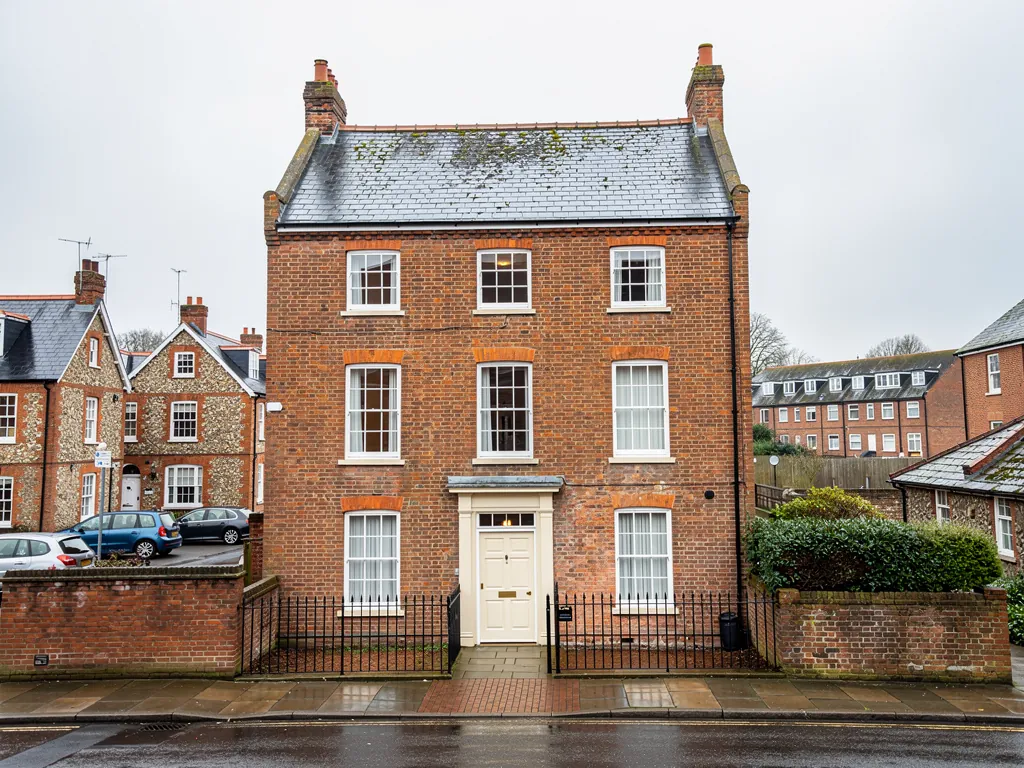
A Georgian brick town house with a slate roof and parapet in a Hampshire market town

Roofs we see in North Oakley

  • Slipped and cracked clay roof tiles

    Farmhouses and estate cottages

    The Victoria County History records North Oakley as a tithing of Kingsclere, its old manor site now marked only by North Oakley Farm. That farming past shapes what we expect to find: farmhouses and cottages that may carry plain clay tile or slate, brick chimneys, and lean-to additions at the back. Old plain tiles are small and double-lapped, so one slipped tile is simple to replace but easy to miss from the lane.

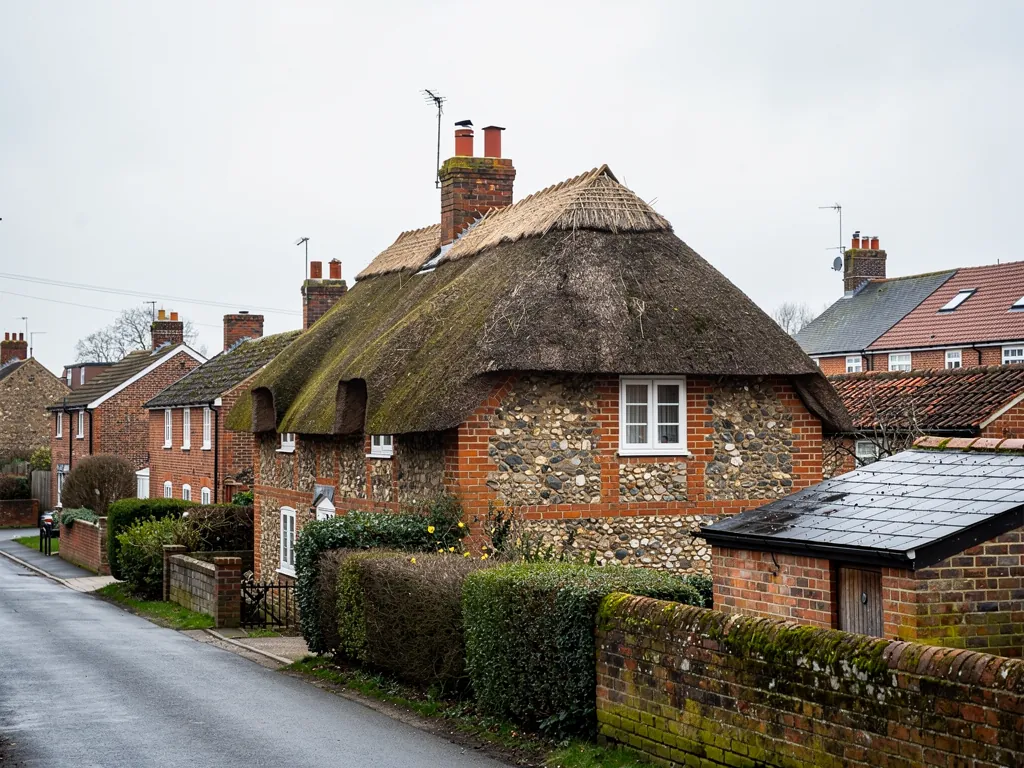
  • A thatched cottage in a Test Valley village with a brick chimney

    Barns, garages and outbuildings

    Farm country means outbuildings, and some have been re-roofed more than once. Open stores often carry profiled sheet, older garages can carry corrugated asbestos cement, and converted barns tend to have modern membranes and rooflights set into old frames. Each needs a different repair, and we price it from photographs of your own roof once we have been up and looked.

  • Brick estate houses with concrete tile roofs among pine trees

    Exposed downland roofs

    The parish sits on the North Hampshire Downs inside the North Wessex Downs Area of Outstanding Natural Beauty, with little cover around it. The Hannington transmitting station on Cottington Hill shows how open the high ground is. Wind and driving rain reach the roof directly, so ridges, verges and eaves take the beating, and that is where faults usually start.

8.4 road miles west of Basingstoke

Planning and building control in North Oakley

Planning and building control for this hamlet both sit with the borough council at Basingstoke, which is the local planning authority here. It lies in Hannington civil parish, within the North Wessex Downs Area of Outstanding Natural Beauty, so if a job would change how a roof looks from the lane or the downs, ask the council's planning team first whether the designation affects it. Church Oakley's conservation area belongs to Oakley village, and Hannington parish's own conservation area, designated in 1992, is centred on Hannington village. You can check the boundaries and read how the borough describes its protected areas on the conservation appraisals page. Older farmhouses and cottages here may still be listed, and a listed house needs consent for changes to its materials or appearance, so check before ordering anything.

For ordinary re-roofing, the Planning Portal sets the test: a repair or re-cover that touches under 25% of the building envelope and under 50% of the roof usually falls outside building control. Beyond that, approval is needed and the insulation may have to be improved. A farmhouse stripped and re-covered will usually be over that line, and we handle the paperwork. Planning a roof window for an upstairs room? The rules are laid out in our roof window planning permission guide.

What we find on North Oakley roofs

A hamlet of farms and cottages on high ground has a particular set of roof problems. Weather comes in unbroken across the fields, outbuildings stand beside the houses, and old roofs have been patched by several different hands over the years.

Chapter 1: Why do ridge and verge tiles keep working loose on our exposed North Oakley house?

What we find

On open downland the wind does not arrive in gusts from one side. It lifts and drops against the roof from every direction, and the parts that stand proud take the load: the ridge (the capping along the top), the hips, and the verge (where the roof finishes at a gable wall). Where those tiles were bedded in sand and cement, the mortar cracks as the roof flexes and the bond lets go a little more with each storm.

Looking up from the lawn you might spot a ridge tile sitting proud of its neighbours, or lines of pale mortar crumbs in the gutter. In the loft, daylight along the ridge or a damp patch on the ridge board tells you rain is getting in. A tile that lifts in a gale can land well away from the house.

What we fix

First we lift a few to see if the tiles themselves are good and it is just the bedding that has gone, as it often is on roofs like this. Under BS 5534:2014 the capping pieces along ridges, hips and verges must be fixed mechanically, with no reliance on mortar alone. On an exposed site like this, we normally recommend dry-fix: the tiles are screwed or clipped down to a long timber batten with a vented roll beneath, and nothing depends on a mortar bond holding. BS 8612:2018 covers those dry-fix systems.

Your fixed quote follows the survey. As a guide, reported prices for dry-fixing the ridge of a semi-detached house run £900 to £1,600, plus scaffold at £300 to £900. Our ridge tile repairs page sets out the options. A written 10-year guarantee on our workmanship comes with the job.

Chapter 2: Can the old plain clay tiles on our North Oakley cottage be repaired, or does the whole roof have to go?

What we find

Older cottages and farmhouses in north Hampshire commonly carry plain clay tiles, small and double-lapped, hung from battens (the timber laths the tiles hook over) and often pinned with nails or pegs. Iron nails corrode until a tile drops out of its course, a fault roofers call nail sickness. Pegs rot. The softer tile faces flake in frost, particularly on the north slope, which stays damp longest.

One missing tile rarely gives a leak by itself, since the next course underneath catches the water. The trouble starts when the gap is left for a winter and the old underlay below it, if there is any, has long since perished. Brown marks on a bedroom ceiling under the roof slope are the usual first sign.

What we fix

Repair is normally right. We strip the failed section only, keep every sound tile, and fill the holes from a stock of reclaimed tiles that match the originals for colour and curve. Fresh battens and breathable underlay are laid beneath that patch, and each tile is fixed securely rather than hung back on old rusted nails.

A full re-cover is only worth it when the failure runs across the whole slope, and we say so when a roof has years left in it. A photograph of each fault sits in the survey report, so you can see what we saw. Re-roofing a three-bedroom semi-detached house in concrete tile is typically reported at £6,500 to £10,500, and an old clay-tiled farmhouse costs more. For how these jobs run, read about pitched roofing.

Chapter 3: Is the corrugated roof on our North Oakley barn or garage asbestos cement, and can it stay?

What we find

Outbuildings round farms and cottages were roofed with whatever was cheap and quick when they were built. Grey corrugated sheets on a garage or store from the mid-20th century may well be asbestos cement. Nobody can tell by eye with certainty, so treat such sheets as suspect until they are tested. They gather moss and lichen, turn brittle, and crack around the fixing bolts, and a cracked sheet can drop through if anyone steps on it.

Do not drill, jet wash or climb on them. On a flat-roofed lean-to or porch the usual fault is different: bitumen felt splits and blisters, and water sits in hollows where the deck has sagged.

What we fix

Careful removal of asbestos cement sheets, handled whole and not broken up, is non-licensed work under HSE guidance, but it still calls for a written risk assessment, sensible controls on site, and workers who have been trained for it. Where breaking the sheets cannot be avoided the work becomes notifiable, so we plan removal to keep them whole. On a small building, overlaying with a new covering is sometimes the better route, and we tell you which after the survey.

For a felt lean-to we strip to the deck, replace soft boards, and cover it again with EPDM, a rubber membrane supplied as one large sheet. As a guide, reported figures for a one-car garage in EPDM sit between £1,200 and £2,500. Our garage roof replacement page compares the choices.

Chapter 4: Why does the rain run down the wall of our North Oakley cottage instead of into the gutter?

What we find

A cottage at the edge of a field often has trees close by, and leaves, seed and twigs collect in the gutter through autumn. A blocked gutter overflows over the front edge. Rain then runs down the wall, or splashes behind the gutter onto the fascia (the timber board the gutter brackets screw into) and the soffit (the board under the overhang). Damp patches on the brickwork below, and a fascia that feels soft when you press it with a screwdriver, point the same way.

On an exposed site wind can also push rain sideways under the lowest course of tiles. If the underlay is torn at the eaves, that water drops onto the wall plate behind the brickwork instead of reaching the gutter.

What we fix

We clear the gutters, check the falls (the slope towards the outlet) and refix any bracket that has pulled away. Where a section of fascia or soffit has rotted, we cut it back to sound timber and replace it. If the underlay at the eaves has failed, we lift the bottom courses, fit an eaves carrier tray (a rigid strip that guides water from the underlay into the gutter), and relay the tiles.

For orientation, new uPVC fascias, soffits and guttering on a semi-detached house are reported at £1,800 to £3,500. Repair or replacement is explained on the guttering, soffits and fascias service page.

North Oakley roofing questions

Do outbuildings and barn roofs at North Oakley need a different repair from the house?

Often they do. A farm outbuilding may have profiled sheets, old slate or clay pantiles, and sheeting is fixed and sealed quite differently from tile. Exposed high ground tests the fixings, so we check for lifted sheets, rusted screws and gaps at the ridge. If the sheeting is cement-based and old, it may contain asbestos, which must be handled with care. We survey each building separately.

Is North Oakley part of Oakley, and does that change who we deal with?

No. North Oakley is a hamlet in Hannington parish, about three miles north of Oakley. Both come under Basingstoke and Deane Borough Council, so building control and planning questions go to the same team. The old Church Oakley conservation area belongs to the larger village, so do not assume a rule you read about Oakley applies to your house here.

Can you work on a converted barn roof with rooflights in North Oakley?

Yes. Converted barns usually have a modern membrane or underlay laid over an old timber frame, with rooflights flashed into it, and leaks tend to start at those upstands (the raised edge round a window or rooflight). We photograph the junctions, test what is failing, and repair or re-flash as needed. Any listed barn needs the council's consent for changes to materials.

Do we need to wait for summer before re-roofing on the downs?

Not always. Long dry spells suit big strips, but a leaking roof should be made safe first, and we prioritise emergency calls. Exposed sites mean we watch the forecast for wind, since open tiles and sheeting are the first things to lift. Old barns and farm roofs often shelter protected bats and nesting birds, which can mean timing the work around them or surveying first.

Is there a conservation area to worry about in North Oakley itself?

The nearest conservation areas are Hannington, centred on Hannington village and designated in 1992, and Church Oakley, in Oakley village. The borough's maps will confirm whether your address falls inside either. For a house here, the better question is whether it is listed or whether the AONB designation affects your plans. Ask the council's planning team before you change materials, and keep our survey photographs to hand for that conversation.

Get your free roof survey in North Oakley

Tell us what’s happening and we’ll call you back to arrange a visit. You’ll get photos of your roof and a fixed written quote.

  • No obligation
  • Photo report of your roof
  • 10-year workmanship guarantee

Rather talk? 01256 213956

Call Free survey