Beacon Basingstoke Roofing

Roofers in Hook

Hook is 7.9 road miles east of Basingstoke, just north of Junction 5 of the M3, and it has been growing since the 1980s: estate houses first, then Holt Park, and now new streets to the north-east. Many of the earlier estate roofs are now of an age to need attention. We photograph yours before we quote.

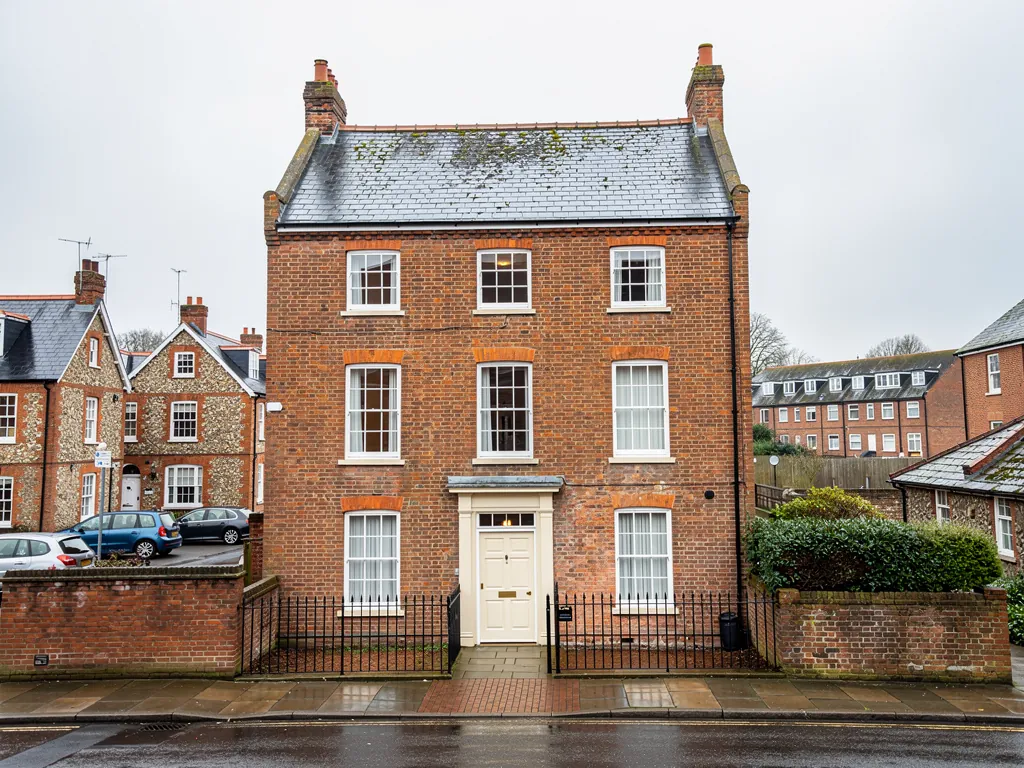
A Georgian brick town house with a slate roof and parapet in a Hampshire market town

Roofs we see in Hook

  • An Edwardian red-brick detached house with clay tile roof and tile-hung gables in north Hampshire

    Houses of the 1980s estates and after

    Hook has grown quickly since the 1980s, and the roofs show it in layers. The first estate houses are now around forty years old, which is when ridge mortar cracks, verge cement lets go and the original underlay under the tiles begins to stiffen. Concrete interlocking tiles were the usual choice on estates of that era, and they are tough, so the covering is often fine when the details around it are not.

  • Roofer fitting roof tiles on a brick house near Basingstoke

    Holt Park and the newer streets

    Holt Park spread the village eastwards between 2004 and 2006, and since 2020 Green Hart Park and Oakwood Grange have pushed it north-east. Roofs this young should rarely need replacing. When they leak, the cause is usually a flashing, a vent, a poorly sealed abutment or a cracked tile, and it can be cured with a targeted repair. A builder's warranty may still apply, so check it first.

  • White uPVC fascia, soffit and guttering under a tiled roof

    Church, common and outbuildings

    St John the Evangelist, designed by Edward Maufe and completed in 1938, is one of the village landmarks, and the houses around it are mixed in age and material. On the edge of Hook Common, forest and heathland press close to gardens, so garages, sheds and extensions sit under trees. Their flat roofs and timber fascias suffer from leaf fall, shade and damp more than roofs in open streets.

7.9 road miles east of Basingstoke

Planning and building control in Hook

Hart District Council is the planning authority for Hook, and it also provides a building control service for work that needs one. We do not guess at designations. The village contains some older and listed buildings, and Tylney Hall Park and Garden nearby is listed Grade II*, so a property close to that estate, or any house that is itself listed, should have its status checked with the council before roof work is priced. Repairs in matching material are normally the easy case.

On the 1980s and later estates the question is usually technical rather than designation-based. Stripping and re-covering a whole roof may bring in the Building Regulations, and if it does we arrange the notification ourselves. Young estates often have covenants or management company rules too, so read your deeds if you plan to change tile colour. Thinking of a loft window? Start with our skylight planning permission guide, then contact Hart. Our Basingstoke roofing service is close at hand for Hook.

What we find on Hook roofs

Because Hook has been built in stages since the 1980s, a street-by-street view works better than a village-wide one. Houses of different decades have different weak points, and neighbours often share them.

Chapter 1: Our 1980s house in Hook has a cracked ridge and crumbling verge. Is the roof finished?

What we find

Rarely. Concrete interlocking tiles were the standard covering on estate houses of the 1980s, and those tiles are made to last. What gives out first is the mortar along the ridge, the line of capping tiles at the very top, and along the verge, the sloping edge above a gable wall. Cement mortar shrinks, cracks and lets go after a few decades, and the tiles it held start to move.

You may see grey crumbs on the path, a gable edge where the mortar has fallen away, or a ridge tile sitting out of line. In the loft, daylight at the ridge or a damp patch on the timber below is the confirmation. Because streets were built to one pattern, a neighbour's roof is usually in the same state as yours.

What we fix

We lift sample tiles to see what condition the covering is in. If it is sound, which is the usual result, we remove the old mortar and re-fix the ridge and verge mechanically, as BS 5534:2014 expects, in place of bedding them in mortar again. Dry-fix systems, covered by BS 8612:2018, hold the tiles with screws and clips, so the roof no longer depends on a bond that will fail.

The roof is then left weather-tight for years without a re-roof. Published UK prices for dry ridge work on a semi start at £900 and top out at £1,600, scaffold being £300 to £900 on top, and our own figure follows the survey. Dry verge has no reliable published price, so we quote it from your measurements. The options are laid out in our notes on ridge, verge and dry-fix work.

Chapter 2: Our house in Holt Park is only about twenty years old and the ceiling is stained. Where is the water coming in?

What we find

A roof built in the 2000s should be watertight, so a stain points to something specific rather than general wear. The usual suspects are the junctions: the flashing where the roof meets a wall or chimney, the abutment between a dormer and the main slope, a roof vent or soil pipe penetration, and the valley where two slopes meet. Builders sometimes seal these with mastic instead of metal, and mastic perishes.

Water also tracks. It can run along a rafter or the underlay for a metre or more before dripping, so the stain on the ceiling is seldom directly below the entry point. A cracked tile, or one slipped slightly at a bottom edge, can also let in wind-driven rain in a storm and then stay dry for weeks.

What we fix

We trace the stain from the loft, checking timbers and underlay for dark tide marks, then look at the outside of that same spot. A lifted flashing is dressed back or replaced with lead, a cracked tile is swapped for a matching one, and a failed seal is renewed properly. Small, accurate repairs like these are all a newer roof usually needs, and we say so rather than suggesting more.

If the house is still under a builder's or new-home warranty, tell us before work begins, since a repair by someone other than the original builder can affect a claim. We can supply photographs that document the fault for that conversation. See emergency and general roof repairs for how we deal with leaks, including temporary measures when a ceiling is dripping.

Chapter 3: Why is moss taking over the roof of our house near Hook Common?

What we find

Hook Common is a large mix of forest and heathland beside the village, and homes near it live with trees, shade and damp. A roof that gets little direct sun stays wet after rain, and moss takes hold in the joints between concrete tiles, then in the valleys and gutters. Moss soaks up water like a sponge and holds it against the tile, and in winter that frozen water can crack the surface.

Debris from overhanging branches adds to the trouble. Leaves and twigs collect in gutters and valleys and can block outlets, so rainwater spills over the edge instead of draining. Look for a green or black crust on the north-facing slope, moss lumps in the gutter, and stained brickwork under the eaves where water has been overflowing.

What we fix

We remove moss by hand with brushes and scrapers, then treat the tiles with a biocide that continues working for months, because the roots survive the scraping. We avoid pressure washing concrete tiles where we can, as it strips the protective surface and drives water under the laps. Gutters and downpipes are cleared in the same visit, and we check the valleys for any damage the moss has hidden.

Typical UK costs for hand moss removal are between £748 and £978 depending on roof size, and the quote we send follows the survey. Trimming back branches that overhang the roof does more than any treatment to slow regrowth. For the methods in detail, see moss removal and roof cleaning.

Chapter 4: The flat roof on our Hook garage or extension is leaking. Repair or replace?

What we find

Garages, porches and rear extensions on estate houses often have flat roofs, usually finished in bitumen felt or an early rubber or fibreglass layer. Felt is thin. It blisters in sun, splits at the laps and tears at the edges, and with a shallow fall, water lingers and works into any gap. The boards beneath absorb it and begin to rot.

Beneath an overhanging tree, a flat roof also holds a layer of leaves and sludge that keeps the surface wet. Look for bubbles, hairline cracks at the upstand where the roof meets the wall, water ponding in the same corner after rain, and stains on the ceiling below. Pressing the surface and finding it springy is a sign the boards are damaged.

What we fix

A local blister or split can often be patched, if the deck beneath is dry. We open the area, dry it out, check the boards and make good. If the deck is soft or the felt has failed across the roof, replacement is the honest advice. We lay new boards where needed, then a membrane: EPDM, a rubber sheet, or GRP, a fibreglass laminate that is brushed on wet and sets rigid.

Upstands are lapped properly under flashings, and edge trims are fixed to shed water into the gutter. UK cost guides show EPDM garage roofs for a single garage at between £1,200 and £2,500, and we confirm a fixed price after our survey. See flat roofing for a comparison of materials.

Hook roofing questions

Can a Hook house built since the 1980s have the same roof problems as its neighbours?

Often, because estates were built in phases with the same tiles, the same ridge details and the same fixings. If one roof has a failing mortar bed under the ridge or a lifting verge, the next house along may have the same fault at a similar age. That works in your favour: we know where to look, and a survey with photos of your own roof tells you whether you have it yet.

We bought a new-build in Green Hart Park. Who should I call about a roof fault?

Start with your builder or warranty provider, because a fault in the first few years may be theirs to put right. If you want an independent view or a quick temporary fix, we can survey and photograph the problem and put it in writing. A repair by someone else can complicate a claim, so tell us about your warranty before we start.

Does Tylney Hall being listed affect my roof in Hook?

Only if your property is listed or close enough to share its status. Tylney Hall Park and Garden is Grade II*, but an ordinary house in the village is judged by its own designation. Check with Hart District Council if you are unsure. Where a house is listed, like-for-like repair is usually acceptable, but swapping the material is where consent can be needed.

Our estate house has a tiny leak by the loft hatch. Does it need a new roof?

Almost certainly not. A drip at one point suggests one fault: a slipped tile, a perished flashing or a vent that is not sealed. We trace it from inside, photograph the outside and fix that part. A new roof is only the answer when the underlay and battens have failed throughout, and we tell you if that is the case.

Is the old tin church roof story true? What roofs did Hook have before?

Hook's parish church of St John the Evangelist, completed in 1938 to a design by Edward Maufe, replaced a tin tabernacle that had served since 1886, so yes, corrugated iron once roofed the village's place of worship. Most houses here today are far newer and carry clay or concrete tile. If you have an old iron-roofed outbuilding, we can repair or replace it.

Get your free roof survey in Hook

Tell us what’s happening and we’ll call you back to arrange a visit. You’ll get photos of your roof and a fixed written quote.

  • No obligation
  • Photo report of your roof
  • 10-year workmanship guarantee

Rather talk? 01256 213956

Call Free survey