
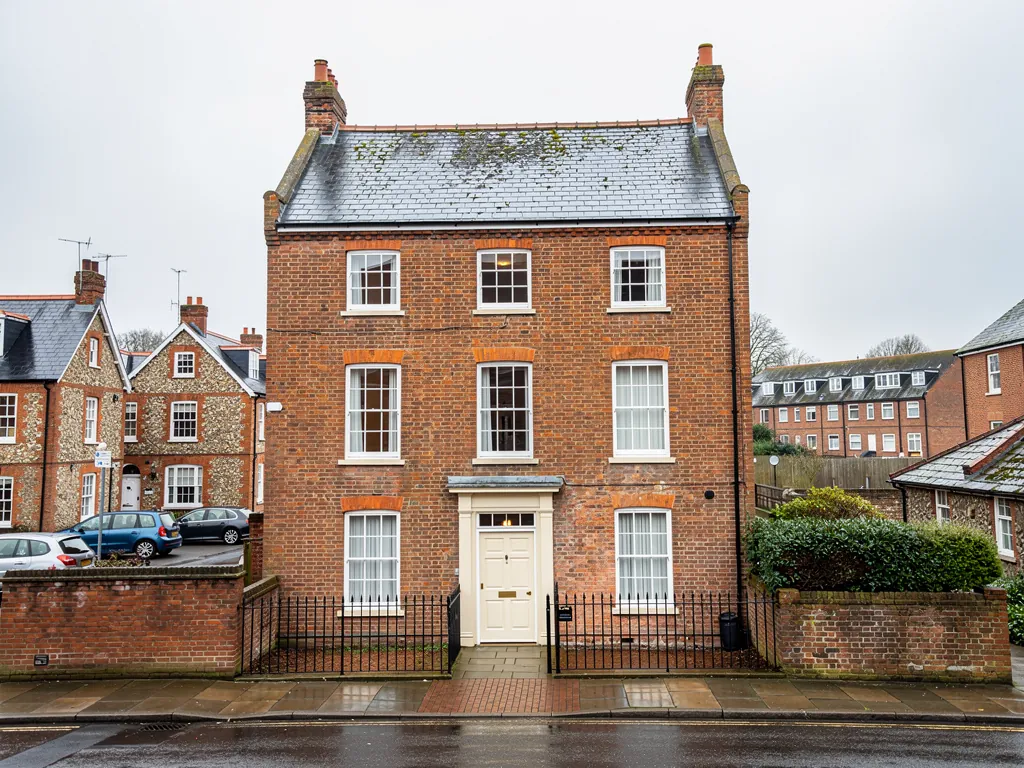


Chapter 1: Why do the tiles on our hilltop house in Ashe slip and lift in strong winds?
What we find
The parish rises to 500 feet above ordnance datum at each end, and on those high stretches a house has little shelter. Wind pushes under the edges of the roof, at the verge (the edge at a gable end), at the eaves, and along the ridge, and it tries to lift the covering off. On roofs where the ridge and verge were bedded in mortar, the mortar eventually loses its grip, and one gust can shift a tile that has been loose for months.
The warning signs are small. A tile out of line in a course, a ridge tile that rocks when you look at it from the road, or mortar crumbs in the gutter. Inside the loft, daylight along the ridge, or a draught coming through the roof, points to gaps. Older tiles nailed with only a couple of fixings per course are more at risk, because each tile is held by very little.
What we fix
We start with a survey of the ridge, verge and eaves, checking the fixings as well as the tiles. BS 5534 requires ridge, hip and verge tiles to be mechanically fixed, with mortar no longer relied on alone, so on an exposed roof we usually recommend dry-fix, with the tiles screwed or clipped to a continuous batten over a breathable roll. Dry-fix systems are covered by BS 8612. Loose tiles elsewhere are re-fixed with extra clips so they resist uplift.
For a semi-detached house the typical UK range for a dry ridge is £900 to £1,600; scaffold, where required, is extra at £300 to £900. Your fixed quote follows the survey. Detached houses on the hill may need more scaffold and so cost more. Our ridge tile repairs page explains the choices, and we send photographs of the problem areas before you commit.
