
Ask three roofers for a price on the same house and you can get three very different numbers. Sometimes that is because one has priced a different job. More often it is because the cost of roof work depends on a handful of factors that are invisible from the pavement, and each quote has made its own assumptions about them. Once you know what those factors are, you can read a quote critically, ask the right questions and see why a number is high or low. This page walks through each driver in turn, with typical UK figures for orientation. It is not a price list: the fixed quote only comes after someone has looked at your roof.
Size and shape of the roof
Area is the starting point. A bigger roof needs more tiles, more battens, more underlay and more labour hours, and the cost scales roughly in step. But shape matters nearly as much as size. A plain gable roof with two clean slopes can be covered quickly. A roof with hips, valleys, dormers, a chimney and an abutment to the neighbour's wall has far more cutting, more lead and more detailing for the same floor area. Two houses with identical footprints can differ by a large margin once the roof shapes are compared. Our guide to the types of roof structure shows how much variety there is.
Pitch affects both safety and time. A steep slope slows the work and often calls for extra edge protection or roof ladders. A shallow slope can limit the choice of covering, since each tile has a minimum pitch it can work at.
Access and scaffolding
Scaffolding is often the biggest single line on a pitched roof quote after the covering itself. A scaffold gives a safe working platform, catches debris and lets materials be lifted to the eaves. Its cost depends on the height of the building, the number of elevations, whether the ground is level and whether a driveway, extension or conservatory is in the way. Published UK guides put roofline scaffold hire anywhere from £200 up to £2,600, and for a dry ridge job on a semi a scaffold of £300 to £900 on top of the work itself. These are broad ranges, because the site decides the figure.
Some small repairs can be done from a tower or a ladder, and a single slate repair at £100 to £250 labour is a typical guide figure for a straightforward case. If the repair needs a tower, that adds a further £300 to £800 in some published ranges. A roof with a long driveway or a gate too narrow for materials delivery also takes longer, and time is money on any job.
Which covering you choose
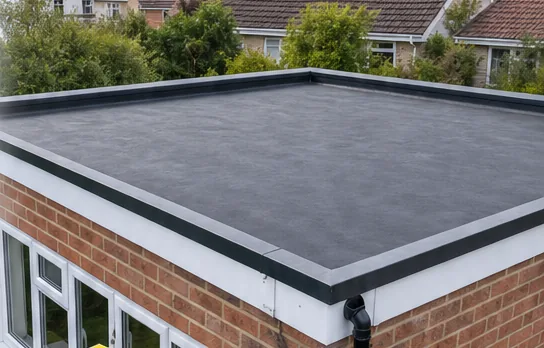
Materials vary widely in price and life. Concrete interlocking tile sits at the lower end for a pitched roof, plain clay tile and natural slate higher. Published UK ranges put natural slate re-roofing at £120 to £180 per m² and man-made slate at £90 to £130 per m². Welsh slate is quoted at £140 to £180 per m² and Spanish slate at £100 to £130 per m². On flat roofs the per-m² ranges reported by cost guides run £60 to £100 for felt, £80 to £120 for EPDM and £100 to £160 for GRP. These are national figures, only a guide until someone has surveyed the roof, but they show how a covering choice alone can swing the total.
A longer-lived covering costs more upfront and less per year of use. If you plan to stay for decades, the extra for a better material is spread thinly. If you expect to sell soon, a middle option may be the more sensible spend.
The condition of what is underneath
This is the biggest unknown on any roof, because it is hidden until the old covering comes off. Battens that have rotted, rafters that have been wet for years, a ridge board that has split and underlay that has perished all add to the bill. Most quotes allow for a normal amount of batten replacement, and sound timber costs nothing extra, but a roof with widespread rot costs more once it is opened up.
This is why a survey that includes the loft is worth having. If we can see the underside of the roof before we price, the number is closer to the final cost and there is less room for a surprise. A good quote also sets out how any extra timber repairs will be priced, per metre or per batten, so that a discovery on the day does not turn into an argument.
Detail work: flashings, chimneys, valleys and edges
Labour-heavy detail work sits behind a good deal of the price. Lead flashing around chimneys is a skilled hand job, and typical published ranges for replacing chimney leadwork run from £350 to £920, with an average near £570. A four-sided chimney flashing is quoted at about £525 without scaffold or about £1,000 with. Valleys, abutments, verges and dormer cheeks each add their own time. A roof with a lot of these details will always cost more than a plain one of the same area.
Roofline work follows the same logic. A full uPVC fascia, soffit and gutter replacement on a semi sits in published guides around £1,800 to £3,500, and often shares the same scaffold as a re-roof, so doing both together saves money.
Regulations, insulation and paperwork
Building rules can add cost, but they exist for a reason. Small re-covering jobs sit below the line where building control gets involved, but a large one crosses it, and then approval is needed and the insulation across the whole roof may have to be raised to current standards. A new covering that is much heavier than the old one can also call for a structural check, which is an extra cost to plan for if you are changing material. Our page on building regulations for roofing work explains the thresholds, and where work is notifiable we deal with that side.
Improved insulation raises the material bill but cuts heating loss for years, so the return is real. Planning matters on listed buildings and in conservation areas, where like-for-like materials may be required and consent may be needed for changes. That can push costs up if the specified material is more expensive.
Where the house sits
Location touches the price in ordinary ways. A terrace on a narrow street, where scaffold needs a pavement licence and materials cannot be stored on the road, costs more to organise than a detached house on a wide plot with a drive. A property at the end of a long lane means longer deliveries. A house on an exposed ridge may need heavier fixings than one sheltered by trees. Regional labour rates matter as well: one trade cost guide adds 20% to 35% to its emergency call-out range of £150 to £350 for London and the south-east, a reminder that national averages understate what work costs in this part of the country.
A tight site is not a reason to avoid work, only a reason to ask the question early. A good surveyor notes where the scaffold will go, where the skip will sit and whether anything has to be moved first. That planning shows up as a line in the quote, and it is better seen then than invented on the day.
Timing, waste and the practical extras
The time of year can affect availability. Summer is busy and dry weather makes roof work easier, so booking ahead may mean a wait, while winter work can include more weather delays. Waste disposal is a line in every quote: old tiles, battens and felt are heavy, and tipping charges apply. Skip hire or a grab lorry may be needed on a larger re-roof. Check that the quote states who removes the waste and whether the cost of disposal is included.
Your own choices matter too. Adding rooflights, changing the pitch, upgrading the fascias or fitting solar-ready fixings all change the work. We recommend deciding on extras before the quote, not during the job, because variations are the usual source of cost surprises.
| Driver | What it changes | What to ask |
|---|---|---|
| Roof area and shape | Materials and hours | How many hips, valleys and abutments are there? |
| Access and scaffold | Safety, set-up and hire cost | Is scaffold included, and for how many elevations? |
| Covering | Material cost and lifespan | Why this material for this roof? |
| Timber condition | Extra repairs once opened | How are extra battens or rafters priced? |
| Details and flashings | Skilled labour time | Is lead renewed or reused? |
| Regulations | Insulation and approval | Who handles building control? |
Repair or replace: the cost question underneath
Many people reading a quote are really asking whether the money should go on a repair or a new roof. If the covering is sound and the fault is local, a repair is the better spend. If the roof is worn out, repeated repairs add up. Our guide to deciding between repair and replacement sets out the tests, and our roofing costs page gathers the typical ranges together. For the quote itself, see how many quotes are worth getting in our answer on comparing quotes, and bear in mind that VAT can apply depending on the work, which we cover separately.
How we turn the drivers into one number
We price from what we find. The free survey covers the outside, the loft and the details, with photographs of your own roof so that the quote ties back to something you have seen. The fixed written quote itemises the covering, timber allowances, scaffold, flashings, waste and any extras, so that you can compare it line by line with another. If a repair would do, you will hear that and see the price for it. Work is backed by our 10-year workmanship guarantee in writing.
If you have a quote in hand and want it sense-checked against these drivers, 01256 213956 is the number. You can also read about everything we do from our main page, or turn to the questions to ask any roofer before hiring if you are comparing options.
