
Most roof failures are not sudden. A slipped tile lets in a little water, the felt beneath it darkens, a timber starts to soften, and a year or two later there is a stain on the bedroom ceiling and a repair that has grown. A look at the right moments catches nearly all of this early. Maintenance does not mean climbing on the roof. Almost everything worth checking can be seen from the ground, from a window, from the loft and from the gutters, and the one rule is that nobody should go on a roof who does not have to. This checklist sets out what to look at, when, what each sign means and when to call someone in.
The principles
Three ideas run through the list. First, look at the roof in the same way each time, from the same spots, so changes show. A photograph from the same place each year makes a record. Second, look after rain, not just in dry weather, because rain shows where water goes. Third, deal with small things at once: a fixing, a seal or a blocked outlet is a few minutes' work now and a larger repair later. Our answer on how often a roof should be inspected gives the reasoning on timing.
Staying safe
Do not walk on a roof. Tiles crack, slates slip, moss is slippery and a fall from roof height can change a life. Use binoculars, a phone with a zoom, a window, a loft hatch or a ground-level pole. If something can only be reached by ladder, make sure the ground is firm, the ladder is tied or footed and you are not leaning out. Anything above the first floor belongs to someone with the right equipment. Our page on whether it is safe to inspect your own roof goes into this.
Autumn: the main check
Late autumn, once the leaves have mostly fallen, is the most important time. Start with the gutters and downpipes. Clear leaves, silt and moss, flush with a hose, and check that water runs freely to the outlet and out at the bottom. Look at the joints and brackets as the water passes. Our gutter maintenance guide covers how to do it safely. Then look at the roof itself for any tiles that have slipped, cracked or gone since the summer. After that, check the loft, as set out below, before the cold weather brings condensation.
Winter: after storms and frosts
Winter checks are about reaction. After a strong wind, walk round the house and look at the ground for tile fragments and at the roof for gaps. A line of missing tiles, a lifted ridge or a loose verge is easy to see. After a hard frost, look at gutters and downpipes for cracks and bulges. In heavy rain, watch the gutters in action, noting any overflow, dripping joints or water running down walls. Inside, look at top-floor ceilings and the loft for stains or drips. Our guide to the roof inspection after a storm lists what to look for, and tiles lost in a gale are dealt with in tiles blown off in a storm.
Spring: the repair season
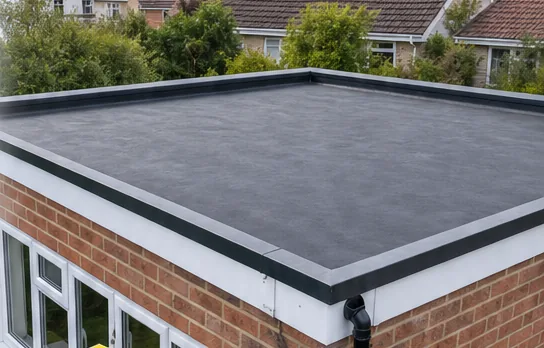
Spring is the time to act on what winter showed. Book repairs for the faults you noted, before the roofers' busy summer. Check the ridge and hips for crumbling mortar or movement, the verges for gaps, the chimney stack for loose pointing and the lead flashings for lifting or splits. Check flat roofs for ponding, blisters and splits, and clear the outlets. Look at the soffits and fascias for peeling paint, staining and gaps. Our pages on signs of ridge tile failure and why a flat roof leaks help you read what you see.
Summer: the dry check and moss
Dry weather is the right time for work. Summer is when moss is dry and easier to see, when flat roofs can be recoated and when trees are in full leaf, so you can see what overhangs. Check where branches touch the roof, and trim them back or arrange for it. If moss or lichen is heavy, plan a clean at the right time of year, and avoid pressure washing, which strips surfaces and drives water under tiles. Our hub on roof cleaning covers methods, and moss on roof tiles explains when it matters.
The ground-level checklist
- Stand back and look at the ridge line for dips, bows or lean.
- Scan each slope for slipped, cracked or missing tiles or slates.
- Look at ridge and hip tiles for gaps or movement.
- Check the verges and edge tiles for gaps and loose pointing.
- Look at the chimney stack: mortar, pots, flashing and any lean.
- Check lead and other flashings against walls and round roof windows.
- Look at gutters, fascias, soffits and bargeboards for sag, rot and peeling paint.
- Check downpipes for cracks, leaks and loose fixings, and the gully they empty into.
- Look at flat roofs for ponding, blisters and loose edges.
- Look for new moss, lichen or algae and for plants growing in gutters or on the roof.
Our roof inspection checklist gives a longer version with notes on each point.
The loft checklist
Use a torch, and stay on the joists or a board. Look for daylight through the covering, wet or stained felt and timber, mould spots, damp insulation, rusted nail tips, and droppings or nests. Check that insulation does not block the eaves, that air can still pass in at the soffit, and that bathroom and kitchen extractors vent outside and not into the roof. Notice the smell. Damp has one. Check any water tanks and pipes for drips. Our guide to inspecting your loft explains the signs, and the answer on condensation in the loft shows how to tell it from a leak.
The inside checklist
Look at ceilings and walls below the roof, particularly on the top floor, in corners and near chimney breasts and roof windows. Brown rings, flaking paint, bubbling plaster and a musty smell all point to water. Note dates and take photographs. A stain that grows after rain is active. One that is dry and stable may be old. If you are unsure, mark the edge in pencil and look again after the next downpour.
Gutters, fascias and soffits
The roofline is where much maintenance concentrates, because it takes the water. Clean gutters at least twice a year and check for sag, leaking joints and overflow. Press a blade into fascia boards at the joints for softness. Look at soffits for staining and holes where birds might enter. Where birds are nesting, wait until the young have gone. See our pages on rotten fascia boards and the signs your gutters need replacing for what each fault means.
Chimneys, flat roofs and special cases
Chimneys need a closer look than most people give them. Loose pointing, a leaning stack, cracked flaunching and torn flashings let water into the house and are dangerous if they fall. Our hub on chimney repairs covers them. Flat roofs need their outlets cleared, their surface checked and their edges looked at. Roof windows need their seals and flashings checking, and conservatory roofs need cleaning and sealing checked. Lead roofs, slate roofs and thatched or listed roofs have their own needs, and a specialist should do any work.
What not to do
A few well-meant habits cause damage. Do not pressure-wash tiles or slates, because the jet strips the surface and pushes water under the laps. Do not scrape moss off dry with a stiff tool, which tears the surface. Do not smear sealant over cracks or joints as a lasting repair, since it traps water and hides the fault. Do not stuff foam into gaps at the eaves, which blocks ventilation. And do not walk on a flat roof covered in felt or EPDM without knowing its construction, because a sharp heel can puncture a membrane that was sound.
Keeping a record
A simple log pays for itself. Note the date of each check, what you saw, what you did and who did it, and keep invoices and photographs. The record supports an insurance claim after storm damage, helps a buyer's surveyor and shows when work is due. The page on making an insurance claim for a leak explains why such evidence matters.
Trees, aerials and things fixed to the roof
Overhanging branches scratch tiles, drop leaves and shade the slope so that moss thrives. Trim back branches that touch the roof, taking care not to cut a tree that has a protection order, which the council can confirm. Satellite dishes, aerials, solar panels and vent pipes are fixed through the covering, and each is a place to look at when you check the roof. Fixings can loosen in wind, and flashings round pipes can crack. If you have panels, ask the installer what care they need, and who to call for work that involves lifting them.
A year at a glance
| When | What to do | Why then |
|---|---|---|
| Spring | Act on winter findings, check ridge, flashings and flat roofs | Repairs booked before the busy months |
| Summer | Trim branches, review moss, recoat flat roofs if needed | Dry surfaces and long days |
| Autumn | Clear gutters, check tiles and loft | Leaves are down and winter is close |
| After storms | Look from the ground and the loft | Damage is fresh and easy to date |
| After heavy rain | Watch gutters, check ceilings | Rain shows where water goes |
When to call a roofer
Call when you see daylight in the loft, a stain that grows, missing or broken tiles, a sagging ridge, a leaning chimney, a flat roof that holds water, soft fascia boards or any fault you cannot reach safely. If water is coming in, call at once. Emergency calls go to the front of our queue, and the first job is making the leak safe. Do not climb up to look. A survey from a professional with the right access, plus photographs, shows you the problem without the risk.
What our survey adds
The free survey reaches places that binoculars cannot, with proper access and a trained eye. We reach the roof safely, photograph every fault so you can see it on screen, and write down what needs doing now, what can wait and what is fine. If your roof needs nothing, we say so. Where work is needed, the quote is fixed, and the finished repair comes with a written ten-year workmanship guarantee. For the full picture, see our homepage, and for a survey ring 01256 213956.
