
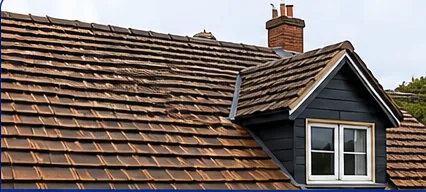
Few people have a new roof in their annual budget. It arrives as a surprise, usually after a survey, a leak or a storm, and the figure is large enough to require a plan. The sensible approach is to take the pressure out of the first conversation, find out what is actually needed, and then look at how to pay for it. Sometimes the answer is a repair that costs a fraction of a replacement. Sometimes the roof does need renewing, and the question becomes how to fund it without paying more than necessary or putting your money at risk. This page covers the options in the order we would think about them: the size of the job, the budget, insurance, finance and the terms of payment.
Start by finding out how much roof you need
A budget built on a guess is a poor foundation. Before you think about finance, get a proper picture of the roof's condition. A survey with photographs separates a repair from a replacement and shows how urgent the work is. Many roofs that look tired need a few repairs and a gutter clear-out, not a new covering, and a plan to maintain them can postpone a large bill by years. Others have failed across the board, and an honest assessment saves you from paying for patch after patch. Our free survey returns pictures taken on your own roof together with a written opinion on which case applies, and repair comes first wherever it works.
If replacement is the answer, ask about phasing. A roof with a sound rear slope and a failing front slope may be done in stages, although our answer on whether you can replace half a roof explains the limits, including scaffolding that is paid for twice and the way regulations treat the total area renewed.
Setting a realistic budget
Use published ranges as a starting point, remembering that they are typical UK figures from third-party guides, not prices for your own roof. One guide reports a spread from £6,500 up to £10,500 on a semi with concrete tiles and three bedrooms, and another spreads wider, £4,000 to £13,000, across ordinary semis and detached houses. Natural slate, clay tile and complex roofs cost more. For a deeper look at what moves the figure, read the full new roof cost breakdown; a fixed price for your house comes only after the survey.
Add a contingency to the quoted price. Even with a fixed quote, there can be extras if the old roof hides rotten timber, and you may want to add fascias, gutters or a roof window while the scaffolding is up. A margin set aside for those items, agreed with the roofer in advance, keeps surprises manageable. Check whether VAT is included in the figures you are comparing.
What home insurance does and does not cover
Buildings insurance is designed to respond to sudden, unexpected damage: a storm that lifts tiles, a fallen tree, fire, escape of water. It is generally not designed to pay for the gradual ageing of a roof or for work that is overdue. That means insurance can help when an event has damaged the roof, and it will not usually fund a replacement just because the covering has simply worn out.
If your roof was damaged by a storm, tell your insurer promptly, keep photographs and receipts and follow their process. Our pages on roof inspections after a storm and roof reports for insurance claims explain what evidence helps. Check your excess, because a small repair may fall below it, and read the policy for conditions on maintenance and the age of the roof. Be careful about claiming for wear: an exaggerated claim can be refused and cause problems with future cover. Honest evidence, set out clearly, is the best protection.
A new roof can also affect your cover going forward. The effect on premiums is covered in does a new roof lower home insurance. Tell your insurer when the work is done and keep the guarantee and completion papers.
Funding from savings
Paying from savings is the cheapest option because there is no interest. If you have the money but would prefer to keep a reserve, consider what you would do if an emergency arrived the week after. Many people use savings for the deposit and fund the balance another way. If the roof is in decent order, setting aside a monthly sum into a roof fund ahead of the need turns a shock into a plan, and a landlord can build it into the maintenance budget. The roof's survey report gives the likely timeline.
Borrowing to pay for a roof
If savings are not enough, there are several ways to borrow, each with different costs and risks. This is general information and not financial advice, so talk to a regulated adviser or your bank about your own circumstances.
- Personal loan. A fixed sum repaid over a set term, usually at a fixed rate. It is simple to understand, and the cost depends on the rate and the term. Compare the total amount repayable, not just the monthly figure.
- Remortgage or further advance. Borrowing more against the house, often at a lower rate than an unsecured loan, but spread over a long period, so the total interest can be high, and the loan is secured on your home. Check arrangement fees and early repayment charges.
- Credit card. Convenient and sometimes offering an interest-free introductory period, but expensive if the balance is not cleared in time. It suits only a manageable sum that you can pay off quickly.
- Finance offered through a contractor. Some businesses arrange finance with a lender. Read the agreement carefully, compare the rate against independent offers and make sure you understand what happens if you wish to repay early.
- Family help or a flexible arrangement. Sometimes the simplest route is a short-term loan from relatives, written down so both sides understand it.
Whatever you choose, check that any lender is authorised by the Financial Conduct Authority, read the small print and avoid any arrangement under pressure at your door. A good roofer does not mind you taking time to compare. A fixed written quote gives a lender or adviser a definite figure to work with, and a survey report explains why the work is needed.
Grants and support
There are occasionally government or local schemes that help with energy efficiency, insulation or low-carbon heating, and a roof renewal can sometimes be tied to them. Eligibility rules change and often depend on income, tenure and the type of work. Check the current position on gov.uk or ask your council, and do not rely on a contractor's assurance that a grant exists. If the new roof involves upgraded insulation, our page on upgrading insulation when you replace a roof explains the work involved.
Agreeing the payment plan with the roofer
How you pay the contractor matters as much as where the money comes from. A sensible plan matches payments to progress. A modest deposit may be reasonable on a larger job to cover materials, but a large payment up front, or a demand for cash, is a warning sign. Stage payments tied to milestones, such as materials delivered, roof stripped and re-covered, and final completion, keep both sides honest. Agree the amounts and triggers in writing before you sign, hold back the last payment until you are satisfied and keep every receipt. Our guide to comparing roof replacement quotes includes payment terms among the points to check.
Ask also how variations will be handled. If rotten timber is found, the extra should be priced from a rate agreed in advance and confirmed in writing before the work goes ahead. That protects you from an open-ended bill.
Timing the spend
When you pay can matter as much as how. If a survey shows that the roof has a few years left, there is time to save, compare quotes and choose the season. Booking work for spring or early summer usually gives the weather you want, but good contractors fill their diaries ahead, so asking early avoids a rush. If a roof is leaking, the calculation changes: a temporary fix to stop the water and protect the ceilings and insulation is a modest outlay that buys time, and our emergency roof repairs team prioritises leaking roofs and makes them safe first.
Keep records as you go. Hold on to the survey report, the quote, the contract, every receipt, the guarantee and the completion paperwork. They help with insurance, help with a sale and help if you ever need to raise a problem with the work. A buyer's solicitor will usually ask for them, and a house with a documented new roof is easier to sell than one where the history is vague.
Landlords and businesses
A landlord or business owner has additional considerations. Roof costs may be treated differently for tax depending on whether the work is a repair or an improvement, and the treatment can have a real effect on the net cost, so ask your accountant before the work is agreed, not after. A planned programme of inspection and repair, as set out in our guide to roof inspections for landlords, helps smooth the spending across years. Commercial roofs can be phased by area, and our commercial roofing page describes the options.
Cutting the bill without cutting corners
You can reduce the cost in fair ways. Repair what can be repaired. Choose a covering that suits the house and budget rather than the most expensive option; the roof material comparison sets them side by side. Combine roofline and gutters under one scaffold. Plan the work for a convenient time, because emergency replacements cost more. Get two or three quotes on the same scope. What you should not do is accept a price that leaves out scaffolding, battens or the lead around chimneys, because they come back as extras.
Our own approach is a free survey, photographs of your roof and a fixed written quote, with repair first where it works. Once you have the quote and a payment plan you are comfortable with, the decision becomes manageable. To begin, phone 01256 213956 (WhatsApp works too), or read about the full service on our roof replacement in Basingstoke page.
