
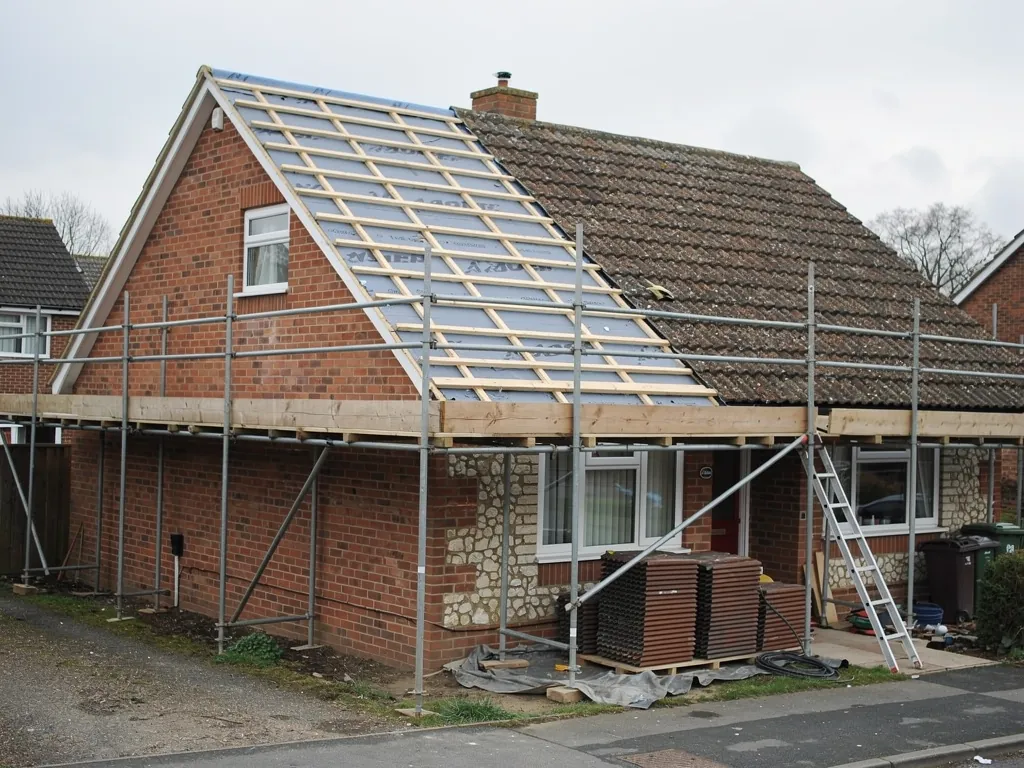
You ask three roofers to price a new roof and the figures come back thousands of pounds apart. The temptation is to take the middle one, or the lowest, and move on. The better response is to ask why they differ. A roof replacement is not a standard product with a standard price; it is a package of materials, labour, access, disposal, repairs and paperwork, and each quote draws its boundaries in a different place. One contractor includes the scaffold and the other leaves it as an extra. One prices a breathable underlay and another prices a cheaper felt. One assumes the battens are sound and another includes new ones. Until you put the quotes on the same footing, the totals tell you almost nothing. This guide shows how to do that.
Insist on a quote, not an estimate
The first question is what kind of document you have been given. An estimate is an informed guess that can move, sometimes by a large amount. A quote is a fixed price for a defined scope of work. When you compare, compare quotes, and ask in writing whether the figure is fixed and what could change it. Legitimate changes exist: if the roof is stripped and rotten rafters are found, extra timber is unavoidable. But the quote should say how such discoveries will be priced, for example by a stated rate per rafter or per metre, agreed before work begins, and not left open.
A written quote should carry the contractor's name, a business address, a contact number, the date and how long the price holds. It should describe the work in enough detail that an independent person could tell what is and is not included. A figure on the back of a business card or a price sent in a text message is not a quote. Ask for the document before you decide anything, and keep it.
Line the scope up item by item
Write the same list down for each quote and tick off what is included. The table below shows the lines that most often differ.
| Item | What to look for | Why it changes the price |
|---|---|---|
| Scaffolding | Included, with the cost of hire and any licence for the pavement | Can be a large share of a small job |
| Stripping and disposal | Old covering removed, skip or waste carrier, site cleared | Heavy tiles and slate are costly to dispose of |
| Underlay | Type and brand named; breathable or bitumen felt | Cheaper underlay fails sooner |
| Battens | New battens, treated, sized for the tile | Reusing old ones saves money and risk |
| Covering | Tile or slate named by make, type and colour | Quality and price vary widely within one type |
| Ridge, hip, verge | Mechanical fixing or dry-fix, not mortar alone | Fixing method affects wind resistance |
| Flashings and lead | New lead at chimneys, walls and valleys, with the code or weight stated | Reusing old lead invites leaks |
| Roofline and gutters | Fascias, soffits and guttering included or excluded | Often priced as a separate job |
| Insulation and ventilation | Any upgrade required, eaves and ridge vents | Building regulations may require it |
| Building control | Who notifies, who pays and what certificate you get | Missing paperwork causes trouble at sale |
If a quote says only "supply and fit new tiles to main roof", it is vague on nearly every line. Ask the contractor to fill in the gaps, or phone and note the answers on the quote itself. A contractor who is happy to itemise is usually one who has priced the job properly.
Materials: names, not adjectives
"Quality tiles" and "good underlay" mean nothing in a quote. Look for the make, the range and the colour of the covering, the underlay product and the type of fixings. Ask for the manufacturer's data or website so you can see what you are buying. Our guide to choosing materials for a new roof helps with the covering. If one quote names a premium product and another a basic one, the cheaper figure may be perfectly fair for what it offers, but you should know that you are comparing two different roofs.
Check that the specification suits the house. A heavier covering than the existing one raises structural questions, which our page on structural checks for a heavier roof covering explains. A quote that ignores weight, pitch or ventilation may not have looked at the roof closely.
Access, safety and the working arrangements
Scaffolding is the single item most often missing. A quote that excludes it is cheaper on paper, but you will have to pay for it, either directly or through a variation later. Published figures for scaffold hire on roofline work run from £200 right up to £2,600, which means a missing line can shift the total considerably. Our page on roof replacement scaffolding describes what is needed and why.
Ask how the site will be protected, how the old covering will be removed, what happens if it rains while the roof is open and how long the job should take. A contractor who works to a sensible sequence, strips and re-covers in sections and has tarpaulins ready, protects your house in a way that a rushed job does not. Our answers on rain during a roof replacement and how long it takes set out the norms.
Guarantees, paperwork and who stands behind the work
A guarantee is only as useful as its wording. Ask for it in writing, and check what it covers (workmanship, materials or both), how long it lasts and what you must do to keep it valid. Be clear that a workmanship guarantee from a roofer is a promise from that business, not an insurance policy, and that manufacturers' guarantees on materials are separate. Find out whether it passes to a new owner if you sell; our answer on whether a roof guarantee is transferable explains.
Ask also who deals with Building Regulations. Where work is notifiable, a completion certificate matters when you come to sell, and our answer on whether you get a certificate for a new roof shows what to expect. The quote should say who notifies the building control body and who pays.
Payment terms
Payment terms deserve as much attention as the price. A small deposit for materials can be reasonable on a large job, but a large payment up front, or a demand for cash, is a warning sign. Stage payments tied to progress, with a final payment on completion and your satisfaction, protect you. Make sure the quote states the amounts and the trigger for each. Do not pay in full before the work is complete, and keep every receipt. If the terms are vague, ask for them in writing before you sign.
Questions to put to every roofer
Use the same short list with each contractor so the answers can be compared. Who will actually do the work, their own team or subcontractors, and will someone senior be on site? What is the start date, and how long will the job take if the weather behaves? What happens if the weather does not? How will the old covering and waste be removed, and is the cost of the skip or waste carrier in the price? Will the loft and gutters be checked while the scaffold is up? What will they do if they find rotten timber, and at what rate is it charged? Who will you speak to if something goes wrong the week after?
Listen to how the answers are given as well as what they say. A contractor who explains the sequence calmly and admits what they do not yet know, such as the state of the rafters under the old felt, is more reliable than one who has an instant answer for everything. Ask to see photographs of the faults on your own roof; if you hear that the roof is beyond repair without being shown why, push back. Where repair would do the job, a good contractor will say so, even though a repair is a smaller sale.
What to do with provisional sums
Some quotes include provisional sums, placeholder amounts for work that cannot be priced until the roof is opened up, such as replacing damaged rafters or battens. They are legitimate when used honestly, because nobody can see through a covering. The trouble comes when a provisional sum is set artificially low to make the headline figure attractive, and the real cost arrives later. Ask what each provisional sum is for, what it assumes and how the final figure will be calculated, and ask for any extra work to be agreed in writing before it goes ahead. Compare provisional sums across quotes as carefully as the main price.
Red flags
- A price given without anyone going up on the roof or into the loft.
- Pressure to decide today, or a discount that vanishes if you wait.
- No written scope, or a scope of one line.
- No business address, only a mobile number.
- A big deposit, or payment in cash only.
- Claims of accreditations or insurance that cannot be backed up when you ask for the paperwork.
- A recommendation to replace the whole roof, with no photographs of the faults.
- A quote far below the others with no explanation of what has been left out.
None of these proves a contractor is dishonest, but each is a prompt to ask more questions before you sign.
Using the quotes to decide
Once the scope is aligned, and with the roof replacement in Basingstoke process in mind, you can compare price properly. Add the cost of any item missing from one quote, using the other quotes as a guide, and see how the totals compare. Then weigh the non-price factors: the quality of the specification, how clearly the contractor explained the work, whether they showed photographs of your roof, the guarantee and the start date. Choose the contractor you trust to do the work well, not necessarily the cheapest number. The typical ranges reported by cost guides can help check whether any quote is badly out of line; the detail sits in new roof costs explained.
When we quote, the survey comes first, with photos of your own roof, and the price that follows is fixed and written, with each line named so you can set it beside anyone else's. Where repair would do the job, we say so before we mention replacement. If you have quotes in hand and want a second opinion on what they include, the quotes can go to us over WhatsApp, or you can phone 01256 213956, and we will talk you through what each one includes.
