
Beacon Basingstoke Roofing

Roofers in Chandler's Ford

Chandler's Ford lies 27.5 road miles south-west of Basingstoke, on the old Winchester to Southampton road, and its roofs run from 1920s houses around King's Court and Merdon to the estates that spread out towards Valley Park. We survey each roof with photographs, then give you a fixed written quote.

Clay tiled pitched roof gable on a red-brick house

Roofs we see in Chandler's Ford

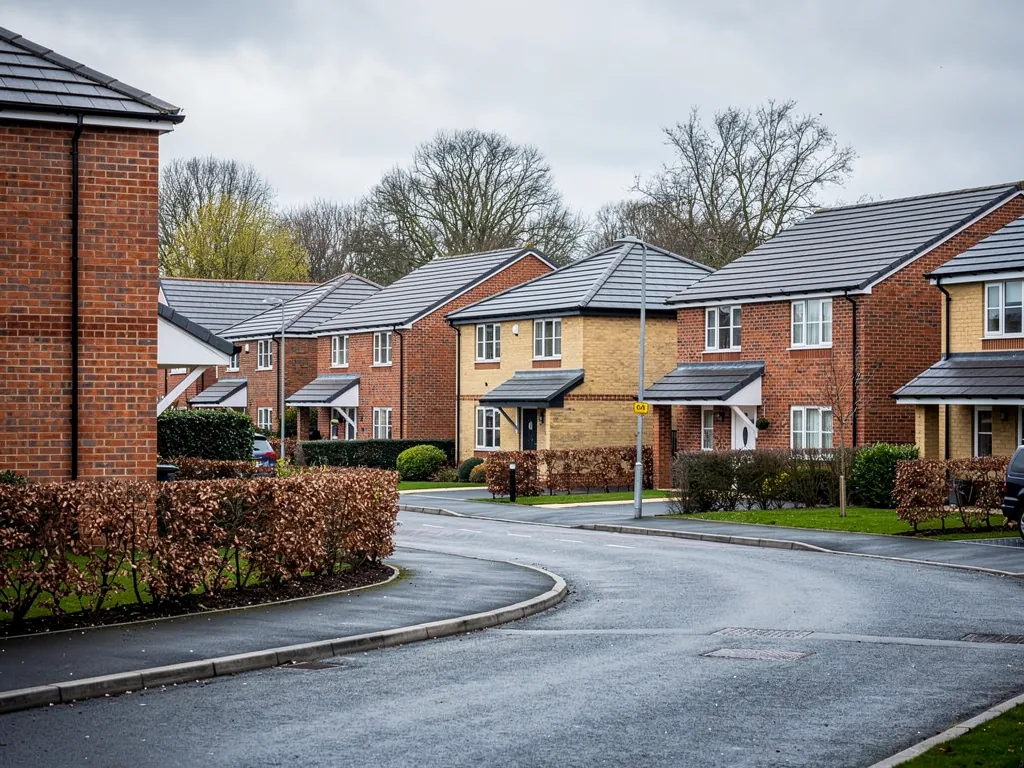
  • Modern 2000s brick houses with grey concrete tile roofs on a new estate near Basingstoke

    1920s houses around Merdon

    Until the nineteenth century the district was very thinly settled, and the first real wave of building came in the 1920s around King's Court, Merdon and Hiltingbury. Houses from that decade have had a century of weather. Their tiles are usually still serviceable, but the nails, the old battens and the mortar at the hips and ridge tend to fail well before the covering does.

  • Clay tiled pitched roof gable on a red-brick house

    Estate housing from Hursley Road to Millers Dale

    Later building filled in the Hursley Road area, Scantabout, Peverells Road, Spring Hill, Oakmount and North and South Millers Dale. Houses of those decades commonly carry concrete tile, with mortar-bedded ridges and verges and timber fascias. At this age the ridge bedding, the underlay at the eaves and the fascia boards are the parts that ask for attention first.

  • Slipped and cracked clay roof tiles

    Late 1970s development and Valley Park

    Hiltingbury Farm stopped working as a farm in the late 1970s, when the land around it was built over. Valley Park, to the west, followed from the late 1980s. The late-1970s roofs are now past forty years old. Felt underlay has often gone brittle, soffit boards have started to open at the joints, and pitched roofs over flat-topped garages and extensions have their own run of leaks.

27.5 road miles south-west of Basingstoke

Planning and building control in Chandler's Ford

Chandler's Ford sits within Eastleigh Borough Council, which handles both planning and building control for the town. Valley Park, on the western side, falls under Test Valley Borough Council instead. We have not assumed that any given road is protected, so before ordering materials on an older house, ask the council's planning team whether the property sits in a conservation area or has an Article 4 direction removing permitted development rights. The council publishes planning guidance on its website, and a short enquiry before work starts costs nothing.

For most roofs here the practical question is building control rather than planning. Repairs or re-covering do not normally need an application if they touch less than 25% of the building envelope and less than 50% of the roof, but a full strip and re-cover on a 1920s house or a later estate semi can go beyond that, and then the insulation of the whole roof may have to be upgraded. A new covering that is 15% or more heavier than the old one needs approval too. We handle that side where the work is notifiable. If you are weighing up a roof window, the skylight planning question is answered in a separate guide.

What we find on Chandler's Ford roofs

Chandler's Ford was built in layers, and the roofs follow the layers. The 1920s houses in the Hiltingbury and Merdon streets are the oldest, the estates off the Hursley Road came after, and the late 1970s development is the youngest. Each period fails in a different place.

Chapter 1: Why do the hips and ridge on our 1920s house near Hiltingbury keep cracking?

What we find

A house from the 1920s was commonly roofed with machine-made clay or early concrete tiles, hung on small timber battens (the thin laths the tiles hook over) and nailed in places. The hips, where two slopes meet at an outward corner, were finished with capping tiles bedded in mortar. A hundred years of frost has loosened that bond, and the mortar shrinks away from the tile edges and drops out in pieces.

You may notice a crack running along a hip line from the pavement, or rubble in the gutter after a windy night. Inside, the signs are a damp patch on a bedroom wall just below the roof line, or a stain on the ceiling beside the chimney breast. The tiles themselves are often fine, which is why a repair so often beats a re-roof on these houses.

What we fix

We start by lifting a few capping tiles to see whether the bedding has failed or the timber beneath it has. If only the mortar is tired, we take the cappings off, clean them and refix them with a mechanical system, because BS 5534 now expects ridge, hip and verge tiles to be fixed in a way that does not rely on mortar alone. Dry-fix kits, covered by BS 8612, clip or screw the tiles to a batten over a breathable strip.

Dry ridge work on a semi-detached house is typically reported between £900 and £1,600, plus £300 to £900 for scaffold. Your fixed quote follows the survey. Any slipped tiles and corroded nails found along the way are replaced in the same visit. The choices are set out on our ridge tile repairs page.

Chapter 2: The fascias on our Scantabout-era estate house are peeling and the gutter sags. Is the roof at fault?

What we find

On the estates built after the 1920s, the eaves are where moisture does its slow work. The fascia is the board that runs along the bottom of the roof and carries the gutter, and the soffit is the board that closes the underside of the overhang. In timber, both soak up water whenever the gutter overflows or the felt at the eaves has torn back and lets rain run behind them.

Peeling paint is usually the first warning, followed by a gutter that droops between its brackets and a dark line on the brickwork below it. Press a screwdriver into the fascia: if it sinks in, the timber is rotten. Often the cause is not the board itself but the underlay beneath the first course of tiles, which has perished and stopped carrying rain into the gutter.

What we fix

We open up the bottom courses of tiles, check the underlay and the rafter ends, and cut out whatever has rotted. A rigid eaves carrier is fitted so water drops cleanly into the gutter, then the tiles go back and the fascia and soffit are replaced with a maintenance-light board. Soffits are fitted with ventilation so the loft can breathe.

Where only a short run has failed, a patch repair is sensible. If the whole roof edge is in the same state, replacing every board and the gutter together saves paying for scaffold twice. Typical UK ranges for a full uPVC roofline on a semi are £1,800 to £3,500. See our guttering, soffits and fascias page for the detail.

Chapter 3: Our late-1970s house in Chandler's Ford has a damp loft. Is the felt under the tiles finished?

What we find

Underlay is the sheet laid over the rafters, beneath the battens, to catch any water or wind-driven snow that gets past the tiles. Houses finished around the time the Hiltingbury farmland was built over were fitted with bitumen felt, a sheet that was never meant to last indefinitely. After more than forty years in a hot, cold, damp loft space, it can turn brittle, tear at the laps and sag between the rafters.

The signs are felt that cracks like dry paper when touched, daylight showing at the tile joints, brown spotting on the underside of the sarking or boards, and condensation on the felt after a cold night. Tiles on these roofs are usually still sound, so the underlay rather than the covering is what decides how long the roof has left. That is why a loft inspection carries as much weight as the view from the ground.

What we fix

If the felt has failed in patches near the eaves or a valley, we repair those areas and leave the rest. Where it has gone throughout, the honest option is to strip the tiles, fit a modern breathable underlay and new treated battens, and relay the existing tiles where they are sound. A full re-roof also gives a chance to improve insulation, which a roof of this size may have to include if the work crosses the Building Regulations threshold.

Typical UK figures for re-roofing a three-bed semi in concrete tile are £6,500 to £10,500. We handle the building control paperwork where it is needed. Our roof replacement page covers the stages in order.

Chapter 4: The brick chimney on our house keeps letting water into the back bedroom. What do you do about it?

What we find

Bell's brickfields once made bricks here on a huge scale, and a brick chimney stack is the most common feature rising from a Chandler's Ford roof, whatever its age. The stack is exposed on every face: rain hits the brickwork, the mortar joints weather back, and the cement flaunching (the sloping mortar cap that holds the pots) cracks and lets water into the flues.

At the base, the lead flashing seals the stack to the roof, and the soakers, small pieces of lead interleaved with the tiles up each side, are folded into the courses. When the flashing lifts, or the mortar line above it opens, water runs down the stack and into the ceiling beside the chimney breast. A stain that grows after a long wet spell and dries out in summer is a typical sign.

What we fix

We look at the stack from a ladder or tower and photograph each face, the flaunching and the flashing, so you can see the fault for yourself. Failed joints are raked out and repointed, loose bricks are rebedded, the flaunching is renewed, and new lead flashings and soakers are fitted where the old ones have lifted or split.

Chimney leadwork is typically reported at £350 to £920, and repointing at £450 to £1,200, with scaffold extra if the stack cannot be reached safely. If a stack has stopped being used, we talk through capping and ventilating it rather than rebuilding. Read more on our chimney repairs page.

Chandler's Ford roofing questions

Is a 1970s concrete-tile roof in Chandler's Ford worth re-covering, or only repairing?

Concrete tiles are usually long-lived, so leaks tend to come from the parts around them: the underlay, the ridge and verge mortar and the flashings. Mortar alone should not be relied on, as BS 5534 requires ridge, hip and verge pieces to be mechanically fixed. If the tiles themselves are sound, repairing those details is normally enough, and we price it that way.

Our house in Merdon dates from the 1920s. Can the roof be patched or does it need stripping?

Often it can be patched. On a house of that age the tiles tend to outlast the nails, the hip mortar and the battens beneath them, so we lift a section and check. If the timber and the covering are sound, we repair the weak points and say how many years the roof has left. If the battens have gone throughout, we say that too. Either way the work carries a written 10-year workmanship guarantee.

Do I need building control for a roof job on a Hursley Road semi?

Not always. Repairs or re-covering generally do not need an application if they affect less than 25% of the building envelope and less than 50% of the roof. A full strip and re-cover goes over that line, and the roof may then have to meet current insulation standards. Eastleigh Borough Council's building control team or a registered approver deals with it, and we handle the notification where it applies.

Moss is growing thickly on our roof in Valley Park. Should it be pressure washed?

We would not use a pressure washer on concrete tiles. The jet can strip the surface layer and drive water behind the laps, which shortens the life of the tile. We clear moss by hand, treat the roof with a biocide so regrowth is slow, and clear the gutters in the same visit. The moss that sits on a tile edge holds rain against the surface, so the sooner it is removed the less damage it does.

A tile slid off our bungalow roof in the wind. Is it worth a call-out?

Yes, because a gap in the covering lets rain reach the underlay and battens, and the damage then spreads quietly. Do not climb up yourself. We prioritise emergency calls and will make a leaking roof safe first. After that we replace the tile or tiles, check the neighbouring nail fixings, and tell you whether the wider roof is showing the same fault. Typical UK call-out figures are £150 to £350 plus materials.

Get your free roof survey in Chandler's Ford

Tell us what’s happening and we’ll call you back to arrange a visit. You’ll get photos of your roof and a fixed written quote.

  • No obligation
  • Photo report of your roof
  • 10-year workmanship guarantee

Rather talk? 01256 213956

Call Free survey