Beacon Basingstoke Roofing

Roofers in Spencers Wood

Spencers Wood lies 12.8 road miles north-east of Basingstoke, on the old Reading to Basingstoke road in Berkshire. Its roofs split between Victorian and Edwardian brick houses around The Square and new estate homes of the South of the M4 development. Both get a proper look with a camera and a price that stays put.

An Edwardian red-brick detached house with clay tile roof and tile-hung gables in north Hampshire

Roofs we see in Spencers Wood

  • A row of Victorian terraced houses with Welsh slate roofs and brick chimneys in Reading

    Victorian and Edwardian village houses

    Brick houses from the Victorian and Edwardian years line Basingstoke Road, and many still stand around The Square. The older ones were built from bricks baked at the local Swain family kiln, and houses of that age were commonly roofed in slate or plain clay tile. Chimney stacks, bay windows and porches add lead work and small valleys, and every one of those joints is a place where weather finds a weakness after a century.

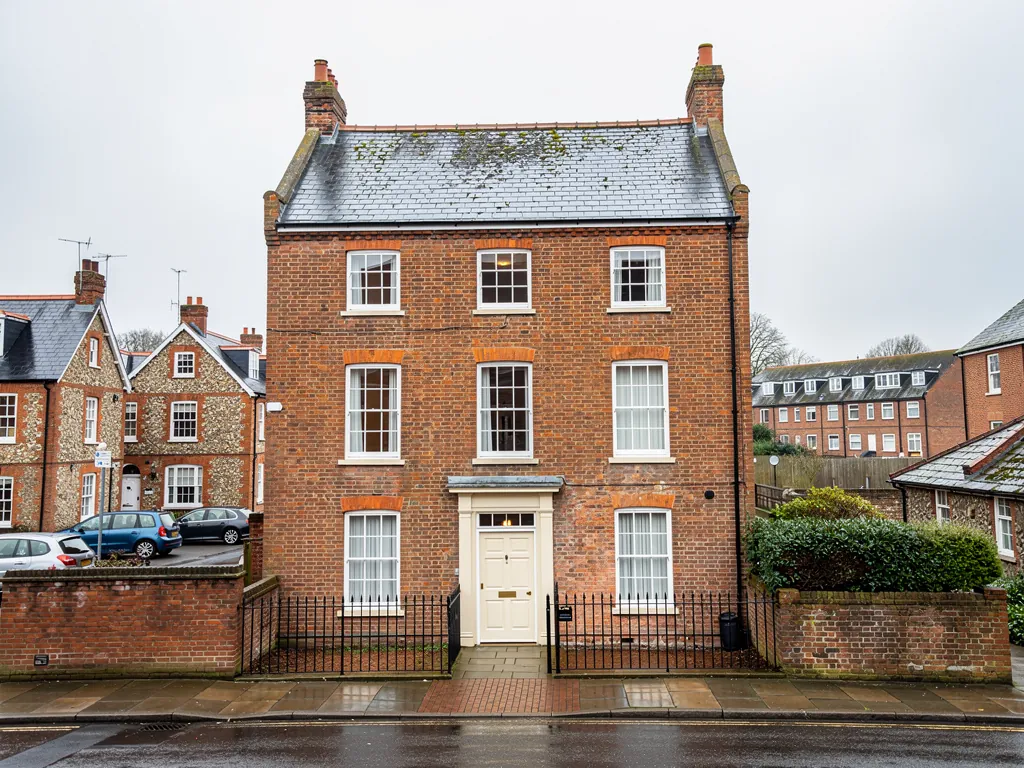
  • A Georgian brick town house with a slate roof and parapet in a Hampshire market town

    New estates south of the M4

    Spencers Wood is one of the villages being extended by the South of the M4 development, which Wokingham Borough Council says will bring about 3,000 homes across Shinfield, Three Mile Cross and Spencers Wood. New-build roofs of this kind commonly use concrete tiles on breathable membranes, with dry-fix ridges and plastic fascias. Faults on roofs this young usually come from damage during building, a displaced tile or a badly lapped flashing, and a builder's own warranty may still apply.

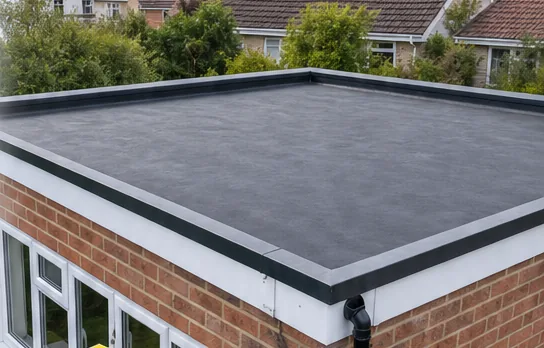
  • New EPDM flat roof on a brick extension

    Arts and Crafts and early twentieth century buildings

    The village hall opened in 1911 in the Arts and Crafts style, and St Michael and All Angels church was consecrated in 1908. Buildings from that decade often have broad clay tile roofs with deep eaves, hips and dormers, plus decorative ridge and hip tiles that cannot be swapped for off-the-shelf parts. Houses and cottages built beside them share the same traits, and they repay a careful look before any tile is lifted or replaced.

12.8 road miles north-east of Basingstoke

Planning and building control in Spencers Wood

Spencers Wood is looked after by Wokingham Borough Council, whose planning and building control teams cover the village. Berkshire sits across the county line from our Basingstoke base, but a different council is nothing unusual for us. The council's website is the place to confirm whether a conservation area or a listing touches your house, and a quick call to the planning team before you order materials can save a refused scheme.

The Arts and Crafts village hall, the church and the older brick houses around The Square give parts of the village a clear period character, so a like-for-like repair is the safe route. Swapping slate for a different covering, or changing how the roof looks from the street, may need consent. On the new estates the roof has usually been signed off already, so check your builder's warranty before anyone else works on it. For a roof window, read the planning permission guide for roof windows first. Large re-roofs are notifiable, and we handle that paperwork.

What we find on Spencers Wood roofs

This village has two layers. Along the old Reading road sits a core of brick houses more than a century old, and around it the new estates of the South of the M4 development. A clay-tile cottage and a new semi fail in completely different ways, so we treat them separately. Four questions follow, each with its cause and the repair we would put forward. Back at base, our Basingstoke roofing team keeps the same standards.

Chapter 1: Why are slates sliding off our Edwardian house on Basingstoke Road?

What we find

A slate is held by nails driven through two holes near its top edge, and the nail heads are hidden under the slate course above. Iron nails rust over a hundred years. The rust swells, snaps the nail shank or enlarges the hole, and the slate loses its grip and slips down a few centimetres, leaving a gap like a missing tooth. Roofers call this nail sickness, and it tends to spread across a slope at once because every nail on the roof is the same age.

From the road you notice slipped slates hanging at an angle, or slate fragments in the border below. Indoors, a stain high on a bedroom wall or a drip into the loft after a westerly gale is a typical warning. On a house built from Swain kiln brick, the walls themselves may be sound while the roof above has been quietly failing for years, so the damage often hides until the plaster blisters.

What we fix

Our first job is to find out whether the slates or only the fixings have gone. We inspect from a ladder and by hand, tapping slates to listen for a dull note that means a crack. If most of the slates are sound, we strip the slope, keep every good slate, and re-fix with copper or stainless steel nails, which will not rust through again. Missing slates are matched from reclaimed stock to the same thickness and colour.

A full slope can be re-slated without disturbing the whole roof, which keeps cost down. UK cost guides give £120 to £180 a square metre for natural slate and £90 to £130 for the man-made kind. A single slate repair is reported at £100 to £250 in labour. Your written price is fixed after we have photographed your own roof. More on this is under slate roofing.

Chapter 2: Is a crumbling chimney stack on a Spencers Wood brick house a repair or a rebuild?

What we find

The older houses here were built from bricks baked at the local Swain family kiln. Bricks of that kind are softer than modern machine-made ones and were laid in lime mortar, which breathes and gives a little. Exposed on a rooftop, a stack takes the worst of the rain, sun and frost from every side. Over time the face of the brick flakes off, which is called spalling, and the pointing washes out between courses so that hairline gaps open up.

Look for loose or leaning pots, brick dust on the roof slope below, a stack that looks darker on one face, and a stain on the chimney breast inside after heavy rain. If the stack has been repointed in hard cement at some point, the soft brick may have been trapped behind it and cracked further. The lead at the base of the stack ages as well, and a split flashing can look minor while letting in plenty.

What we fix

Most stacks can be repaired. We check how far the damage runs by tapping the brick and probing the mortar joints, and photograph each face. Where only the pointing has failed, we rake it back and repoint in a lime mortar matched to the old, because lime lets the soft brick breathe. Badly spalled bricks are cut out and replaced individually with reclaimed ones of similar colour, and the flaunching around the pots is rebuilt.

The flashings are renewed in lead and dressed into the brickwork. Only when the stack is out of true or the bricks crumble to the touch do we recommend taking it down and rebuilding to the same height and style. Reported UK costs for chimney repair run £500 to £2,000, and for repointing £450 to £1,200, so a repair looks very different next to a rebuild. Read about chimney repairs for the full range.

Chapter 3: We bought a new-build in the South of the M4 development and it leaks. Who deals with it?

What we find

The South of the M4 homes are recent, and the largest site, east of Three Mile Cross and Spencers Wood either side of Croft Road, had 899 new homes completed by March 2023. A roof that young should not leak. When one does, the cause is rarely worn-out material. It is more often a detail: a tile cracked by a trade walking over it, a dry-fix ridge clip that missed the batten, a cut valley tile that is slightly off, a lead flashing that was lapped short.

The first sign is usually a stain that appears after the first heavy rain, or damp in a loft corner near a chimney or party wall. Because the neighbouring plots were roofed by the same crew in the same week, the same slip can show up on several roofs at once.

What we fix

Before any repair, ring the builder, because a new house usually comes with a structural warranty and the builder's own defects period, and a repair by someone else can put that cover at risk. If it is outside warranty, or the builder will not act, we survey the roof with photographs, find the exact point of entry and show you the picture, so you have evidence for any claim.

Most faults on young roofs are quick to fix: replacing a cracked tile, re-seating a ridge clip, re-dressing a flashing. We do not suggest a re-roof for a roof that has a single defect. If water has been coming in for a while, we also check the felt and the insulation in the loft for damp. See our pitched roofing page for how a small repair on a modern roof is carried out.

Chapter 4: Why does the roof over our Edwardian bay window keep leaking at the join with the wall?

What we find

A bay window or porch on an Edwardian house has its own small roof, often sloping from the main wall and finished in lead or tile. The line where that lower roof meets the wall is a stepped flashing: a strip of lead tucked into a groove in the brickwork and dressed down over the roof covering. Cut into soft old brick and sealed with mortar, the groove tends to open as the brick weathers and the pointing falls away.

Lead itself lasts for generations, but it does not forgive poor fixings. It expands and contracts with every sunny day and cold night, and a sheet that is too large or too tightly fixed will crack along a line of stress. Look for dark streaks on the wall below, damp at the top of the bay window frame, and ceiling stains inside the room below. A valley where the bay roof joins the main roof is another frequent trouble spot.

What we fix

We take off the old flashing and look at what lies beneath, because the timber boards and felt under lead are often wet. Anything rotten is replaced. We cut a clean new chase in the mortar joint, fit new lead in lengths short enough to move without cracking, and fix them with clips and wedges. The joints are lapped correctly and the top edge pointed in a lime-based mortar that suits the old brick.

Flat or low-pitched bay roofs may be re-covered in lead sheet itself, which suits a period house better than a modern membrane. Reported UK costs for replacing chimney leadwork alone average about £570, with a range of £350 to £920, which gives an idea of the scale for a small flashing job. Our lead roofing and lead work page covers the craft.

Spencers Wood roofing questions

What should I look for in the loft of a newer Spencers Wood house after a storm?

Look for daylight where there should be none, damp patches on the underlay, a torn or sagging membrane, and wet insulation under the eaves. From outside, check for displaced tiles and dry-fix ridge pieces that have lifted. Take photographs and send them over. We can tell from the pictures whether a tile refit is enough, and whether the builder's own warranty is the place to start.

Does the M4 or the busy A33 affect my roof?

Not directly, though houses close to major roads collect more grime, and that can darken gutters and speed up algae on tiles. The M4, which opened past Reading in 1971, separates the village from the town, and traffic dirt carried on the wind lands on exposed roofs. A clean at the right time, with a biocide, is cheaper than a repair. We also check your gutters for blockages on every visit.

Can the slates on our house be replaced with something cheaper?

Man-made slate costs less than natural, and sometimes it is a sensible choice on an extension or a side slope that cannot be seen from the road. On the main roof of an older house near The Square, though, changing the material may affect the look and may need consent. Ask Wokingham's planning team first, and we will talk through the options once we have seen the roof.

Who is responsible for a leak in a new-build house I bought recently?

Start with the developer, which usually owes you a defects process in the first couple of years after purchase, and with your structural warranty provider. Do not let anyone else touch the roof first, since that may affect your cover. If the builder refuses, or the warranty has ended, we can give you a photographed report of the fault and a written quote to put it right.

Do you work on village hall and church roofs?

We take on commercial and community buildings as well as homes, and a large old roof of clay tile or lead needs scaffolding, careful planning and often permissions from several people. Churches carry extra rules about listing and faculties that are beyond what we advise on, so speak to the building's owner or diocese first. Send us a photo and the address, and we can talk through what a survey would involve.

Get your free roof survey in Spencers Wood

Tell us what’s happening and we’ll call you back to arrange a visit. You’ll get photos of your roof and a fixed written quote.

  • No obligation
  • Photo report of your roof
  • 10-year workmanship guarantee

Rather talk? 01256 213956

Call Free survey