
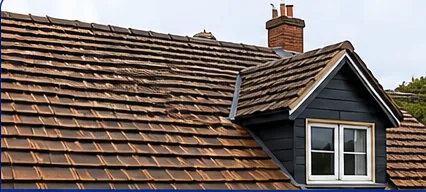
A leak through the ceiling is stressful enough without wondering who pays. The honest answer to whether you can claim is that it depends on what caused the leak, not on the fact of it. Buildings insurance is designed to pay for sudden damage from a named event, such as a storm, and it is not designed to pay for a roof that has simply run out its years. The distinction sounds simple and is where most disputes arise. This guide explains how it works in general terms, what to do in the first hours, how to build a claim that is easy to settle, and what to do when a claim is turned down. Policies differ, and yours is the document that decides, so treat this as orientation and not as advice on your own policy.
What buildings insurance usually covers
Most buildings policies cover the structure of the house, including the roof, against a list of named causes, often called perils. Storm is the one that matters for roofs, along with flood, fire, impact and, in some policies, falling trees and snow. If a storm blows tiles off your roof and rain gets in, the damage to the roof and the water damage that follows may fall within cover. Contents are covered separately, under a contents policy or a combined one, so a stained carpet or a damaged sofa is a contents claim and a damaged ceiling is a buildings claim.
The policy wording defines what counts as a storm, and some set conditions, such as wind of a certain strength or heavy rainfall. Read that definition, because it is the first place an insurer will look. We cannot tell you what yours says.
What it usually does not cover
Insurers generally exclude damage that arises gradually or from the condition of the roof. The common exclusions are these:
- Wear and tear, meaning ordinary ageing of tiles, felt, lead and flashings.
- Gradual deterioration, such as moss growth, slow rot or a covering that has slowly failed.
- Lack of maintenance, such as blocked gutters or a known fault left unrepaired.
- Faulty design or workmanship, where a previous repair or installation was poor.
- The cost of repairing the original fault itself, even where the resulting damage is covered.
That last point surprises people. In some cases an insurer may pay for the stained ceiling and decoration but not for fixing the failed flashing that caused it, because the flashing failed from age. Our short answers on whether insurance covers chimney repairs and whether insurance covers loose ridge tiles show how the same logic plays out on specific parts.
Storm damage versus a roof that has aged
Roofs fail for both reasons, and the evidence differs. A storm leaves a pattern: a run of tiles missing along one slope facing the wind, a ridge lifted, fresh breaks with clean edges, debris in the garden and neighbours with similar damage. An ageing roof shows a different story: tiles that are worn, crumbling or slipped over a wide area, rusted fixings, perished felt, stains that have built over a long period, and moss. Often the two mix, with an old roof that finally gave way in a storm. A careful written report from a roofer, with photographs, helps an insurer see what happened and where the line falls. Our page on tiles blown off in a storm covers the practical side of a storm repair.
How common leaks are likely to be treated
Different leaks tend to land differently, and it helps to know where yours probably falls. Tiles or slates blown off in a named storm, with rain entering as a result, are the classic covered case. A branch or tree falling on the roof is usually an impact claim. A ridge tile that comes loose in high wind may be covered if the wind is shown to be the cause, though if the mortar had crumbled over years the insurer may say otherwise. A flat roof that splits and leaks after years of ponding is normally seen as wear. A gutter overflow that soaks a wall is likely to be seen as maintenance. A chimney flashing that has lifted with age is usually excluded, with the interior damage treated separately. In every case the cause is the question, and a roofer who can tell the difference and say so in writing is a help.
What to do first
- Stay safe. If water is coming through near light fittings or sockets, leave the circuit alone and keep clear. Our answer on a roof leak near electrics explains what to do.
- Limit the damage. Move belongings, put a bucket under the drip, and lift wet carpet if you can. Insurers expect you to take reasonable steps to stop things getting worse.
- Photograph everything. Take pictures and video of the leak, the ceiling, the ground outside and any fallen tiles, with date stamps.
- Call your insurer. Tell them early. Many policies require prompt notice, and they will tell you how they want repairs handled.
- Arrange a temporary repair. A tarpaulin or a temporary patch to stop water entering is usually allowed and often expected. Keep receipts.
- Keep damaged materials. Do not throw away broken tiles or flashing until the insurer says you can.
When you call a roofer to a leaking roof, we prioritise emergency calls and make a leaking roof safe first. That means stopping the water, not carrying out the permanent repair, and it protects your position as well as the house. Our guide to stopping a roof leak from inside covers what you can do before anyone arrives.
Do not do the permanent repair first
This is the mistake that costs people most. If you pay for a full repair before the insurer has seen the damage or agreed to the claim, you may lose the evidence, and the insurer can say it cannot assess what it has not seen. A temporary make-safe is fine. A permanent re-roof is a decision to take once the claim position is clear, unless the insurer agrees otherwise in writing. If you have an urgent need, ask the insurer to confirm in an email or letter what you may do.
Evidence that helps a claim
The more clearly a claim shows cause, date and extent, the easier it is to settle. The useful pieces are dated photographs, a written account of what happened and when, weather reports for the date, a roofer's report on cause and repair, receipts for temporary work, and estimates for the permanent repair. Evidence of regular maintenance also helps, such as invoices for previous repairs or gutter clearing. Our pages on roof damage evidence for insurers and roof reports for insurance claims explain what a good report looks like. We can provide a photographed survey of your roof for this purpose, and it states what we found without arguing the claim on your behalf.
The claim process, step by step
After you notify the insurer, expect a claim number and a request for details. Smaller claims may be settled on photographs and estimates. Larger ones may involve a loss adjuster, who visits, inspects and reports to the insurer, and may ask to speak to your roofer. The insurer then accepts, partly accepts or declines the claim. If accepted, it may pay you, pay a contractor directly or appoint its own repairer. Excesses apply, so you pay the first part of any claim. Keep copies of everything, and do not accept a settlement you do not understand.
If the claim is declined or reduced
You are entitled to a written reason. Read it against your policy. If the decision rests on wear and tear and you believe a storm caused the damage, ask for the insurer's evidence and offer yours. Every insurer has a complaints process, and if it does not resolve the matter you can take it to the Financial Ombudsman Service, which is free. Citizens Advice also publishes guidance on insurance disputes. This is general information, not legal advice.
Leaks that are not on the roof at all
Not every ceiling stain comes from the roof covering. Condensation in a cold loft, a leaking tank or pipe in the roof space, a blocked gutter sending water behind the eaves, and a failed seal round a roof window all produce stains that look like roof leaks. The cause decides the cover: a burst pipe, for instance, is a different claim from a storm. A careful survey traces the water to its source before anyone speculates, and our pages on how a roof leak is traced and mended and condensation in the loft for the loft side.
Does a claim affect your premium?
A claim will usually be recorded and may affect your premium or your excess at renewal, and you will be asked about past claims when you switch insurer. That is a reason to weigh a small claim against its cost, though never a reason to hide damage or delay reporting it. Some insurers ask about the age and condition of the roof at renewal. The effect of a fresh roof on your premium is covered in does a new roof lower home insurance.
Rented homes and landlords
If you rent, the building is the landlord's responsibility, and the landlord's insurance deals with the structure. Your contents are your own concern, so tenants should have their own cover. Tell your landlord or agent promptly and in writing, and keep a record. Our guide to a leaking roof in a rented home explains what you can expect.
What we do
If you have a leak, call us and we will make it safe, photograph the cause and tell you plainly whether it looks like storm damage or age. Our report is a factual record of what we find, written so that you can send it to your insurer. If the roof has years left, we say that and repair only what is needed. Any permanent work is quoted as a fixed price and carries our decade-long workmanship guarantee. See our homepage for everything we do, or ring 01256 213956.
