


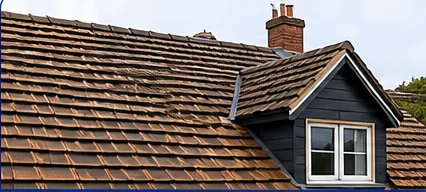

Chapter 1: Why are the tiles slipping on our old cottage near the church in Wootton St Lawrence?
What we find
Plain clay tiles on an old cottage were hung on battens with oak pegs or iron nails, depending on the age of the roof. Both fail with time. Iron nails rust until they shear, which roofers call nail sickness, and pegs soften and rot where damp lingers. Once a tile has dropped a few millimetres, its neighbours begin to follow, and a stripe of slipped tiles opens across the slope.
From the garden, look for tiles that sit lower than their course, gaps showing dark underlay and moss gathering in the slipped areas. In the loft, there may be pieces of tile or a nail lying on the insulation, and daylight along a line of battens. The timbers of these roofs are often substantial, but the small fixings holding the covering on are the weak point, and no amount of re-bedding fixes that.
What we fix
We strip the affected area only, set aside every sound tile, and check the battens and the rafters beneath. Rotten battens are replaced, and stainless steel nails or clips hold the tiles, where the old rusted ones once did. Missing tiles are replaced from reclaimed stock of a similar colour and curve, so the mended slope blends in.
If the whole slope is affected, we explain why and quote for a larger job. If the house is listed, the survey photographs give you the record to put in front of the conservation officer before work begins. Our nail sickness guide explains the problem in more detail, and the guide to matching new tiles covers the repair side.
