
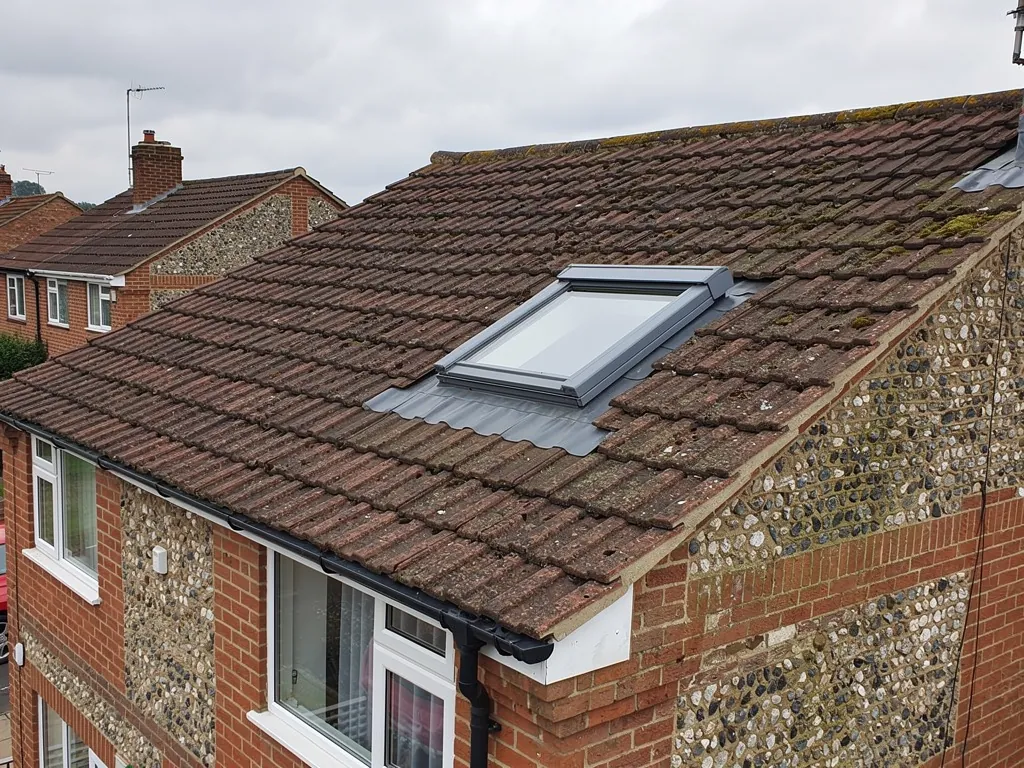
Roof windows are built to last, but they are made of parts that age at different rates. The glass unit, the gaskets, the hinges, the frame, the flashing and the lining all have their own lifespans. A window that was installed in the 1980s may still open and close, yet leak at the corners, mist between the panes and let heat out through a frame that was never insulated. The question is whether to patch it or take it out. This guide helps with that choice. It explains what to look for, what a replacement involves, how a swap in the same opening differs from a change of size, and what the current energy rules ask of the new window.
What can be repaired and what cannot
A lot of faults are repairable. Gaskets can be replaced. A cracked pane or failed glass unit can be reglazed on most current models, as covered in replacing roof window glass. Hinges and springs can be adjusted or replaced. A worn flashing can be renewed, which is the fix for many leaks, as our guide to leaking roof windows explains. A window that does not close properly can sometimes be eased, as in roof window won't close.
Some faults are not worth repairing. Timber frames that have gone soft with rot lose their grip on screws and seals. Aluminium or plastic cladding that has corroded or split cannot be patched reliably. Hardware that is no longer made leaves nothing to fit. And a window from before modern insulation standards sits in a roof with a cold, uninsulated frame that causes condensation and heat loss around the whole opening, which no amount of re-gasketing cures. When two or more of these combine, the repair bill approaches the cost of a new unit.
Signs that point to replacement
- Rot or swelling in a timber frame. Press a screwdriver into the lower corners. If it sinks in, the frame is failing.
- Corroded or cracked cladding on the outside, especially at the corners and the bottom edge.
- A sealed unit misted between the panes on a window where the frame is also tired.
- A sash that sags or will not stay open, with worn hinges or a broken balance mechanism that cannot be sourced.
- Repeated leaks after flashing repairs, which suggests the frame or trimming is out of square.
- Draughts and cold spots around the frame, and recurrent mould on the lining.
Age on its own is not the test. A window in good order at thirty years old is worth keeping, and a badly fitted one can fail in ten. Our answer on how long roof windows last goes through the components.
A like-for-like swap
If the new window matches the old in width and height, the job is relatively quick. The sash and glass are removed, then the frame is unscrewed from the rafters and lifted out. The old flashing is stripped back, the tiles around it are lifted, and the timber trimmers are checked for rot or movement. A new frame goes into the same opening, with new underlay collars, an insulation collar around the frame, a new flashing kit matched to the roof covering, and the tiles are laid back around it. Finally the new lining is fitted inside, if it needs renewing. Work is done mostly from outside, with the room below protected, and often takes a day for one window, depending on access and weather.
Matching the size is simpler because the opening is already framed, and the flashing sizes are listed by the maker for each model. Different brands use different dimensions and codes, so we measure the existing frame and trimmers carefully, not just the sash. Fixings that look similar can differ by millimetres, and a mismatch makes the flashing a fight. We supply and fit complete kits, not just glass and frame, since the flashing is the part that keeps water out.
Changing the size or position
A bigger window is more work. The opening has to be widened or lengthened, which means cutting rafters, fitting new trimmers and re-laying a larger area of tiles. The structural alteration needs Building Regulations approval, and the roof structure may need an engineer's input. Our answer on whether a roof window can be enlarged deals with the practicalities, and what size roof window do I need helps with choosing. A smaller window is simpler in principle, but the opening has to be framed down, and the flashing and lining have to be made good.
Moving the window sideways or up and down the slope is effectively a new installation in a new place, with the old opening made good in tiles. Planning rules apply as for any new roof window, and our guide on planning permission for a skylight sets them out. A like-for-like replacement is generally treated more simply, though a conservation area or a listed building needs a check first.
The energy rules for a replacement
Replacement windows in an existing home in England fall under Part L of the Building Regulations. Table 4.2 of the 2021 edition names two ways for a roof window to comply, a U-value of 1.4 W/m²K or a Band B rating on the Window Energy Rating scale, and gives a looser 2.2 W/m²K for rooflights. A new double-glazed unit with low-emissivity coating normally meets those figures with some margin, whereas a 1980s single-glazed or early double-glazed roof window does not. Part of the gain from replacing is therefore a warmer room and a window that no longer mists as readily. The details are in our guide to roof windows and Building Regulations. Window installers who are registered with a competent person scheme can self-certify the energy compliance. Where a job is notifiable, the application and inspections sit with us.
What goes wrong with a poor replacement
Replacement windows fail early for a few predictable reasons, and it helps to know them when comparing quotes. The first is a flashing kit that does not match the covering. A kit made for plain tiles in a slate roof leaves gaps along the sides. The second is a new frame set into old, sagging trimmers, so that the sash never closes square and the seals leak from the first winter. The third is a missing or crushed insulation collar, which gives a cold surround that mists and grows mould within a year. The fourth is the underlay: if it is not cut and dressed into the new frame with a proper collar, any water that gets past the flashing runs into the room instead of draining out below the window.
The fifth is simply speed. A window that is fitted in a hurry, with tiles re-laid roughly and sealant used to fill gaps, may look right on the day and fail the first time a gale-driven shower hits. A good fitter takes time over the details that nobody sees afterwards. Ask any roofer who quotes for a window to explain how the underlay will be dealt with, which flashing kit will be used and whether the trimmers will be checked, and be wary of an answer that begins with sealant.
Escape, safety and glazing
If the window lights a loft room and was the escape route, the new one has to do the same job, with an opening of the right size and a sill at the right height. Our answer on what an escape roof window is sets out the requirements. A roof window above a stair or in a place where someone might fall against it needs safety glazing, usually a laminated inner pane. Child safety latches, restrictors and tilt-and-lock functions are available on most models.
Choosing the replacement
Opening style is the first choice. Centre-pivot windows rotate around a horizontal axis near the middle, and top-hung windows open outward from the top, giving more headroom at the bottom. Conservation-style units sit flush for period roofs. Our guide to roof window types compares them. Then come finishes (white-painted or clear-lacquered pine, white polyurethane, or aluminium), glazing options (standard, noise-reducing, solar control, toughened or laminated), and extras such as electric operation, covered in are electric roof windows worth it, and blinds or shutters fitted from inside. Matching the make of the old window is not required, though sticking with one brand can ease fitting and parts.
What it costs
As typical UK ranges, one trade guide gives £680 to £1,300 for a standard centre-pivot window supplied and fitted. A manufacturer's figures, which include VAT, are £1,623 to replace an existing roof window and £1,906 to add a new one. Costs rise with size, glazing, electric operation, difficult access and the need for scaffold. A renewal of the flashing and lining adds to the bill if they are in poor state. We prefer not to quote from a distance. Once we have measured and photographed the window, the price we give is fixed after the survey. Our roof window installation cost page breaks it into its parts.
How long it takes and what to expect
A single like-for-like swap is usually done in a day, though the time depends on the access, the roof covering and whether the lining needs work. Plan to clear furniture from under the window, and expect noise and some dust. The window opening is covered at the end of each day so that the room stays dry. For several windows, or a change of size, allow more time and let us talk you through the order of work. Our answer on how long it takes to fit a roof window goes into more detail.
At the end of the job the old window and waste are taken away, the roof around the new unit is checked, and you get the paperwork. The workmanship carries our written 10-year guarantee. If you are weighing a repair against a replacement, a free survey will answer the question with photographs of your own window. Our roof windows page lists everything we do, and 01256 213956 is the number to call.
