
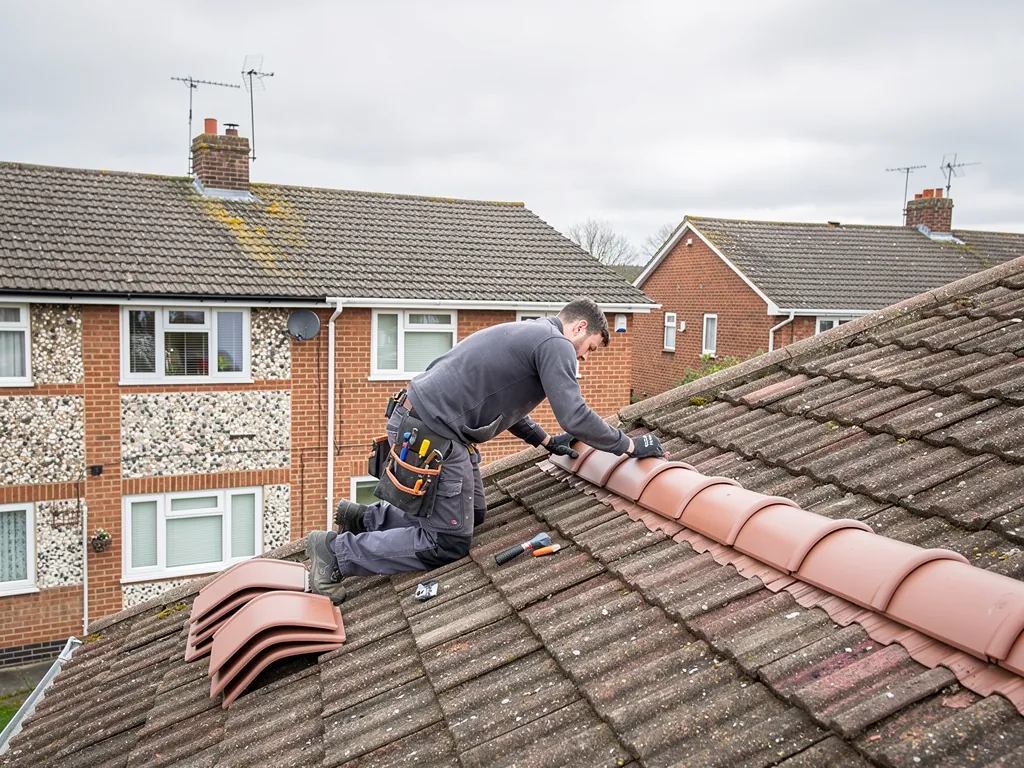
Mortar is the least glamorous material on a roof and the one most people notice when it goes wrong. A cracked line of mortar along the ridge stains the roof, lets water in and gives an easy clue that a roof is tired. Choosing and mixing it well is a skill, and it is one reason two ridges done by different people on the same day can age very differently. This page covers what ridge bedding mortar is for, the mixes in common use, the part sand and additives play, how colour matching works and what today's standards expect of it.
What the mortar does, and what it no longer does
On a mortar-bedded ridge, the mortar has several jobs. It fills the gap beneath the ridge tile and between the ridge tile and the field tiles, keeping out wind and rain. It seals the ends of the ridge tiles and the joints between them. And it gives a finished, neat line. For generations it did the holding as well, and a ridge tile was simply pressed into a bed of mortar and trusted.
That last job has changed. The tiling code, BS 5534:2014, no longer relies on mortar to hold ridge tiles on its own, and calls for mechanical fixing, such as a screw or bracket into a batten or ridge board. Mortar still seals and finishes the joint and hides the fixing, but it is not asked to carry the load. A well-made modern ridge therefore has two systems: the fixing holds, and the mortar seals. The page on the BS 5534 and BS 8612 fixing rules explains that division of labour.
The ingredients
Ridge mortar is simple in principle: a binder, sand and water, sometimes with additives.
Binder. The binder is cement or lime, or a mix of both. Cement gives strength and a fast set. Lime gives flexibility, breathability and a softer, more forgiving bed. Most modern roofs use cement-based mortar, and many period roofs were originally laid with lime.
Sand. Sharp sand, also called grit sand or concreting sand, has angular grains that lock together and give a strong bed. Soft sand, also called building sand, is finer and gives a smoother, more workable mix. Many mixes use a blend. The sand also sets the colour of the finished mortar, since the colour of the sand shows through, which is why local sands give an authentic look.
Water. Enough to make the mix workable and no more. Too much water weakens the mortar and causes shrinkage cracks.
Additives. A plasticiser makes the mix more workable and helps it resist frost, and can be used in place of lime. Pigments colour it. Waterproofing agents are sometimes added. All additives must be used as the manufacturer directs, because a mix with the wrong dose can fail.
Common mixes
Ratios are by volume, and the proportions below are those commonly used. The right mix depends on the tile and on what the mortar must do, and a tile manufacturer's guidance takes priority.
| Mix | Typical use | Character |
|---|---|---|
| Cement and sharp sand, about 1 to 3 | Bedding ridge and hip tiles on modern roofs | Strong, quick to set, can be brittle |
| Cement, sand and plasticiser | General ridge work | More workable, better frost resistance |
| Cement, lime and sand | Period roofs, softer clay tiles | More flexible, gentler on old tiles |
| Pure lime mortar | Heritage and listed work | Soft, breathable, slower to set |
A mix that is too strong is as much of a problem as one that is too weak. A hard, rigid cement mortar can crack away from the tile, hold water at the edge and damage soft clay tiles when it moves. A mix that is too weak breaks down in the first frost. The aim is a bed that is strong enough to seal and soft enough to move with the roof. Our page on lime or cement mortar for chimneys explains the same trade-off on masonry.
Colour matching to weathered tiles
New mortar that does not match is a visible patch. A grey line along a brown ridge, or a pale bed on a dark roof, draws attention for years. Colour matching is part science and part trial, and it begins with sand. The colour of the sand dictates the base shade, and a darker sand gives a darker mortar. A sand supplier can often offer several, and a roofer with experience knows which to use.
Pigments are the second tool. Oxide pigments in black, brown, red or buff are mixed into the mortar to shift the shade. They must be added consistently, by measure, and not by eye, or each batch will differ and the ridge will look striped. Pigment doses beyond the manufacturer's limit can weaken the mortar.
The third tool is patience. Mortar dries lighter than it looks when wet, so a sample mix is made and left to dry before a final decision is taken. The roofer compares it against the tiles in daylight. On an aged roof, the weathered colour of the tiles and the moss and staining on them are part of the target, which makes an exact match rare. Our answer on whether roof tile colour matters deals with the same problem for the tiles themselves.
Mortar for hips, verges and ends
The same mortar is used at hips and verges, with small changes. On a hip, the mortar has to hold its shape on a slope, so the mix is a little stiffer and is laid in short runs so it does not slump before the tile is placed. The foot of the hip needs particular care, because that is where the weight of the whole column bears down. On a verge, the mortar is exposed on the face of the gable and takes the full force of the weather, so a well-compacted mix with a clean, even finish is more important than anywhere else. Mortar at ridge ends and hip junctions is laid in small amounts, where a thick fill would crack. Our page on hips, hip irons and dry-hip kits and verge repairs cover the details.
Finishing: tooling, brushing and cleaning off
How the surface is finished affects how long it lasts. A joint that is pressed in and tooled to a slightly concave or flush profile sheds water and compacts the surface, while a joint left proud, ragged or smeared holds water and cracks early. Once the mortar is firm, a soft brush removes the loose surface and leaves a clean, textured face that blends with the tile. Smeared mortar left on the tile faces is hard to remove later and leaves a pale stain. A tidy roofer cleans the tiles as they go and sweeps the field tiles free of droppings before leaving, which also stops mortar crumbs blocking the gutter.
Weather and laying conditions
Mortar cures by chemical reaction and by drying, and both are sensitive to weather. Laying in frost is a risk, since ice in the mix breaks the bond. Laying in heavy rain washes out the binder and spoils the finish. Strong sun and wind dry it too fast and cause cracking, so in hot weather the work is kept damp and shaded. A reputable roofer picks the day, covers fresh work if rain is forecast and does not lay mortar in conditions that will spoil it.
Preparation matters as much. The surfaces must be clean, free of old mortar and dust, and damp but not wet, so that the new mortar bonds and does not lose water to dry tiles. Tiles are cleaned of old bed before being relaid. Skipping this stage is a frequent cause of early failure.
Why mortar cracks, and how to slow it
All mortar on a roof cracks in time, and the causes are well known. It shrinks as it dries. The roof timbers move with moisture and temperature, and the mortar, being rigid, cracks along the line of movement. Water gets in and freezes. Sun and wind age it. A mix that is too strong shrinks and cracks more, and a mix that is too weak crumbles.
The practical measures are good preparation, a suitable mix, correct curing, not overfilling the joints and, above all, mechanical fixing so the tile does not depend on the bed. Our answer on how long ridge mortar lasts explains what to expect, and the guide to re-pointing and re-bedding shows how repairs are chosen.
Mortar and dry-fix systems
Dry-fix systems avoid wet mortar altogether, using brackets, clips and flexible seals. They are covered by BS 8612:2018. Some owners choose them because they remove the maintenance of mortar. Others prefer the traditional look and stay with mortar, with fixings hidden beneath. Neither is wrong, and the choice depends on the roof. A side-by-side look at dry and mortar ridges sets out the difference.
One point to keep in mind: even on a dry ridge, a little mortar or sealant sometimes appears at hips, ends or junctions. The same principles apply there, in a smaller way.
Cost
Mortar itself is a very small part of the cost of a ridge repair. A bag of sand and cement costs little. What costs money is the access and the labour. There is no reliable UK price range published for mortar work on its own. On the dry alternative, a published UK guide reckons £900 to £1,600 for a ridge on a semi, with £300 to £900 more for scaffold. Take those as typical UK ranges and not Beacon prices; no fixed quote is given until the survey is done.
How we work with mortar
We choose the mix to suit the tile and the exposure, make a test patch for colour on visible roofs and add a pigment by measure so every batch matches. We lay mortar only in suitable weather, clean the bedding surfaces first and fix each ridge tile mechanically, with the mortar sealing and finishing the joint. We photograph the work on your roof as it goes. The price is fixed in writing, our written guarantee on the workmanship lasts ten years, and we clear the mess away when we finish. For the full range of work, see our ridge tile repair service.
