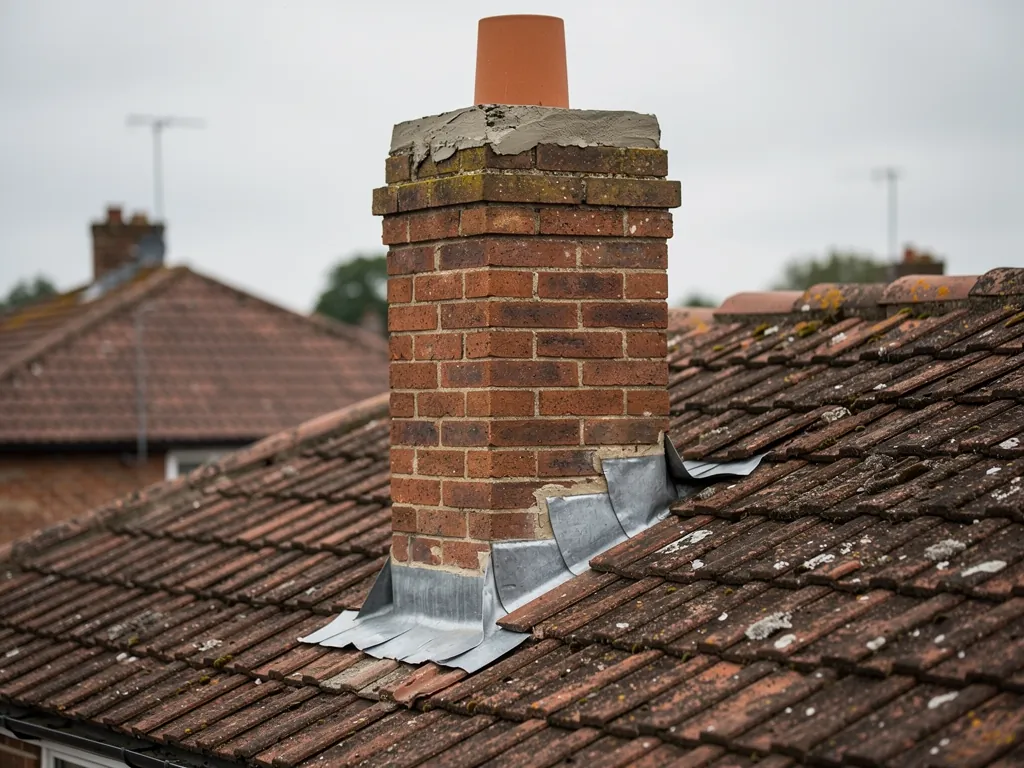
The pot is the part of a chimney most people can name and few have looked at closely. It is the clay or concrete tube that finishes each flue above the stack, and many have a cowl, a cap-like hood, fitted over the top. Together they shape how smoke leaves the house, how much rain enters, and whether birds can get in. They are also exposed to every frost and gale, so they crack, tilt and rust. This guide describes the types of pot and cowl in use around Basingstoke, what each is good at, how to tell when one needs replacing and how we fit a new one.
What a pot does
A chimney stack on its own is just a column of brick. The pot extends the flue upwards beyond the brickwork, lifting the opening clear of the stack top so smoke leaves above the turbulence around the masonry. A pot also gives the flaunching, the sloping mortar around its foot, something to grip. Pots are not decoration alone: a taller pot can improve draught, and a tapered neck concentrates the rising gases and helps them exit with some speed.
Each flue has its own pot, so a stack with four flues will show four pots, sometimes of different shapes if it has been altered over the years. On a Victorian terrace, a row of matching pots is part of the street.
The main types of pot
Plain round and tapered pots
The commonest pots are plain clay cylinders, narrowing slightly towards the top. Terracotta and buff are the usual colours, and the glazed finish of some varieties sheds water better. They are inexpensive, widely available and suit most houses.
Cannon and louvred pots
A cannon pot is a tall, narrow, straight-sided tube with a rounded profile, a style seen on many Victorian and Edwardian stacks around Reading and Newbury. Louvred pots have slots in the sides, which let rain and wind in less directly and give some ventilation when the flue is not in use.
Decorative and crown pots
Older and more expensive houses may have pots with crimped, fluted or crown tops. Replacing one often means finding a match from a reclamation yard or a specialist clay maker, and the cost climbs accordingly. A protected house is a matter for the council's conservation officer, who should hear about any change of style before the work is booked.
Concrete and steel pots
Concrete pots are cheaper and heavier, found on many post-war houses. Steel and stainless steel liners or pots appear on stacks that have been relined, for example for a wood-burner, and are chosen for strength rather than looks.
What a cowl is for
A cowl is a hood or cap fitted over or on top of the pot. People often say cowl and cap interchangeably, but a cowl is designed to alter airflow as well as keep weather out. The three problems a cowl is chosen to address are rain, downdraught and birds.
- Rain. A cowl with a solid top stops water falling straight down the flue. This protects the fireplace and the chimney breast from damp.
- Downdraught. When wind sweeps over a roof it can flow down a chimney and push smoke back into the room. A wind-directional or spinning cowl, or a shaped cowl with an anti-downdraught design, reduces the effect.
- Birds. A cowl with a mesh guard keeps jackdaws, starlings and pigeons from nesting in the flue. If you already have a nest, remember that nesting birds are protected, so have the work timed or checked first.
Types of cowl
The main designs are set out below, with the roof conditions that favour each.
| Cowl type | How it works | Suits | Watch for |
|---|---|---|---|
| Fixed hat or rain cap | Solid cover held above the rim | Disused or rarely used flues | Too small a gap restricts flow |
| Mesh bird guard | Wire cage over the pot | Flues with nesting birds | Soot can clog fine mesh on a lit flue |
| Anti-downdraught cowl | Shaped hood diverts wind over the opening | Exposed stacks with smoky fires | Needs the right size for the flue |
| Rotating cowl | Vane turns with the wind to face away from it | Open sites with changing winds | Moving parts wear and can seize |
| Spark-arrestor or stove terminal | Mesh or hooded terminal rated for solid fuel | Wood-burners and stoves | Must match the appliance and be cleaned |
On a flue that serves a stove or boiler, the choice of terminal is a safety matter, not a style one. The appliance maker's instructions, and the sweep or installer who services it, should decide what goes on top. We fit what is specified. Where a flue is no longer in use and you simply want to stop the rain, our page on capping a disused chimney covers vented caps.
Signs a pot or cowl needs replacing
From the ground, with binoculars if you have them, look for the following.
- Cracks running up a pot. A vertical crack lets water into the stack and weakens the pot until a section can fall off. Our answer on whether a cracked chimney pot is dangerous covers the risk to people below.
- A leaning pot. A tilt usually means the flaunching has failed, not the pot, and the cure starts with the mortar collar. We describe it in our guide to chimney flaunching.
- Flaking and spalling clay. The faces of the pot peel away in layers after repeated frosts.
- Rust on a metal cowl. Flaking, thinning or holes in a galvanised or painted cowl show it is near the end.
- A spinning cowl that has stopped. A rotating head that no longer moves has seized, which makes it useless against downdraught.
- Fragments in the garden. Pieces of clay on the path or in the gutter come from somewhere.
How a pot or cowl is replaced
Replacing a cowl on a sound pot is the easiest case: the old one is unclipped or unscrewed, the rim is cleaned, and the new cowl is fitted and fixed to suit its design. A pot replacement is a bigger job because the pot is set in mortar.
- Safe access. A pot may be loose, and a loose pot must not be levered at from a ladder. A stable platform is set up first, as described in our answer on scaffolding for chimney repairs.
- Remove the old pot. The flaunching around it is chipped away and the pot is lifted out in one piece where possible. Debris is kept out of the flue.
- Check the flue and stack top. We inspect the top of the flue and the brickwork for damage, and clear any nest or rubble.
- Select the replacement. The new pot must match the flue size and, ideally, the look of its neighbours. A mismatched pot on a symmetrical stack stands out at once.
- Bed and level. The pot is set plumb on fresh mortar, aligned with the others.
- New flaunching and cowl. The collar is rebuilt around the foot of the pot, sloping outwards, and any cowl is fixed in place before the mortar is left to cure.
Choosing a replacement that suits the house
Appearance matters on a visible stack. A buff pot on a stack of red-brown terracotta will look wrong for years, so we try to match colour, height and profile. For a listed building or one inside a conservation area, a like-for-like pot is the safest route and usually the only one the council will accept. On a new-build estate, cost and durability decide.
Height needs thought too. Raising a pot can improve draught on a flue that smokes, though a tall pot on an exposed stack catches more wind and needs firmer bedding. We say what each option changes and let you decide.
Materials differ in life. Clay is long-lived but brittle and can split in hard frost if it was not well fired. Concrete is tough and heavy and often cheaper. Painted tin and thin galvanised cowls rust, while stainless steel keeps its strength for far longer and costs more.
Cost and what shapes it
The typical UK range reported by one cost guide for chimney work runs from £500 to £2,000, with a stated average near £750, so a single cowl sits at the bottom. A single new cowl on an easy stack is well below that, and a run of decorative pots on a tall stack is above it. Access, the number of pots, whether the flaunching is redone and the price of a matching pot all move the total. Your fixed quote follows the survey, itemised so you can see which parts matter most.
Pots, weather and the neighbours
Terraced and semi-detached houses often share a stack with the next door property, so a pot on your side may belong to a flue that serves them. Anything that changes the stack should be agreed with the neighbour, and our article on shared chimney stacks explains how responsibility is usually divided. Wind direction matters as well: stacks on the southwest side of a ridge take the worst of the weather, and pots there tend to age first. It is sensible to look at them in autumn, before the frosts, when a repair can still be done in dry conditions.
Flue use comes first
A cowl fitted to the wrong flue can do harm. An appliance that burns gas, oil or solid fuel needs a terminal designed for it, and a mesh fitted over a lit flue can fill with soot. If you are not sure what a flue serves, we will find out at the survey, not guess from the roof. For a flue serving an open fire that is lit regularly, a sweep should check the draw once the new pot or cowl is on.
Booking a survey
If you can see a cracked pot, a rusted cowl or a leaning stack, a free survey will show what is wrong. We photograph the pots and cowls from the roof, tell you whether the pot or cowl can stay, and send a fixed written quote. When the job ends the roof is left tidy, the waste is gone, and a ten-year guarantee on our workmanship is given in writing. Browse the rest of our stack work on the chimney repairs in Basingstoke page, or ring 01256 213956 or send a WhatsApp message.
